Best Kaiber AI Alternatives: AI Video Generation Tools Transforming Creative Workflows


How AI Video Generation Tools Like Kaiber Are Changing Creative Workflows
AI video generation platforms have changed how creators produce visual content. Tools like Kaiber AI allow users to convert simple prompts, images, or audio tracks into stylized animated videos. Instead of manually editing footage frame by frame, creators describe an idea and the AI generates a sequence of visuals that match the prompt.
This workflow has become particularly popular among musicians, digital artists, marketers, and social media creators. A musician can upload a track and generate animated visuals for a music video. A designer can turn an illustration into a moving scene. Content creators often use these tools to produce short cinematic clips or experimental visuals for platforms such as YouTube, Instagram, and TikTok.
Kaiber AI is known for its ability to transform images into animated sequences with distinctive visual styles. It is also widely used for music visualizers and stylized art videos. However, users sometimes explore alternatives for several reasons. Some platforms offer faster rendering speeds, while others provide more control over motion, camera movement, or cinematic realism. Different AI models also produce different visual styles, which encourages experimentation across platforms.
As a result, several tools have emerged that follow a similar creative workflow to Kaiber. These platforms focus on text to video generation, image to video animation, and AI driven visual storytelling.
The following tools represent some of the closest alternatives to Kaiber AI in generative video creation.
AI Platforms That Offer a Similar Creative Workflow
Runway ML
Runway ML has become one of the most influential platforms in the generative video space. Its Gen models allow users to generate short video clips from text prompts, edit existing footage using AI, and extend scenes with motion synthesis.(https://runwayml.com/)
Compared with Kaiber AI, Runway focuses more on cinematic control and professional workflows. Instead of simply producing stylized clips, it allows creators to manipulate camera movement, scene composition, and video editing using AI assisted tools. This makes it attractive for filmmakers and creative studios experimenting with AI driven production.
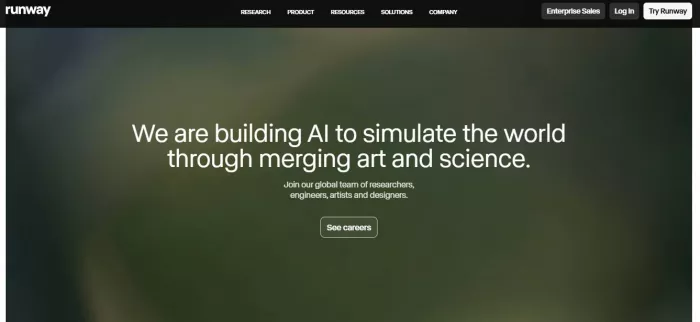
Runway also integrates several generative models into one interface, which means creators can generate visuals, edit videos, remove backgrounds, or expand scenes without leaving the platform.
Key highlights
1. AI video generation from text prompts
2. Image to video animation and scene extension
3. Advanced editing tools integrated with generative AI
4. Paid plans start around $15 to $28 per month depending on credits
5. Best suited for cinematic AI clips and professional creative projects
Pika Labs
Pika Labs is widely known for its prompt driven video generation system. Users describe a scene using text, and the AI generates a short animated clip that visually interprets the prompt.
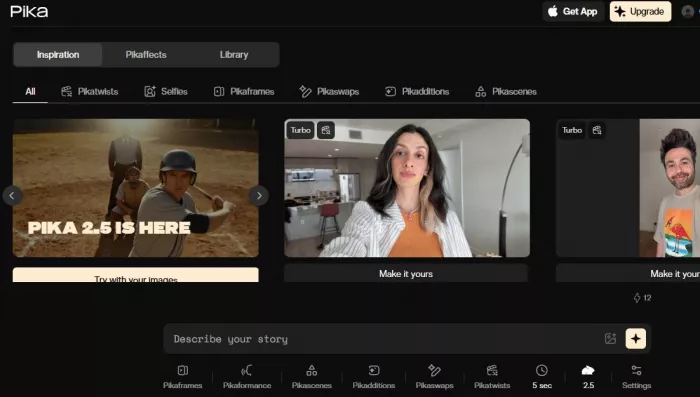
The workflow feels similar to Kaiber AI but tends to emphasize creative experimentation and stylized motion. Pika’s interface focuses on quick prompt iteration so creators can test multiple visual ideas rapidly. This makes it useful for concept exploration and social media visuals.
One interesting difference is that Pika Labs often produces more exaggerated or imaginative animations, which many artists prefer for experimental content.(https://pika.art/login)
Key highlights
1. Prompt to video generation using AI animation models
2. Supports image to video transformation
3. Strong stylized motion effects and fantasy visuals
4. Limited free usage with paid plans expanding generation limits
5. Ideal for creators experimenting with artistic AI visuals
Luma Dream Machine
Luma Dream Machine focuses on realistic video generation rather than purely stylized animation. It uses advanced generative models to produce scenes that resemble cinematic footage.(https://lumalabs.ai/dream-machine)
Compared with Kaiber AI, which often produces highly stylized visuals, Luma aims for photorealistic motion. Creators can generate scenes such as landscapes, environments, or dynamic action clips based on simple prompts.

This difference in style makes Luma particularly attractive for creators interested in cinematic storytelling, concept art videos, and visual experiments that resemble real camera footage.
Key highlights
1. Text to video generation with realistic motion rendering
2. High visual realism compared with many stylized tools
3. Generates short cinematic scenes from prompts
4. Free access with paid usage tiers for higher generation limits
5. Suitable for cinematic visuals and concept video creation
Genmo AI
Genmo AI is another generative video platform designed for text driven animation. It allows users to describe a scene and generate animated video sequences that interpret the prompt.
Its workflow resembles Kaiber AI because it focuses heavily on creative interpretation rather than strict realism. Users often experiment with abstract prompts, storytelling visuals, or artistic animation styles.(https://www.genmo.ai/)
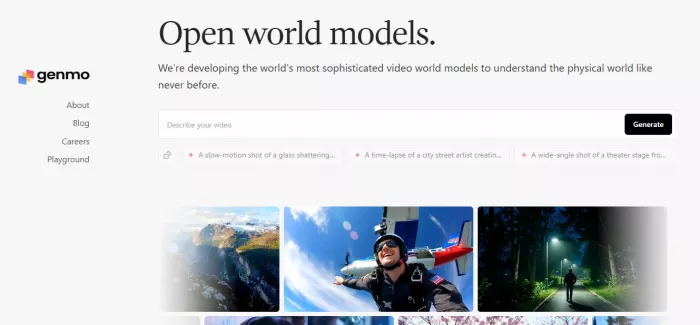
Genmo also emphasizes accessibility. The platform is relatively easy to use and does not require advanced editing skills. This makes it attractive for creators who want to experiment with AI generated visuals without complex production tools.
Key highlights
1. Text to video animation based on creative prompts
2. Simple interface designed for experimentation
3. Strong artistic interpretation of prompts
4. Free tier with optional paid generation upgrades
5. Useful for experimental storytelling and AI art videos
Steve AI
Steve AI approaches AI video creation from a slightly different angle. While many generative tools focus on abstract visuals, Steve AI emphasizes content creation for storytelling, marketing, and social media.(https://www.steve.ai/)
Users can generate animated scenes from text scripts, images, or prompts. The platform combines AI video generation with automated storytelling tools. This means creators can produce explainer videos or visual narratives using AI generated scenes.
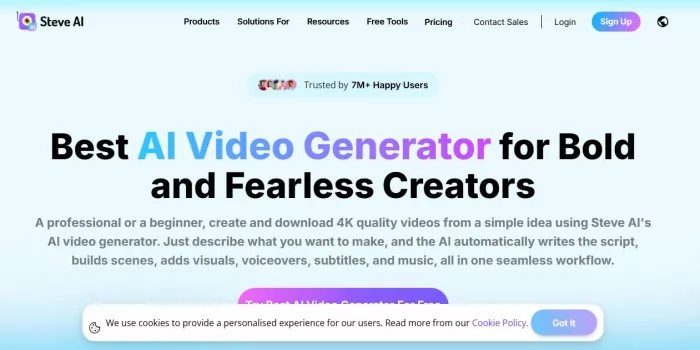
Compared with Kaiber AI, Steve AI may produce less abstract visuals but offers a structured workflow for creating short AI videos quickly.
Key highlights
1. Script to video and prompt based video generation
2. AI generated characters and animated scenes
3. Faster generation designed for content creation
4. Entry plans around $15 to $20 per month
5. Suitable for social media clips and marketing videos
Capability Comparison Table
| Platform | Text to Video | Image to Video | Style Customization | Rendering Speed | Creative Control |
| Runway ML | Yes | Yes | High | Medium | Very High |
| Pika Labs | Yes | Yes | High | Medium | Medium |
| Luma Dream Machine | Yes | Limited | Medium | High | Medium |
| Genmo AI | Yes | Limited | High | Medium | Medium |
| Steve AI | Yes | Limited | Medium | High | Low to Medium |
This comparison highlights an important pattern in the generative video ecosystem. Runway ML offers the highest level of creative control and editing capabilities. Tools such as Pika Labs and Genmo focus more on stylized creativity and artistic experimentation. Luma Dream Machine emphasizes realism and cinematic output, while Steve AI prioritizes quick video generation for practical content creation.
Each platform therefore represents a slightly different interpretation of what AI video creation should look like.
Pricing and Access Table
| Platform | Free Plan | Entry Price | Paid Features | Best For |
| Runway ML | Yes | About $15 per month | More generation credits and advanced tools | Filmmakers and designers |
| Pika Labs | Limited free usage | Paid credits system | Higher generation limits | Creative experiments |
| Luma Dream Machine | Yes | Usage based upgrades | Faster rendering and longer clips | Cinematic scenes |
| Genmo AI | Yes | Paid credits | Extended generation capability | AI art videos |
| Steve AI | Limited free plan | About $15 to $20 per month | More exports and higher resolution | Marketing content |
Pricing differences show that many generative video platforms follow a credit based model. Instead of unlimited generation, users typically receive a certain number of credits each month that determine how many videos they can produce.
Platforms like Runway ML and Steve AI use subscription plans that provide consistent access to features. Tools such as Pika Labs and Genmo often combine free experimentation with paid generation limits. This structure allows creators to test AI video workflows without a large upfront cost.
Use Case Mapping Table
| Use Case | Most Suitable Tool | Reason |
| Music video visuals | Kaiber AI or Pika Labs | Strong stylized animation |
| Social media animations | Steve AI | Fast generation and structured storytelling |
| Cinematic AI clips | Runway ML or Luma Dream Machine | Higher visual realism |
| Experimental art videos | Genmo AI or Pika Labs | Creative interpretation of prompts |
The use case mapping demonstrates that no single platform dominates every creative scenario. Kaiber AI remains popular for music video visuals because of its distinctive animation style. However, platforms like Runway and Luma offer stronger cinematic realism.
Artists exploring abstract visuals may prefer Pika Labs or Genmo because their models produce imaginative results from simple prompts. Creators focused on marketing or content production may find Steve AI more practical because it emphasizes storytelling and speed.
Industry Direction of AI Video Creation
Generative video technology is evolving rapidly as new models improve motion consistency, scene coherence, and visual realism. Early tools focused mainly on short stylized animations. Newer platforms are moving toward longer video sequences, more stable camera motion, and improved storytelling capabilities.
Competition between platforms such as Kaiber, Runway, Pika Labs, and Luma Dream Machine is accelerating innovation across the industry. Some tools focus on artistic expression, while others aim to integrate AI generation into professional filmmaking workflows.
Another major trend is the integration of AI video generation with editing tools. Instead of generating isolated clips, future platforms will allow creators to produce entire scenes, edit them, and combine them into full productions within a single interface.
As generative models continue to improve, AI video tools are likely to become a core part of digital content creation. Creators will increasingly choose between platforms based not only on generation quality but also on how well the tools support their unique creative workflow.


Comments