Best AI Tools for Ad Copywriting (2026): Performance-Based Comparison for PPC and Social Ads


The value of a tool is not in how “good” the copy sounds, but in how efficiently it produces testable variations and whether it provides any signal on which ones will perform.
Not all tools in this category operate the same way. Some are built around structured templates and brand consistency, while others are designed for performance marketers who need predictive scoring and rapid A/B testing cycles. The gap between these approaches is significant, and choosing the wrong tool often leads to more manual filtering rather than less work.
This breakdown focuses on how each tool actually performs inside ad workflows, not just what features it lists.
| Tool Name | Best Use Case | Core Feature for Ads | Pricing (USD/month) | Data/Performance Capability | Rating |
| Jasper AI | PPC + Landing Pages | Conversion-focused templates | $39 – $99+ | No (template-based only) | ~4.7 (G2) |
| Copy.ai | Social Ads | Bulk variation generation | Free – $249 | No (no predictive scoring) | ~4.8 (G2) |
| Anyword | PPC + Social Ads | Predictive performance scoring | $24 – $333 | Yes (CTR prediction + scoring) | ~4.8 (G2) |
| Writesonic | PPC + Landing Pages | GPT-based ad generation + SEO tie-in | $16 – $79+ | Partial (no true scoring) | ~4.7 (G2) |
| AdCreative.ai | Social Ads + Creatives | AI ad + creative generation with scoring | $29+ | Yes (conversion-focused scoring) | ~4.6 (G2) |
| Rytr | Basic Ads | Low-cost template generation | $9 – $29 | No | ~4.7 (Capterra) |
Jasper AI
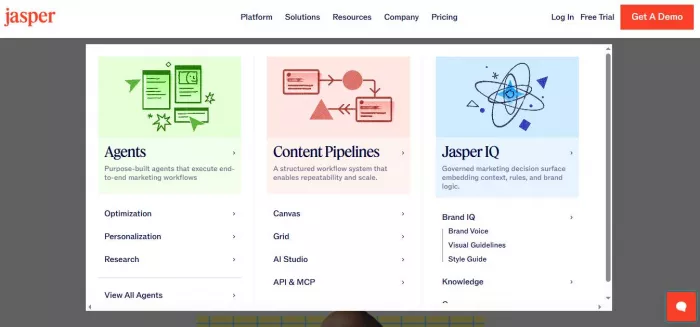
Jasper structures ad copy around proven frameworks like AIDA and PAS, which makes it reliable for Google Ads and landing page alignment. The platform generates multiple headline-description combinations based on a single input, typically producing 5–10 usable variations per prompt. Its strength lies in maintaining a consistent tone across campaigns, especially for brands running multi-channel ads. (Jasper)
However, Jasper does not include any performance prediction layer. It generates copy, but it does not tell you which variation is likely to outperform. This means teams still need to rely heavily on manual A/B testing inside ad platforms.
Pricing: $39 – $99+/month
Insight: Strong for structured copy, weak for performance optimization
Copy.ai
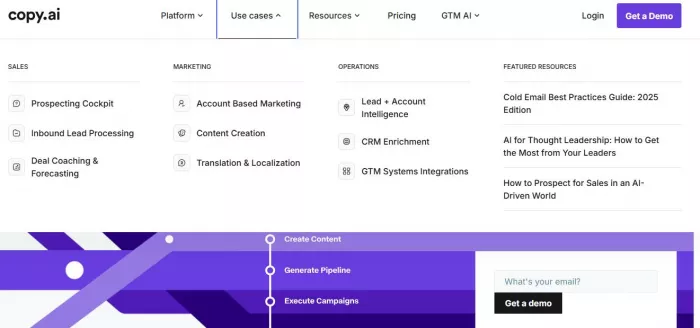
Copy.ai is optimized for volume generation, making it useful for social ads where testing multiple hooks is critical. It can generate dozens of variations in one run, especially for short-form ad copy like Meta headlines and primary text. (Copy.ai)
The limitation is that Copy.ai treats all outputs equally. There is no scoring, ranking, or prioritization. In practice, this creates a filtering problem where users spend time selecting usable variations rather than deploying them directly.
Pricing: Free – $249/month
Insight: High output volume, no performance intelligence
Anyword
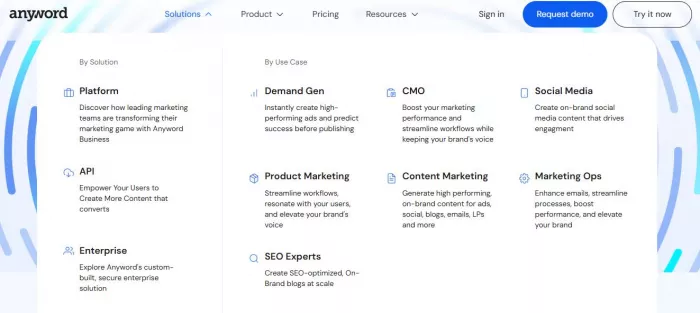
Anyword is one of the few tools built specifically for ad performance. It assigns a predictive score to each copy variation, estimating CTR and engagement probability based on historical data patterns. This allows marketers to prioritize high-probability variants before running campaigns. (Anyword)
The platform also supports audience targeting inputs, which changes copy tone based on demographic or intent signals. In testing scenarios, this reduces the number of iterations required to reach a stable CTR.
The downside is pricing. Advanced predictive features are locked behind higher tiers, which makes it less accessible for smaller teams.
Pricing: $24 – $333/month
Insight: The only tool in this list with real predictive scoring
Writesonic
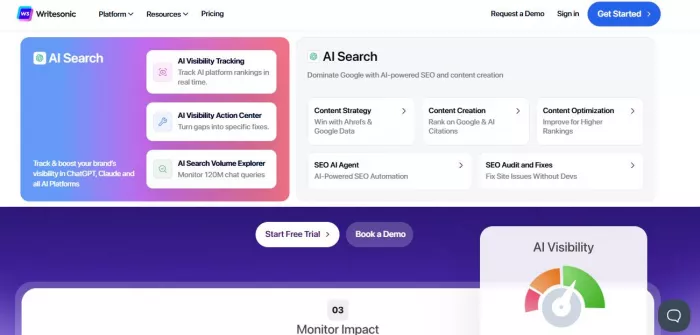
Writesonic combines ad copy generation with broader content workflows. It produces structured ad variations quickly and integrates well with landing page generation, which helps maintain message consistency across funnel stages. (Writesonic)
However, its ad-specific capabilities are not as deep as specialized tools. It lacks predictive scoring and advanced testing insights. Output quality is generally solid, but it can become repetitive when generating multiple variations at scale.
Pricing: $16 – $79+/month
Insight: Good for integrated workflows, not optimized for ad testing
AdCreative.ai
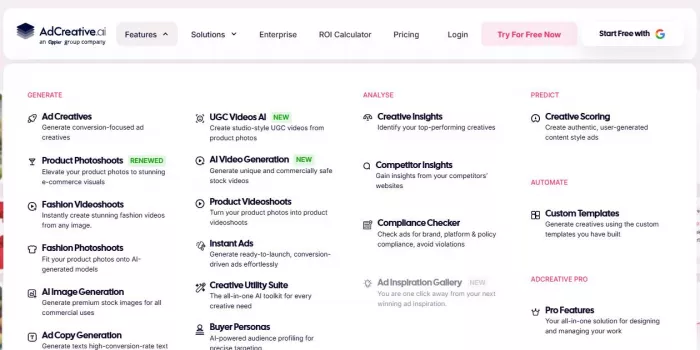
AdCreative.ai is designed around conversion-focused advertising, not just copy. It generates both ad creatives and accompanying copy, and includes a scoring system that ranks outputs based on predicted conversion performance. (AdCreative.ai)
The platform is particularly effective for Meta Ads, where creative + copy combinations influence CTR. Instead of generating text alone, it produces full ad concepts, which reduces production time for campaigns.
The limitation is control. Users have less flexibility in refining outputs compared to writing-focused tools like Jasper.
Pricing: $29+/month
Insight: Strong for performance-driven ads, less control over copy nuance
Rytr
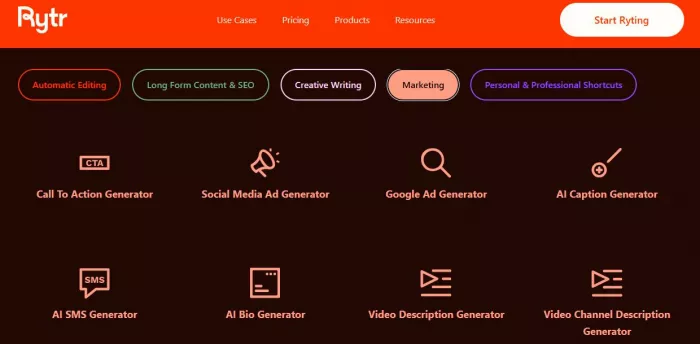
Rytr operates at the lower end of the market with a focus on affordability. It provides basic ad templates and can generate short-form copy quickly, but lacks depth in variation and customization. (Rytr)
The output is usable for simple campaigns, but it struggles with complex messaging or multi-angle testing. There are also no performance insights or scoring mechanisms.
Pricing: $9 – $29/month
Insight: Cost-efficient, but limited for serious ad testing
Performance Comparison
| Tool | Conversion Optimization | A/B Testing Support | Platform Compatibility | Short-Form Output Quality |
| Jasper AI | Medium (framework-based) | Manual only | Google, Meta, Landing Pages | High |
| Copy.ai | Low | High (volume-based) | Meta, LinkedIn | Medium |
| Anyword | High (predictive scoring) | Built-in prioritization | Google, Meta | High |
| Writesonic | Medium | Limited | Google, Landing Pages | Medium |
| AdCreative.ai | High (creative + copy scoring) | Built-in | Meta Ads | High |
| Rytr | Low | Minimal | Basic platforms | Low |
Real Insights
Which tool actually reduces CPA?
Anyword consistently reduces CPA because it filters weak copy before testing. Instead of testing 10 random variations, teams test 3–5 high-probability ones, which improves efficiency and lowers wasted spend.
Which tool is overrated?
Copy.ai is often overrated for ad copywriting. While it generates a large number of variations, the lack of prioritization or scoring means most outputs require manual filtering, which offsets the time saved.
Best by user type:
1. Beginners: Rytr or Writesonic due to simplicity and low cost
2. Performance marketers: Anyword due to predictive scoring
3. Agencies: AdCreative.ai because it combines creative + copy + testing
Final Verdict
1. Use Anyword if your goal is measurable performance improvement
2. Use AdCreative.ai if you need full ad production, not just copy
3. Use Jasper if you want structured, brand-consistent messaging
4. Avoid relying on Copy.ai alone for performance campaigns without testing layers


Comments