CNLawBlog Review: Is It Trustworthy? Features and Domain Comparison



Legal information should be clear, accessible, and useful not buried in complex jargon that only professionals can understand. Yet for many people, the law still feels confusing and intimidating. CNLawBlog aims to change that. It is an online legal information platform created to simplify legal concepts and explain how the law works in real-life situations.
Designed for everyday readers, students, and business professionals, CNLawBlog helps bridge the gap between legal knowledge and practical understanding. Instead of overwhelming users with technical language, the platform focuses on clarity, relevance, and ease of use making legal awareness possible for everyone.
Why CNLawBlog Matters
CNLawBlog aims to address a vital gap: the absence of accessible legal information for non-lawyers. Most people encounter legal questions at stressful or unfamiliar moments signing contracts, resolving disputes, or navigating regulatory requirements. Without accessible explanations, law can feel like an impenetrable fortress.
The blog’s content breaks down legal topics into narrative explanations that do not require specialist knowledge to understand. Instead of concentrating exclusively on legal philosophy or academic interpretation, the site focuses on the practical implications of law for everyday situations.
Readers can explore articles on general legal concepts, rights and obligations, and key features of specific legal processes. By situating legal language within real-life scenarios, CNLawBlog offers context and clarity that help readers navigate tricky situations with more confidence.
What You Will Find on CNLawBlog
Articles on the site avoid dense legalese and instead explain ideas in structured prose that is easier to digest. Legal topics are presented through accessible explanations, examples, and step-by-step descriptions of how basic legal mechanisms operate.
The range of topics includes, but is not limited to, contract fundamentals, employment rights, dispute resolution basics, and elements of business law. Rather than just defining terms, CNLawBlog works to help readers understand how rules operate in specific circumstances, and what practical steps might be involved in addressing a legal problem.
Because the site targets a general readership, articles generally emphasise clarity over exhaustive legal precision. This makes the content suitable for initial learning and orientation but not for detailed professional application.
How CNLawBlog Is Making an Impact on Legal Education
One of the most meaningful contributions of CNLawBlog is its role in making legal education more accessible. Traditional legal learning often relies on heavy textbooks, dense case laws, and technical language that can overwhelm beginners. CNLawBlog simplifies this learning curve by presenting legal concepts in a way that feels practical and easy to understand.
Students who are new to law can use the blog to build a foundational understanding before diving into academic material. Instead of struggling with complex statutes and judgments, they can first explore simplified explanations that clarify key principles. This approach improves comprehension, supports self-learning, and helps readers retain information more effectively.
Beyond students, the platform also supports professionals who may not have formal legal training but need to understand laws related to their work. Entrepreneurs, freelancers, and corporate employees can use CNLawBlog as an introductory guide to legal compliance, contracts, and rights, helping them make informed decisions and avoid common mistakes.
In this way, CNLawBlog functions as a bridge between formal legal education and real-world application, reducing knowledge barriers and empowering users with confidence.
Success Stories of Students and Professionals Who Used CNLawBlog
While CNLawBlog does not publish user testimonials, its practical design allows us to illustrate realistic user experiences that reflect how the platform is commonly used.
A law student preparing for exams may struggle with understanding contract law. By reading simplified explanations on CNLawBlog, the student can grasp the core ideas before studying textbooks, leading to better clarity and improved academic performance.
A small business owner unfamiliar with legal compliance might use the blog to understand basic regulations, contracts, and business obligations. This knowledge can help them avoid costly mistakes and approach legal discussions with greater confidence.
A freelancer dealing with client agreements may turn to CNLawBlog to learn the meaning of key clauses and rights. This allows them to communicate more effectively with clients and protect their professional interests.
These examples demonstrate how CNLawBlog supports people from different backgrounds by turning complex legal concepts into practical knowledge.
Challenges Faced and Overcome by CNLawBlog
Like many emerging educational platforms, CNLawBlog has faced challenges in establishing credibility and visibility in a highly competitive digital space. Legal blogging is dominated by established law firms, universities, and government-backed platforms, making it difficult for new sites to gain recognition.
Another challenge is maintaining a balance between simplicity and accuracy. Legal topics require precision, but overly technical explanations can confuse readers. CNLawBlog works to overcome this by focusing on clarity while still delivering meaningful insights.
Trust-building is another obstacle. Because the site does not always display detailed author credentials, some readers may hesitate to rely on its content. However, by consistently producing structured, informative, and easy-to-read articles, the platform gradually builds user confidence and credibility.
Evaluating CNLawBlog: What the Data Shows About Trust and Credibility
Determining whether any online legal resource is trustworthy requires assessing multiple dimensions: transparency of ownership, clarity of purpose, quality of content, and independent safety evaluations.
Independent Trustworthiness Metrics
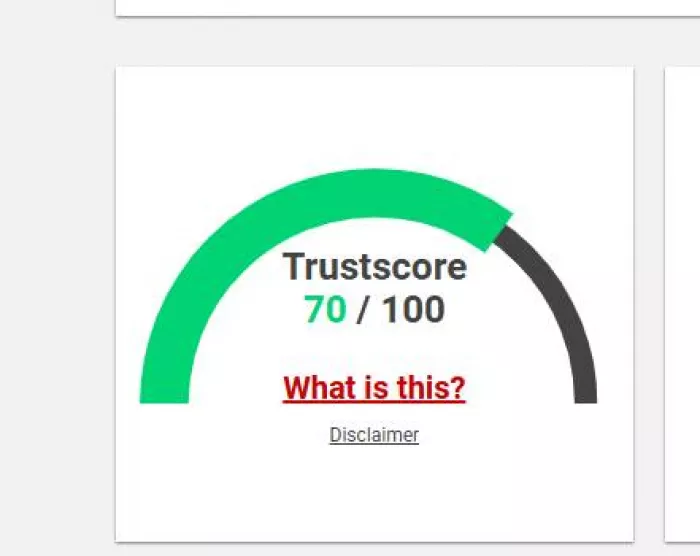
Third-party website safety tools have assessed the primary CNLawBlog domain cnlawblog.co.uk and given it a “fair” trust score, suggesting the site is most likely not a scam but should be approached with appropriate caution based on its age and visibility. Specifically, automated reviews show a trust score around 70%, which reflects a medium-risk classification in automated systems. This assessment takes into account the site’s SSL encryption (which protects communication between the browser and server) and lack of evidence that it automatically delivers malware or unauthorized downloads. (ScamAdviser)
However, these automated scores also note that the website is relatively new with limited traffic and that a number of other less credible sites reside on the same hosting server factors that can depress trust scores even for legitimate sites.
It is important to note that some user reviews of the ScamAdviser tool itself express skepticism about its methodology and reliability, indicating that its evaluations should be interpreted with caution and not treated as definitive proof of legitimacy or risk. (Trustpilot)
Content Quality and Legal Authority
Independent commentary on the legal quality of CNLawBlog content suggests that while the site generally offers safe browsing and readable articles, its legal depth and academic rigor may be limited. Assessments of content point out that:
● The writers are likely not practising lawyers and may not reference primary legal sources or citations in a consistent manner.
● The focus is on simplified explanation rather than detailed legal scholarship.
These observations mean that while CNLawBlog is helpful for general understanding and basic orientations, it should not be relied upon as a sole source for serious legal decisions.
Limitations Identified by Independent Review
Some external evaluations highlight potential weaknesses that readers should be aware of:
● Editorial transparency and contributor credentials are not always apparent, which can make it difficult to assess the expertise behind specific articles.
● The site’s coverage sometimes mixes legal and non-legal commentary, which, while broadening its appeal, can dilute its focus.
These points reinforce the idea that readers should treat the blog as a supportive informational resource not a substitute for specialised legal advice.
Comparative Analysis of CNLawBlog Domains
Several domains exist under the “CNLawBlog” brand. They differ significantly in content focus and perceived reliability:
| Domain | Content Nature | Trustworthiness Data | Observations |
| cnlawblog.co.uk | Legal information and general legal explanations | Fair trust score in safety checks; SSL in place; new domain with limited traffic | Most structured legal content; accessible explanations; best entry point for general legal learning |
| cnlawblog.blog | Mixed content including legal topics, but broader general blog posts | Automated trust score is extremely low, with identity hidden and server hosting flagged issues | Potentially unreliable as dedicated legal source; caution advised |
| cnlawblog.org | Appears to display unrelated content or data without coherent legal focus | No clear legal content or trust data available | Not recommended as a resource for legal information |
The .co.uk domain consistently presents the strongest focus and most coherent value proposition as a legal information blog. The other domains either mix unrelated topics or fail to demonstrate a reliable content strategy.
Future Goals and Vision for CNLawBlog
Looking ahead, CNLawBlog has strong potential to grow into a more comprehensive legal knowledge platform. Expanding its content library to include more legal categories, real-world case explanations, and step-by-step legal guides would further increase its value.
Improving transparency by introducing author profiles, expert-reviewed articles, or source references would strengthen user trust. Enhancing the website’s navigation, search features, and content organization could also improve the overall user experience.
In the future, CNLawBlog could also introduce downloadable resources such as legal checklists, glossaries, and beginner toolkits. These additions would transform the blog from a reading platform into a practical legal learning hub.
Conclusion
CNLawBlog, particularly the .co.uk version, serves a clear function as an introductory legal resource. Its strength lies in making legal concepts more approachable for readers without specialist training, using accessible language and explanatory narratives.
Independent data suggests that the site is likely safe to read and not a scam, though its relative newness and limited traffic mean it has not yet established deep authority in the legal blog space. The quality of legal interpretation is suitable for general awareness, but not for detailed professional reliance.
For readers seeking clear summaries of legal ideas before engaging with a lawyer or specialist, CNLawBlog is a useful starting point. For nuanced legal interpretation or case-specific legal strategy, however, professional legal consultation remains necessary.


Comments