How Hotels Can Turn Guest Touchpoints Into Revenue Channels?

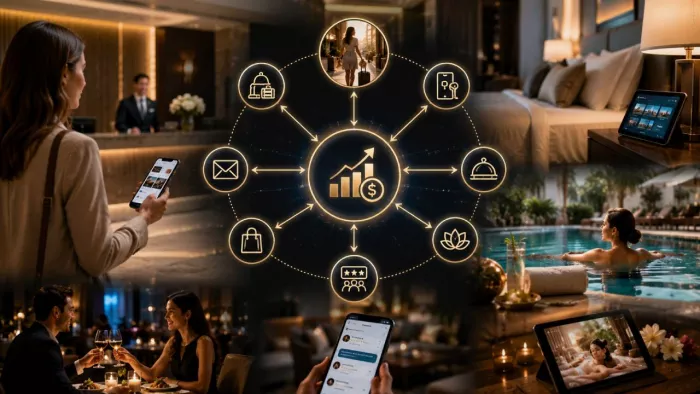
Every guest interaction shapes your hotel’s revenue. From the moment someone searches for a room to the follow-up email after checkout, each touchpoint can influence spending, loyalty, and future bookings. Many hotels treat these moments as routine tasks instead of revenue drivers.
You turn guest touchpoints into revenue channels by aligning every stage of the guest journey with clear upsell, cross-sell, and engagement strategies that add value while increasing total revenue. That means you design booking pages, pre-arrival messages, check-in conversations, on-site services, and post-stay outreach with purpose. You connect each interaction to personalized offers, upgrades, and experiences that fit the guest’s needs.
When you manage touchpoints with intent, you strengthen revenue management and improve guest satisfaction at the same time. You create a system where service and sales work together. The result is steady growth built on smart engagement, not chance.
Key Strategies to Monetize Guest Touchpoints
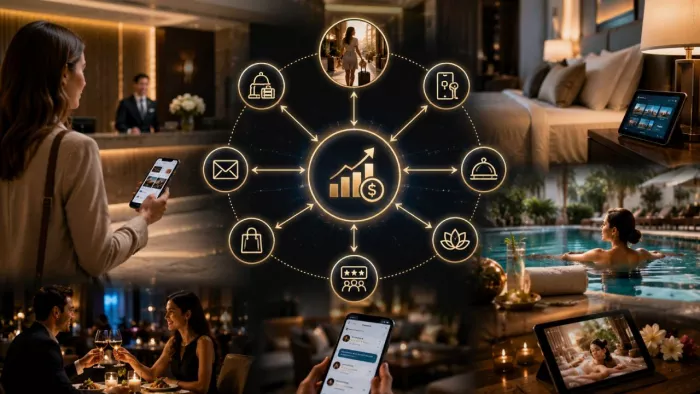
You increase revenue when you treat every guest touchpoint as a sales opportunity, not just a service step. Focus on targeted upselling, clear pre-arrival communications, strong personalization, and direct booking control to drive measurable incremental revenue.
Optimizing Upselling and Cross-Selling
You generate incremental revenue when you present the right offer at the right time. Train your front desk and reservations team to use structured upselling and cross-sell strategies during booking, check-in, and in-stay interactions.
Focus on high-margin options such as:
- Premium room upgrades
- Early check-in and late check-out
- Spa treatment bundles
- Dining reservations and tasting menus
- Celebration packages
Offer flexible add-ons instead of vague upgrades. For example, promote a guaranteed high-floor room or a bundled spa and dining credit rather than a general “better room.”
Hotels can also create cross-selling opportunities through hotel interactive TV system, where in-room screens present relevant offers such as dining reservations, spa treatments, local experiences, transportation services, or late check-out options while guests are already engaged with hotel information or entertainment. This helps make additional services easier to discover, increasing ancillary revenue without relying solely on front desk interactions.
Use simple pricing tiers to make decisions easy. When guests see clear value, they accept room upgrades and ancillary services more often.
Track acceptance rates and revenue per guest. Adjust your offers based on season, occupancy, and guest segment.
Leveraging Pre-Arrival Communications
You shape spending behavior before guests arrive. Pre-arrival communications create a structured pre-arrival upsell window that many hotels overlook.
Send targeted emails or app messages 3–7 days before arrival. Highlight:
- Paid early check-in or late check-out
- Discounted spa treatment bundles
- Dining reservations with priority seating
- Celebration packages for birthdays or anniversaries
Keep messages short and focused on benefits. For example, explain how early check-in gives guests more usable vacation time.
Automate offers based on booking data. A couple booking a weekend stay may receive spa and dining options. A family may see activity packages and flexible add-ons.
Pre-arrival upsell campaigns often convert better than front-desk sales because guests feel less pressure and have time to decide.
Personalization Across the Guest Journey
You increase conversion when offers match guest preferences. Use booking data, past stay history, and stated preferences to tailor personalized offers.
Segment guests by purpose of travel, rate type, and spend history. Business travelers may value late check-out and workspace upgrades. Leisure travelers may prefer spa credits or celebration packages.
Apply personalization at key guest touchpoints:
| Touchpoint | Revenue Opportunity |
| Booking confirmation | Premium room upgrades |
| Pre-arrival email | Add-ons and bundles |
| Check-in | Paid early check-in |
| In-stay messaging | Dining and spa promotions |
| Post-stay follow-up | Direct booking incentive |
Avoid sending the same offer to every guest. Relevant cross-sell strategies improve acceptance rates and protect the guest experience.
Maximizing Direct Booking Channels
You retain more revenue when guests book direct. Third-party channels limit your ability to upsell and reduce your margin.
Strengthen your website and booking engine to promote:
● Clear room upgrade options
● Add-on services during checkout
● Flexible packages with visible price differences
Display premium room upgrades and ancillary revenue options before payment, not after. Make benefits clear, such as added space or included credits.
Use direct booking incentives such as small discounts, added perks, or loyalty points. Then continue monetizing through pre-arrival communications and in-stay personalized offers.
When you control the booking channel, you control pricing, messaging, and every revenue opportunity tied to your guest touchpoints.
Enhancing Revenue Management Through Guest Engagement
You increase hotel revenue when you manage each guest touchpoint as a revenue opportunity. Strong revenue management links pricing, personalization, and communication across the full guest journey to lift ADR, RevPAR, and guest lifetime value.
Total Revenue Management Principles
You move beyond room-only pricing when you apply total revenue management. Instead of focusing only on ADR and occupancy, you track total spend per guest, including dining, spa, parking, and add-ons.
This approach aligns dynamic pricing with guest engagement. You sell the right room, to the right guest, at the right time, and through the right channel. You also promote relevant extras before arrival, during the stay, and after check-out.
Key actions include:
- Driving pre-arrival revenue with targeted upsell offers
- Improving attach rate for add-ons and packages
- Using hotel cross-selling to increase average spend per guest
- Supporting direct booking mastery to lower customer acquisition cost
When you connect pricing and experience, you generate incremental revenue per booking without harming guest satisfaction.
Utilizing Data for Microsegmentation
You strengthen hotel revenue management when you use data for microsegmentation. Instead of broad groups like “business” or “leisure,” you create small segments based on behavior, spend patterns, channel use, and past upsell conversions.
A modern CRM stores booking history, preferences, and response data. You can then tailor offers based on:
- Stay frequency and repeat bookings
- Past average daily rate (ADR) paid
- Add-on purchases and upsell conversions
- Channel conversion rates, including voice channel conversion
This allows you to practice natural upselling. You present relevant upgrades, not random offers.
For example, a guest who often books spa services can receive a bundled pre-arrival package. A price-sensitive guest may respond better to value-added offers than rate increases. Microsegmentation improves cross-sell optimization and supports higher RevPAR without relying only on rate growth.
Boosting Guest Lifetime Value and Loyalty
You grow guest lifetime value when you treat engagement as a long-term strategy. Each stay becomes part of a broader plan to increase repeat direct bookings and reduce reliance on high-cost channels.
A strong loyalty program supports this goal. Offer clear loyalty incentives such as:
- Member-only rates
- Free upgrades after a set number of stays
- Points tied to total spend, not just room nights
Tie customer loyalty incentives to behavior. Reward guests who book direct, respond to upsell offers, or increase their average spend per guest.
Track both guest satisfaction and guest satisfaction score. High satisfaction improves repeat bookings and supports stronger ADR over time. Tools such as Revinate and similar platforms help manage omnichannel communication so you stay connected through email, SMS, and voice.
When you link loyalty, personalization, and revenue management, you build stable hospitality revenue and predictable growth.
Measuring Success and Revenue Attribution
You need clear revenue attribution to understand which touchpoints drive results. Do not rely only on occupancy and RevPAR. Track the full impact of engagement efforts.
Focus on metrics such as:
- Incremental revenue per booking
- Pre-arrival revenue contribution
- Attach rate for upsells and cross-sells
- Channel conversion rates and voice channel conversion
- Average spend per guest
Connect CRM data with your property management and revenue systems. This allows you to see which campaigns increase upsell conversions and which offers improve ADR.
Also compare guest lifetime value to customer acquisition cost. If repeat direct bookings increase and acquisition costs fall, your strategy works.
Measure results at each stage of the guest journey. When you link performance data to specific touchpoints, you turn guest engagement into a structured and accountable revenue engine.
Conclusion
You turn guest touchpoints into revenue channels when you treat each interaction as both a service moment and a business opportunity. From booking to post-stay follow-up, you shape spending, loyalty, and reviews through clear offers and well-timed communication.
As you align marketing, front desk, reservations, and service teams, these efforts create a connected journey that supports higher guest value. Thus, you move beyond single transactions and build steady revenue across the full stay.
When you track results by channel and touchpoint, you see what drives upgrades, add-ons, and repeat visits. As a result, you refine your approach, improve performance over time, and strengthen your hotel’s long-term revenue strategy.


Comments