HubSpot Too Expensive or Complex? Here’s What to Use Instead



If you mostly use HubSpot as a CRM
This is the easiest place to simplify.
A lot of people using HubSpot CRM don’t actually need marketing automation or complex reporting. They just need a clean pipeline, contact tracking, and deal management.
That’s where tools like Pipedrive start making more sense.
Pipedrive focuses on sales pipelines. It’s visual, simple, and doesn’t try to be everything. You can track deals, move leads across stages, and keep things organized without navigating through multiple dashboards.
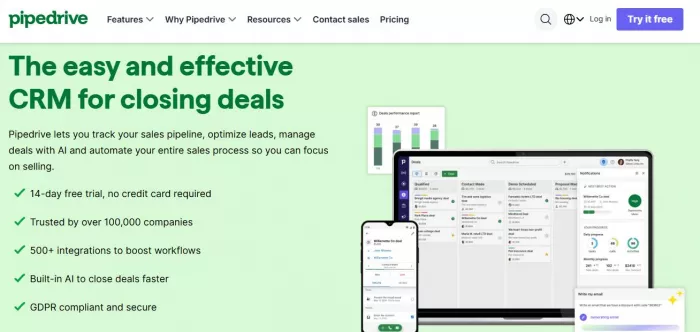
Pricing starts around $14–$20/month.
The limitation shows up quickly though. It’s not built for deep marketing automation or advanced workflows. It’s a sales tool first, not a full system.
Ratings: G2 ~4.3, Capterra ~4.5
Then there’s Zoho CRM, which sits somewhere between simplicity and flexibility.
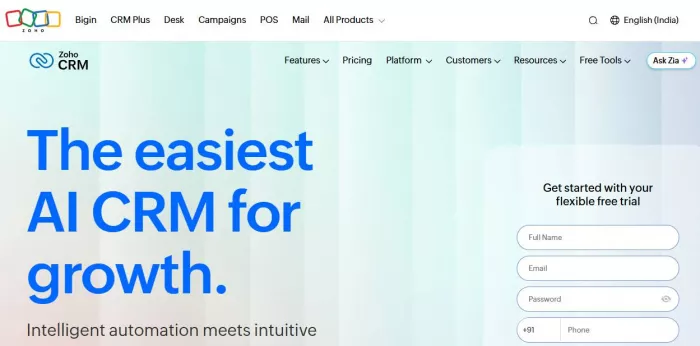
Zoho CRM starts around $14/month and gives you more customization than Pipedrive. You can build workflows, automate tasks, and scale without immediately jumping into enterprise pricing.
But the trade-off is usability.
It’s not as intuitive. The interface can feel cluttered, especially for new users.
Ratings: G2 ~4.1, Capterra ~4.3
So if CRM is your main use case, you’re basically choosing between:
● Simplicity (Pipedrive)
● Flexibility (Zoho CRM)
If you mainly use HubSpot for email marketing
This is where HubSpot often becomes overkill.
You don’t need a full CRM just to send campaigns, manage lists, and automate emails.
That’s where Mailchimp still holds its ground.
Mailchimp is built for campaigns. You can design emails, segment audiences, and automate flows without dealing with CRM complexity.
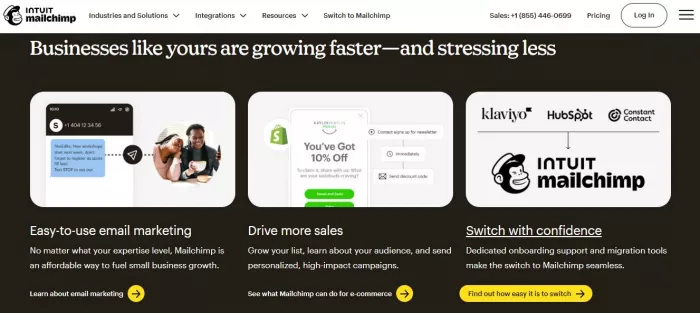
Pricing starts free, then jumps to ~$13–$20/month as your list grows.
The issue is scaling.
Costs increase sharply with contacts, and automation isn’t as deep as HubSpot once you need advanced workflows.
Ratings: G2 ~4.3, Capterra ~4.5
A more balanced option is Brevo (formerly Sendinblue).
Brevo starts around $9/month and charges based on emails sent rather than contacts stored. That makes it more predictable if your list is large but you don’t send constantly.
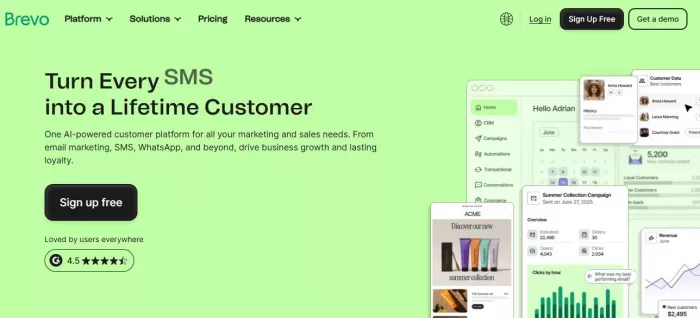
It also includes basic CRM and automation features without becoming overwhelming.
But the interface can feel less polished, and reporting isn’t as strong.
Ratings: G2 ~4.5, Capterra ~4.6
So here the decision becomes:
● Familiar and polished (Mailchimp)
● Cheaper and more flexible (Brevo)
If your focus is on sales pipelines and deal tracking
HubSpot can feel heavy if you’re just trying to manage leads and close deals.
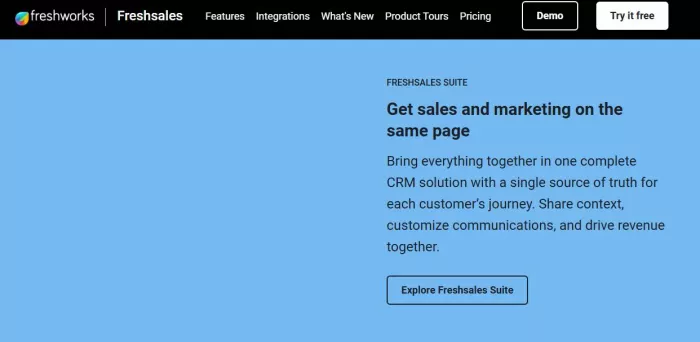
That’s where Freshsales fits better.
Freshsales starts around $15/month and gives you:
● Built-in calling
● Email tracking
● Deal pipelines
All inside a simpler system compared to HubSpot.
It’s designed for sales teams, not marketing departments.
But again, the limitation shows up when you need cross-team workflows or deeper automation. It’s not trying to replace HubSpot fully.
Ratings: G2 ~4.5, Capterra ~4.5
If you actually want an all-in-one replacement
This is where things get tricky.
Because most “HubSpot alternatives” either simplify too much or don’t fully replace the ecosystem.
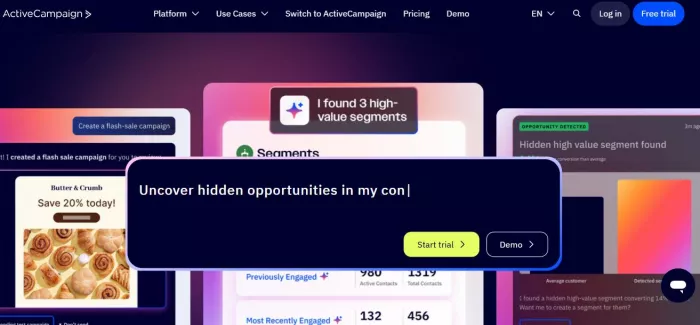
The closest balance comes from tools like ActiveCampaign.
ActiveCampaign starts around $29/month and focuses heavily on automation.
● Email marketing
● CRM
● Customer journeys
It’s more flexible than HubSpot in automation logic and often cheaper at lower scales.
But it has its own learning curve. Setting up workflows takes time, and pricing increases as your contact list grows.
Ratings: G2 ~4.5, Capterra ~4.6
Then there’s a different approach entirely with ClickUp.
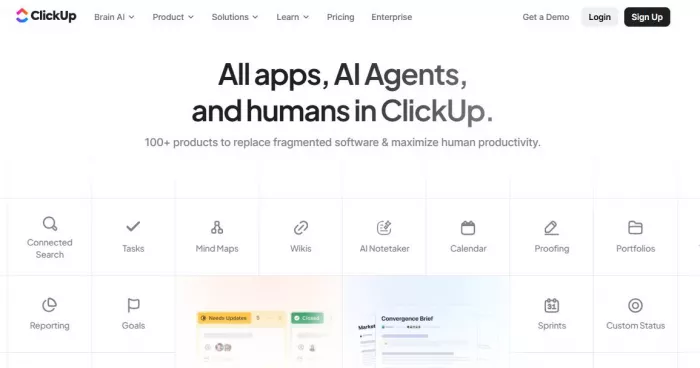
ClickUp isn’t a CRM-first tool, but many teams use it to replace parts of HubSpot.
● Task management
● Pipelines
● Basic CRM setups
Pricing starts around $7–$12/month, making it significantly cheaper.
But you’re building your own system.
It doesn’t come ready as a marketing + sales platform. You trade structure for flexibility.
Ratings: G2 ~4.7, Capterra ~4.6
Quick reality check
| Tool | Starting Price | Best For | Limitation |
| Pipedrive | ~$14/month | Sales CRM | Limited marketing features |
| Zoho CRM | ~$14/month | Custom CRM workflows | Less intuitive UI |
| Mailchimp | ~$13/month | Email marketing | Expensive as contacts grow |
| Brevo | ~$9/month | Budget email marketing | Weaker analytics |
| Freshsales | ~$15/month | Sales pipelines | Limited automation depth |
| ActiveCampaign | ~$29/month | All-in-one automation | Pricing scales with contacts |
| ClickUp | ~$7/month | Custom workflows | Not a true CRM out of the box |
Final Thoughts
If most of your time is spent managing deals and pipelines, then a focused CRM like Pipedrive or Freshsales will immediately feel lighter. You’re not digging through marketing dashboards or automation settings you don’t need. The trade-off is that you lose the “all-in-one” feel, but in return, everything becomes faster and easier to manage.
If your work is mostly campaigns, newsletters, or basic automation, then tools like Mailchimp or Brevo make more sense. You’re removing the CRM layer entirely and focusing only on communication. That’s where the cost drops significantly. The downside is that once your campaigns become more complex, you’ll start noticing the limits.
If you’re somewhere in between, where you still want automation but without HubSpot’s weight, then ActiveCampaign becomes the middle ground. It gives you structure and control, but it also introduces its own learning curve and pricing growth as your contact list increases.
And if your main goal is to simplify everything and cut costs, then something like ClickUp only works if you’re comfortable building your own system. It doesn’t replace HubSpot out of the box. It replaces it gradually, depending on how much you’re willing to set up yourself.


Comments