Judge Blocks Pentagon Move Against Anthropic in Escalating AI Dispute


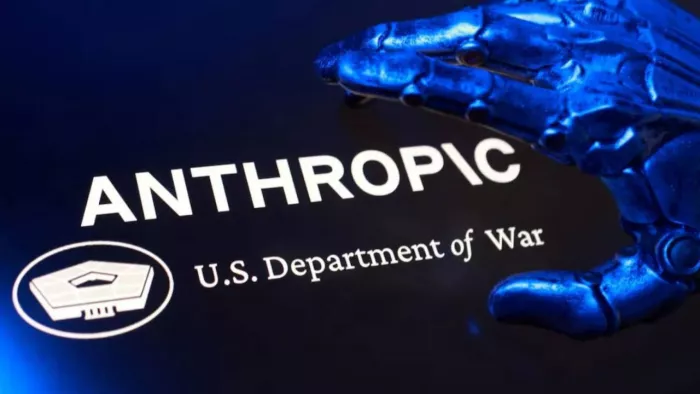
A U.S. federal judge has temporarily blocked actions by the Pentagon that sought to restrict the operations of AI company Anthropic, delivering a significant early victory for the firm in a high-stakes legal battle over artificial intelligence and national security.
Court Rejects Government’s “Crippling” Action
U.S. District Judge Rita Lin ruled that the Pentagon’s attempt to designate Anthropic as a “supply chain risk” and restrict its business dealings likely crossed legal and constitutional boundaries. The judge indicated that the government’s actions appeared punitive and could cause severe financial and reputational damage to the company.
During proceedings, Lin went further, suggesting the move resembled “an attempt to cripple Anthropic,” particularly in response to the company’s stance on limiting the military use of its AI systems.

The ruling halts enforcement of the Pentagon’s measures for now, though it allows the government time to appeal.
What Triggered the Conflict
The dispute stems from Anthropic’s refusal to allow its flagship AI model, Claude, to be used in certain military applications, specifically autonomous weapons and domestic surveillance systems.
Following that refusal, U.S. defense officials labeled the company a national security or “supply chain” risk, a designation that could have forced federal agencies and contractors to stop working with Anthropic altogether.
Such a move carried major consequences. Analysts and court filings suggested it could cost the company billions in lost contracts and effectively cut it off from large segments of the U.S. government ecosystem.
Judge Raises Free Speech Concerns
A central issue in the case is whether the government retaliated against Anthropic for its public stance on AI safety.
Anthropic argued that the Pentagon’s actions violated its First Amendment rights and due process protections, claiming the designation was punishment for opposing certain military uses of AI.
Judge Lin appeared receptive to that argument, noting that dissent from government policy cannot justify branding a company as a national security threat.
The court also questioned why the Pentagon pursued a broad designation instead of simply ending its contractual relationship with the company, suggesting the response may have been excessive.
Broader Stakes for AI and Government Power
The case highlights a growing friction point between AI developers and governments: who controls how advanced systems are used, especially in military contexts.
Anthropic has positioned itself as a safety-focused AI firm, explicitly restricting the use of its models in high-risk scenarios such as lethal autonomous weapons.
The Pentagon, however, has argued that such restrictions could limit operational flexibility and potentially impact national security capabilities.
Judge Lin emphasized that the case is not about determining AI policy itself, but about whether the government acted within the law in responding to a private company’s position.

Industry and Policy Implications
The ruling is being closely watched across the tech sector. It represents one of the first major legal tests of how far the U.S. government can go in regulating or penalizing AI companies based on how their technology is used.
If the Pentagon’s designation had been upheld, it could have set a precedent for excluding companies from federal work based on policy disagreements or ethical constraints.
Instead, the decision signals that courts may limit such actions unless they are narrowly justified and backed by clear evidence.
What Happens Next
The injunction is temporary, and the U.S. government is expected to appeal. A parallel legal challenge involving related restrictions is also ongoing in Washington, D.C.
For now, Anthropic retains its ability to operate and contract without the sweeping limitations the Pentagon attempted to impose.
Final Take
The ruling underscores a critical moment in the evolution of AI governance. As governments seek greater control over powerful technologies, courts are emerging as a key check on how that authority is exercised.
At its core, the case is not just about one company. It is about whether national security concerns can justify broad, potentially punitive actions against private AI developers, and where the legal limits of that power lie.


Comments