3 Marketing Workflows Every Small Business Needs to Grow Online




If you run a small business, you probably feel like you’re juggling a dozen different roles. One minute you’re the CEO, the next you’re the customer service rep, and somewhere in between, you’re trying to act as the entire marketing department.
For many small business owners, marketing feels chaotic because it is chaotic.
However, the solution isn't necessarily hiring more people or buying more expensive software. It's about building repeatable systems.
By establishing clear workflows, you can turn a scattered to-do list into a streamlined engine for growth.
Here is how to organize your marketing efforts into three essential workflows that will save you time and help you scale.
The Missing Layer: Task Management in Modern Marketing
Most small businesses focus heavily on the "doing" part of marketing: writing the post, launching the ad, or hitting publish. But marketing doesn't end when you click "send."
Every campaign generates follow-up work.
Maybe you need to update a landing page, fix a broken link, or refresh old content that’s gaining traction. This is where things often fall apart. Without a dedicated system for tracking these tasks, vital optimization work gets delayed or forgotten entirely.
Effective marketing requires a layer of task management that sits on top of your creative work.
Think about SEO (Search Engine Optimization).
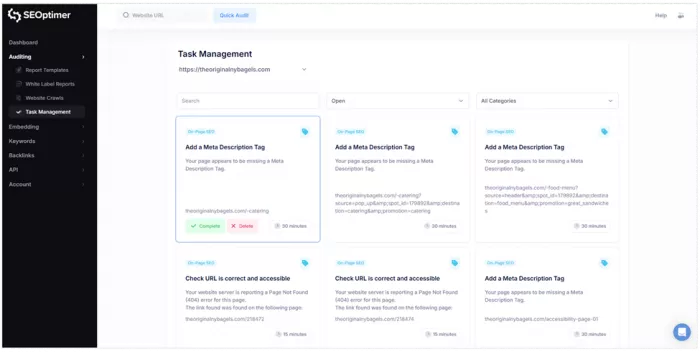
An audit might reveal twenty small issues on your website.
If those issues are just lines on a spreadsheet, they'll likely stay there. But if you use a dedicated SEO task management tool and treat the process as a workflow—where audits turn into clear, actionable tickets—you ensure that improvements actually happen.
By organizing your marketing into workflows, you stop reacting to fires and start building a foundation for consistent growth.
Workflow 1: Content Publishing & Distribution
Consistency is the biggest challenge in content marketing.
It’s easy to post when you’re feeling inspired, but it’s hard to keep it up when business gets busy. A solid publishing workflow removes the guesswork and ensures your message reaches your audience every time.
What this workflow covers
This workflow manages the lifecycle of your content from idea to distribution.
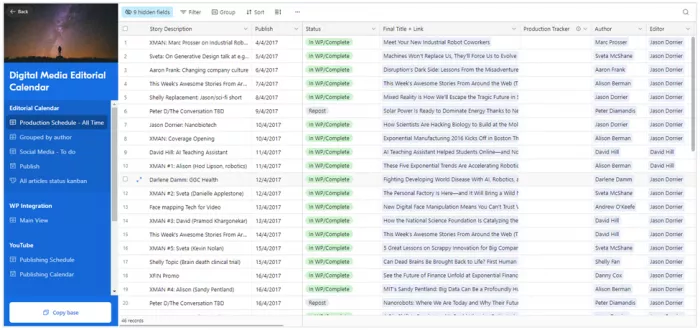
It ensures that every piece of content you create is actually seen by the people who need to see it.
● Planning: Mapping out content ideas in a calendar so you aren't scrambling for ideas on Monday morning.
● Publishing: Scheduling posts across your social platforms (LinkedIn, Instagram, Facebook, etc.).
● Aligning: Ensuring the links in your social profiles actually point to the content you are promoting.
Why it matters
Have you ever clicked a link in a brand's bio, expecting to see a specific product, only to land on a generic homepage? It’s frustrating, and it kills conversions.
A good distribution workflow prevents this "dead end" experience. It ensures that when you launch a campaign, your entire digital presence aligns with it.
● Pro Tip: This is where tools like TieUp.io can save the day. Instead of manually changing your Instagram bio link every time you post, you can manage your links dynamically. This ensures your campaigns stay organized and your traffic always lands exactly where you want it.
Workflow 2: On-Page Optimization
Getting traffic to your site is only half the battle.
Once visitors arrive, you need to make sure they have a great experience.
What this workflow covers
● Landing Page Checks: Regularly reviewing the pages you link to from social media. Do they load quickly? Is the offer clear?
● Usability Fixes: Checking for broken buttons, confusing navigation, or images that don't load.
● Visibility: Ensuring your pages are readable by search engines so you don't miss out on organic traffic.
SEO isn't a "set it and forget it" task. It's an ongoing process.
You might run an audit and discover that your best-selling product page has a slow load time that's hurting your Google rankings.
In a disorganized system, that insight gets lost. In an optimized workflow, that insight becomes a priority task. You log it, assign it, and track it until it's fixed. This systematic approach to on-page optimization ensures that technical issues don't silently sabotage your marketing efforts.
Workflow 3: Performance Review & Ongoing Improvements
The difference between a struggling business and a growing one often comes down to how they make use of the data they have access to.
Do you post content and hope for the best? Or do you look at what happened and learn from it?
What this workflow covers
● Analytics Review: Setting a regular time (weekly or monthly) to look at your numbers. Which posts got the most engagement? Which emails had the highest open rates?
● Pattern Recognition: Identifying why certain campaigns worked. Was it the headline? The image? The time of day?
● Backlog Creation: This is crucial. When you see something that needs improving, don't just make a mental note. Add it to a "backlog" of optimization tasks.
This workflow turns marketing into a cycle of continuous improvement. Instead of constantly reinventing the wheel, you're building on what works.
For example, if you notice that "How-to" guides drive 20% more traffic than other posts, you can create a task to update your content calendar with more educational topics. If you see that mobile visitors bounce quickly, you create a task to investigate your mobile site speed.
The best tools for measuring performance is probably Google Analytics, not just because it is free to use, but because it also offers comprehensive data and insights.
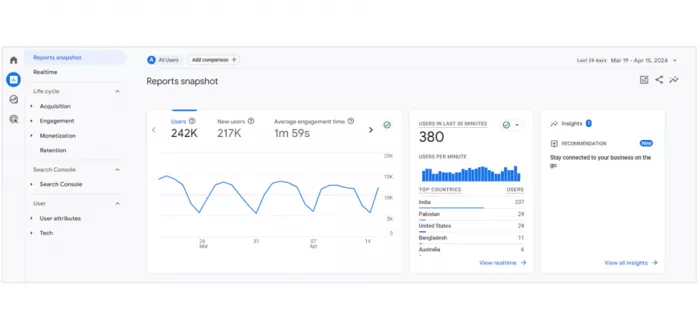
By making performance reviews a standard part of your week, your marketing becomes proactive rather than reactive.
Systems Create Sustainable Growth
Growth doesn't come from a single viral post or a lucky break.
It comes from showing up consistently and delivering value over time.
While it’s tempting to chase the latest marketing trend, the highest ROI often comes from simply getting organized.
When you have clear workflows for publishing, optimizing, and reviewing your work, you remove the chaos from your day-to-day operations.
Implementing these three workflows ensures that:
- Your content reaches your audience reliably.
- Your website is always ready to convert visitors.
- You are constantly learning and improving based on real data.


Comments