Pink Video Chat: A Platform Analysis of Random Video Interaction in the Modern Web




1. Setting the Context
Random video chat platforms occupy a strange but persistent corner of the internet. They tend to resurface in waves—often driven by shifts in social behavior, isolation cycles, or curiosity about unscripted interaction with strangers. Each generation of the web produces its own version of this idea: live, unfiltered video conversations with people you’ve never met, connected instantly and often anonymously.
Pink Video Chat belongs squarely in this category. It presents itself as a live video chat platform designed for spontaneous, one-to-one interaction between users across different locations. Like similar services before it, the appeal lies not in depth or long-term connection but in immediacy—press a button, meet someone new, move on.
The curiosity surrounding platforms like this is rarely about technology alone. It’s social and psychological. What will happen when two strangers are placed face-to-face without context? Will the interaction be friendly, awkward, brief, or uncomfortable? The unpredictability is both the attraction and the risk.
Understanding Pink Video Chat, therefore, requires looking beyond surface descriptions and into how such platforms operate within broader online behavior patterns.
2. What Pink Video Chat Claims to Offer
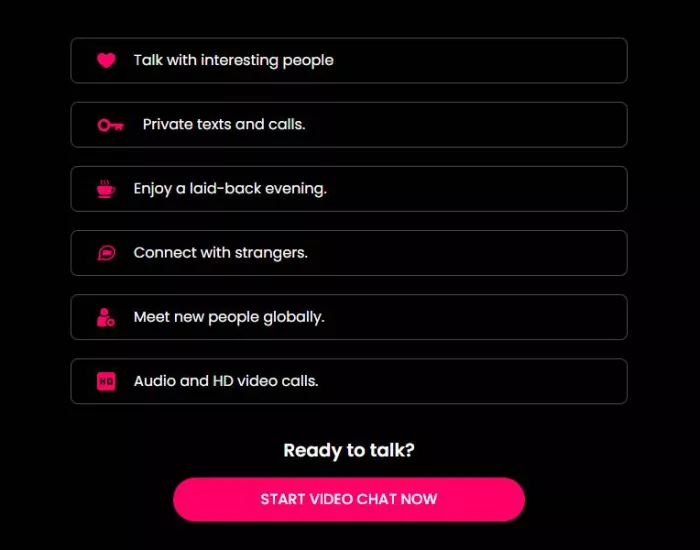
At its core, Pink Video Chat frames itself around instant video-based social interaction. The underlying idea is simple: users are matched randomly with others for live, real-time video conversations. There is no lengthy setup, no requirement to build a profile with extensive personal details, and no long-term commitment implied.
The experience typically follows a predictable flow:
● A user accesses the platform
● Grants camera and microphone permissions
● Is connected with another user
● Either party can end the interaction and move on
What the platform emphasizes is connection without friction. It does not promise relationships, outcomes, or curated matches. Instead, it offers access to chance encounters—brief windows into conversations that may last seconds or minutes.
Importantly, the platform’s framing suggests social discovery, not structured communication. There is no explicit narrative about networking, dating, or community-building. This ambiguity allows users to project their own expectations onto the experience, which partly explains the wide variation in user satisfaction.
3. Platform Experience & Interface
From a usability perspective, Pink Video Chat leans toward minimalism. The interface prioritizes speed over explanation. For first-time users, this can feel both inviting and disorienting.
01. Onboarding flow:
The platform generally avoids complex sign-up processes. Users are often able to start interacting almost immediately, which lowers the barrier to entry. However, this also means that guidance around rules, conduct, or expectations may feel secondary rather than central.
02. Design style:
The visual design is functional rather than expressive. Buttons and prompts are straightforward, but the lack of contextual cues can make the experience feel abrupt. The platform assumes users already understand the mechanics of random video chat, which may not always be the case.
03. Accessibility and devices:
Pink Video Chat is typically accessed through a browser and is usable on both desktop and mobile devices. Mobile access increases convenience but also introduces variability in experience due to camera quality, connectivity, and screen size. Desktop usage tends to feel more stable and controlled.
Overall, the interface supports immediacy but does little to prepare users emotionally or socially for what they might encounter.
4. Pricing Model Explained Clearly
Like many platforms in this category, Pink Video Chat operates on a freemium-style model. Basic access is generally available without payment, while additional controls or extended usage require paid credits or subscriptions.
The pricing structure is not positioned as a traditional subscription service but rather as a usage-based enhancement model—users pay to unlock more control, longer interaction time, or preferred matching conditions.
Pricing Structure Overview
| Plan / Credits | Cost Range | Access Level | Intended User Type |
| Free Access | $0 | Basic random matching | Casual or first-time users |
| Credit Packs | Varies | Extended time or filters | Curious repeat users |
| Premium Tier | Higher cost | Priority or enhanced access | Frequent or goal-driven users |
This structure reflects a common strategy in random chat platforms: allow exploration for free, then monetize control and convenience rather than access itself.
5. Reviews & User Sentiment Analysis
Review sources found-
Because “Pink Video Chat” is a highly ambiguous name across the web, I’m limiting this section to sources that explicitly reference pinkvideochat.com or a clearly associated entry.
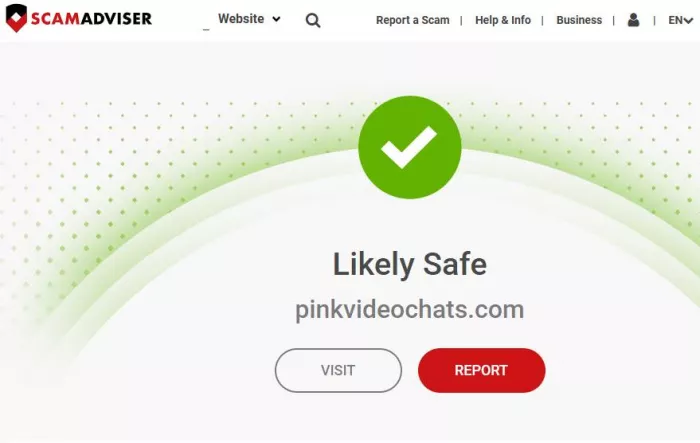
1. Scamadviser:
○ Reports a trust score (76) and shows user ratings aggregated on its page (example: “2 stars” with a small number of reviews).
2. Reddit:
○ Thread asking if pinkvideochat is worth it includes a user claiming good pricing and experiences.
○ Another thread is extremely sparse (“Great” with no detail).
Because other platforms with verifiable, attributable ratings were not found, a cross-platform “average rating” would be mathematically meaningless.
Common positive feedback patterns-
From Reddit anecdotes:
● Some users claim the pricing feels “good” and report finding real people (anecdotal).
Common negative complaints-
Not enough verifiable review volume tied to pinkvideochat.com to claim patterns like bots, billing abuse, or moderation failures as “common.”
● Scamadviser’s low user rating can indicate dissatisfaction, but the page alone does not provide a robust breakdown of complaint categories.
6. Safety, Moderation & User Responsibility
Safety is a central concern for all random video chat platforms, and Pink Video Chat is no exception.
The platform typically provides:
● Basic reporting mechanisms
● The ability to disconnect instantly
● Limited moderation controls
However, moderation in live, anonymous video environments is inherently reactive rather than preventative. This places a significant degree of responsibility on users themselves.
General risks include:
● Exposure to unpredictable behavior
● Uneven enforcement of conduct standards
● Emotional discomfort due to lack of filtering
This does not make the platform inherently unsafe, but it does require users to approach it with awareness and boundaries. The ability to exit an interaction quickly is one of the most important safety features in this category.
7. How Pink Video Chat Compares Conceptually
| Platform | Pricing | User verification / sign-in | Safety / moderation | Trust level |
| Pink Video Chat | Coin-based private sessions: 120 coins/min (indexed snippet tied to domain) | Claims “user verification” but no verifiable mechanism description | Claims 24/7 moderation + reporting, but no accessible rules/policy text | Lower (documentation gap): legal/operator transparency not verifiable |
| OmeTV | Not established here | Mentions email verification on site | Rules page describes user reports reviewed 24/7, screenshots with reports, and auto-bans for multiple complaints | Higher: published rules + described enforcement workflow |
| Chatroulette | Free (per their positioning; detailed monetization not used here) | Not established here | States content is moderated by AI + humans; “adults only” | Medium–Higher: explicit moderation statement + adult-only rules |
| CooMeet | Published subscription pricing page (example: ~$9.99 1-month, etc.) | Not established here | Not established here from primary sources in this dataset | Medium: clear pricing page, but moderation/verification not verified here |
| LuckyCrush | Third-party review states ~$1.20/min after free minutes (DatingScout) | Not established here | Not established here from primary sources in this dataset | Medium: strong brand presence, but pricing here is third-party |
| ChatHub | Claims “Free Forever” (no hidden fees) | Not established here | Publishes community guidelines and report/block references | Medium–Higher: has guidelines + explicit reporting mentions |
8. Who This Platform Is and Is Not For
Likely suitable for:
● Users curious about spontaneous interaction
● People comfortable with unpredictability
● Short-term, low-commitment engagement seekers
Likely unsuitable for:
● Users seeking structured conversation or community
● Those uncomfortable with anonymity
● People expecting consistent or meaningful outcomes
The platform’s value depends heavily on alignment between expectation and reality.
9. Final Perspective
Pink Video Chat represents a familiar idea executed with minimal framing: live, random video interaction without promises. It neither hides its limitations nor compensates for them with narrative or structure.
As with many platforms in this niche, its success depends less on technical execution and more on user expectation management. Those who approach it as an experiment in spontaneity are more likely to find it acceptable. Those seeking connection, structure, or reliability may leave disappointed.
Rather than labeling it as good or bad, it is more accurate to see Pink Video Chat as a reflection of a particular kind of online curiosity—one that values immediacy over depth and chance over control.
For readers researching before using it, the most important takeaway is simple: understand what the platform is designed to offer, and decide whether that aligns with what you are actually looking for.


Comments