Real-Time Streaming: Assessing Quality in Live Dealer Software



The Intersection of Streaming Tech and Traditional Gaming
The landscape of the iGaming industry has undergone a significant transformation over the last decade. While Random Number Generator (RNG) based titles—such as slots and automated table games—remain a staple, the technological focus has increasingly shifted toward live dealer solutions. This sector combines high-definition video streaming with complex data integration, creating a hybrid product that bridges the gap between brick-and-mortar establishments and digital interfaces.
For developers and platform aggregators, this shift presents unique challenges. Unlike static software, which relies entirely on mathematical models running in the background, live dealer games require a synchronization of physical actions, optical recognition, and digital overlays. Evaluating these products requires a distinct set of criteria, moving beyond simple aesthetics to assess the robustness of the underlying infrastructure.
Technical Architecture of Live Studios
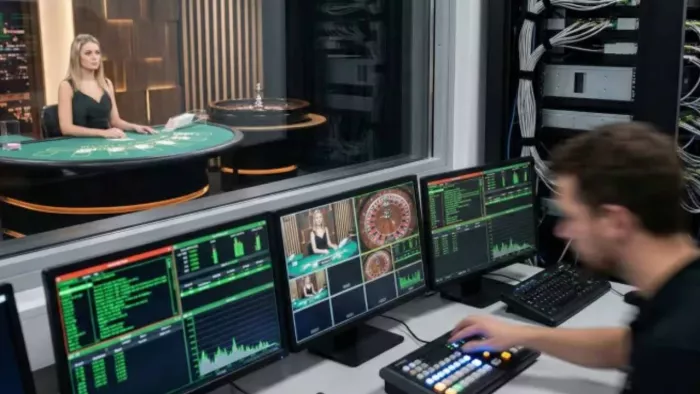
To understand the quality variances between providers, one must look at the hardware and software stack that powers these games. A standard live casino studio is not merely a film set; it is a data-processing hub.
The Game Control Unit (GCU)
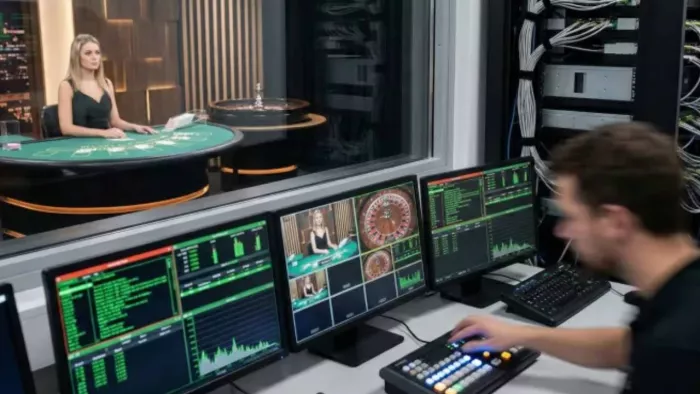
Every table in a professional studio is equipped with a Game Control Unit (GCU). This device is arguably the most critical component of the entire operation. It encodes the video data that is broadcast to the user’s device. However, its role extends beyond video encoding. The GCU acts as the bridge between the physical equipment (wheels, cards, dice) and the software interface on the player's screen. Without a high-performance GCU, the latency between the dealer’s action and the digital result would render the game unplayable.
Optical Character Recognition (OCR)
The seamless integration of physical cards into a digital UI is achieved through Optical Character Recognition (OCR) technology. As cards are dealt, or a ball lands in a roulette pocket, sensors and cameras track the movement and values. The OCR software converts this visual data into digital information instantly.
This data transfer allows the system to overlay the results on the screen, resolve bets, and update the game history in milliseconds. When analyzing the quality of a provider, the speed and accuracy of this OCR technology are paramount. Inferior systems result in "missed scans" or delays, which disrupt the game flow and erode trust in the platform's fairness.
Distinguishing RNG Models from Live Probabilities
A fundamental difference between standard online games and live dealer variations lies in how outcomes are generated. This distinction is crucial for anyone studying the mechanics of the industry.
Theoretical Return vs. Physical Probability
In slots and automated tables, the Return to Player (RTP) is dictated by a complex algorithm known as a Pseudo-Random Number Generator (PRNG). The volatility is hard-coded into the math model. Conversely, live dealer games—specifically Blackjack, Baccarat, and Roulette—rely on physical probabilities. While they still have a theoretical RTP, the outcome is determined by mechanical physics (the shuffle of a deck or the spin of a wheel) rather than a line of code.
However, the "Game Show" genre, which has gained traction recently, introduces a hybrid model. These games often utilize a physical money wheel combined with digital bonus rounds that are governed by RNG. This fusion allows developers to introduce high-volatility mechanics, similar to slots, into a live streaming environment. This complexity makes the task of standardizing a casino review rating much more intricate, as analysts must weigh the transparency of the physical elements against the certified fairness of the digital RNG segments.
User Interface and Bitrate Optimization
The user experience (UX) in live gaming is heavily dependent on the quality of the stream. Unlike video on demand (VOD) services like Netflix, which can buffer content, live gaming requires real-time data transmission with near-zero latency.
Adaptive Bitrate Streaming
Top-tier providers utilize adaptive bitrate streaming to ensure stability across various devices and network conditions. The software detects the end-user's bandwidth and adjusts the video quality automatically. A high-quality platform will prioritize the data stream (the outcome of the game) over the video stream if the connection drops. This ensures that even if the video freezes, the game state remains accurate and the user can see the result of the round.
UI Overlays and Mobile Responsiveness
The challenge for UI designers is the limited screen real estate, particularly on mobile devices. The interface must display the video feed, the betting grid, game history statistics, and chat functions simultaneously.
Superior interface design is characterized by:
- Non-intrusive Overlays: Betting options that appear over the video feed only when bets are open.
- Multi-Camera Angles: Giving the user control over the viewing perspective without lagging the stream.
- Chroma Key Technology: Using green screens to create immersive, 3D environments that blend seamlessly with the physical table.
Regulatory Standards and Fairness
Trust is the currency of the iGaming sector. Because live games involve human interaction, the potential for error—or perceived manipulation—is higher than in automated software. Consequently, the regulatory requirements for live studios are stringent.
Compliance Audits
reputable studios operate under licenses from bodies such as the UK Gambling Commission (UKGC) or the Malta Gaming Authority (MGA). These licenses mandate rigorous auditing. Auditors do not just check the software; they inspect the physical equipment. Roulette wheels are tested for bias (e.g., ensuring the wheel is perfectly level), and card shufflers are analyzed to ensure randomness.
Studio Transparency
High-quality providers often implement features to prove the content is live. This can include visible clocks or news channels playing in the background. Furthermore, the presence of a "Pit Boss" who manages disputes on camera adds a layer of operational legitimacy similar to land-based operations.
The Future of Hybrid Gaming Interfaces
Looking ahead, the industry is moving toward even greater integration of emerging technologies. Augmented Reality (AR) is already being used to create "imposing" digital characters that interact with live hosts.
Furthermore, we are seeing a trend toward "Dual Play" tables, which are located on the floor of actual land-based resorts but are wired for online play. This convergence requires sophisticated networking to handle the simultaneous inputs of physical players at the venue and thousands of online participants.
Evaluating these platforms requires a deep understanding of network infrastructure, video compression standards, and game theory. As the technology evolves, the metrics for success will continue to shift from simple availability to the depth of the immersive experience and the reliability of the technical backbone.


Comments