Stop Updating Your Bio Link Randomly, Build a System Instead



Most creators don’t realize this, but the bio link is one of the few places where attention actually turns into action. Someone watches your content, gets curious, clicks your profile, and then clicks your bio. That moment is not casual. It is intent. And intent is rare. Yet, what happens next is usually disappointing.
The link they expected is gone. The offer they came for is missing. The page feels like a random collection of buttons with no clear direction. Within seconds, they leave. This is not a content problem. It is a system problem.
Updating your bio link randomly every time you post feels productive, but in reality, it breaks continuity, kills conversions, and makes your entire content ecosystem weaker than it should be. The solution is not to update less. The solution is to build a system that does not rely on constant updates in the first place.
Why Random Bio Link Updates Quietly Hurt Your Growth
At a surface level, changing your bio link seems harmless. You post something new, you update the link to match it. That feels logical. But the deeper issue is how content actually behaves over time.
Your posts are not temporary. A Reel, a carousel, or a tweet can continue generating profile visits for days, weeks, or even months. People discover your content at different times, with different expectations.
When your bio link keeps changing, you create a mismatch between intent and destination.
Here is what typically happens:
● A user watches an older post and clicks your bio expecting a specific resource
● The link now points to something completely different
● The user does not search further, they simply drop off
This creates a hidden loss across your entire content library.
| Behavior | Immediate Outcome | Long-Term Impact |
| Changing link after every post | Visitors land on irrelevant pages | Lower trust and repeat visits |
| No structure in links | Users feel confused | Reduced click-through and engagement |
| Removing old links quickly | Late visitors miss value | Wasted evergreen content |
| No tracking system | You rely on guesswork | Poor decision-making |
The key takeaway is simple. Content compounds over time, but random link updates break that compounding effect.
The Bio Link Is Not a Link, It Is a Routing System
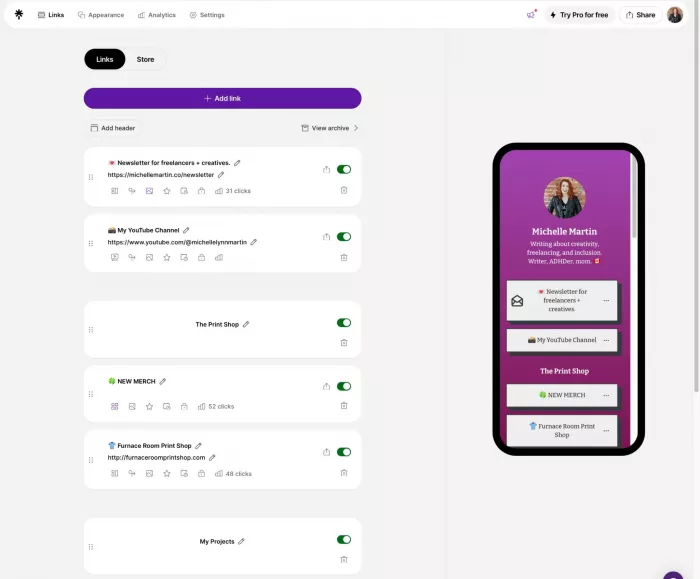
Most people think of the bio link as a destination. In reality, it should function more like a routing system.
Every visitor who clicks your bio comes with a different level of awareness and intent:
● Some are discovering you for the first time
● Some are looking for something specific mentioned in your content
● Some are ready to take action like buying, subscribing, or booking
● Some just want to explore more
A single random link cannot serve all these users effectively.
A structured system, however, can guide each type of visitor toward the right next step without friction. This is where most creators and businesses miss the opportunity. They optimize for “what I posted today” instead of “what the visitor needs right now.”
The Shift That Changes Everything
Instead of asking:
“What link should I put in my bio today?”
You should be asking:
“What paths should exist in my bio for different types of visitors?”
This shift moves you from reactive behavior to intentional design. A strong bio link system is built around stable pathways, not temporary links.
Understanding Visitor Intent Before Building Anything
Before you structure your bio link, you need to understand why people are clicking it in the first place.
Most bio link traffic falls into a few predictable intent categories.
| Visitor Type | What They Are Thinking | What They Need |
| New visitor | “Who is this?” | About page, best content, overview |
| Content-driven visitor | “Where is that thing mentioned?” | Direct resource or related hub |
| Warm follower | “Can this help me?” | Guides, use cases, value content |
| High-intent user | “I want to take action” | Product, service, booking, pricing |
| Curious explorer | “What else is here?” | Organized content hub |
If your bio link treats all these users the same, you create friction. If you build paths for each type, you create flow.
The Core Structure of a Bio Link System
A well-built bio link system is not about adding more links. It is about organizing them with clarity and purpose.
Most effective systems follow a layered structure.
1. The Primary Action (Top Priority)
This is the most important thing you want users to do right now. It could be a free resource, a product, a webinar, or a service.
This should always be clearly visible and easy to access.
2. The Context Layer
This helps new visitors understand what you do and why they should care. Without this layer, first-time visitors feel lost.
3. The Value Layer
This includes your best content, guides, or educational resources. It builds trust and keeps users engaged.
4. The Conversion Layer
This is where high-intent users take action, such as buying, booking, or contacting you.
5. The Relationship Layer
This captures long-term audience value through newsletters, communities, or subscriptions.
Here is how this structure looks in practice:
| Layer | Example | Purpose |
| Primary | “Download Free Content Strategy Guide” | Capture immediate action |
| Context | “Start Here: What I Do and How I Help” | Orient new visitors |
| Value | “Explore Growth Guides and Resources” | Build trust |
| Conversion | “Work With Me” or “View Services” | Generate revenue |
| Relationship | “Join Weekly Newsletter” | Build long-term audience |
This structure ensures that every type of visitor finds a relevant path without confusion.
Stop Replacing Links, Start Building Content Hubs
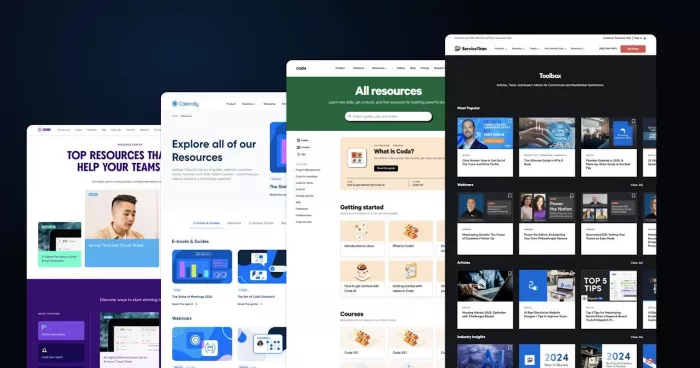
One of the most effective ways to eliminate random updates is to use content hubs.
A content hub is a stable destination that groups related resources together. Instead of linking every post to a different page, you direct users to a hub that evolves over time.
For example, instead of changing your bio link every time you post about Instagram growth, you create a single “Instagram Growth Hub” that includes:
● Guides and tutorials
● Case studies
● Templates or tools
● Related videos or posts
● A relevant offer or service
This approach solves multiple problems at once:
● Older content remains relevant
● New content fits into an existing structure
● Users get a better, more complete experience
● You reduce the need for constant updates
It also improves conversions because users are not landing on isolated pages. They are entering a structured environment designed to guide them.
Every Link Must Have a Clear Job
A common mistake is adding links without defining their purpose. A strong bio link page is not a collection of links. It is a collection of decisions.
Before adding any link, ask:
● Does this link help users take the next step?
● Does it reduce confusion or create it?
● Is it aligned with my current goal?
Links should serve specific roles, such as:
● Driving conversions
● Building trust
● Educating users
● Capturing leads
● Supporting navigation
If a link does not serve a clear role, it becomes noise.
How to Prioritize Links Without Overloading the Page
One of the biggest challenges is deciding what appears first.
A practical way to approach this is to rank links based on impact and intent.
| Priority Level | Type of Link | Why It Matters |
| High | Current campaign or offer | Drives immediate results |
| Medium | Educational or trust-building content | Warms up users |
| Medium | Lead capture (newsletter, freebie) | Builds future value |
| Low | Secondary links or social platforms | Supports but does not drive core action |
Important points to keep in mind:
● The top 1 to 2 links should do most of the work
● Do not give equal importance to every link
● Avoid overwhelming users with too many choices
A smaller, structured list almost always outperforms a long, unorganized one.
Tracking Turns Your Bio Link Into a Growth Engine
Without tracking, your bio link is just a static page. With tracking, it becomes a feedback system.
You should track not just clicks, but outcomes.
● Which links are getting the most clicks
● Which links are leading to conversions
● Which platforms are sending the best traffic
● Where users drop off
| Metric | Insight | Action |
| High clicks, low conversions | Interest without clarity | Improve messaging or landing page |
| Low clicks, high conversions | Hidden value | Increase visibility |
| High traffic from one platform | Strong channel | Double down on that content |
| Low engagement overall | Weak structure | Simplify and reorganize |
This data helps you refine your system over time instead of relying on assumptions.
The Maintenance Rule Most People Ignore
A system does not eliminate updates. It makes them intentional.
Instead of updating your bio link every day, you should review it on a schedule.
During each review:
● Check if the top link still matches your current goal
● Remove outdated or irrelevant links
● Analyze performance data
● Improve clarity and structure
Key principle:
● Update campaigns frequently
● Keep the overall structure stable
This balance allows you to stay relevant without creating chaos.
Final Perspective
The bio link is not a small detail. It is a critical layer between attention and action.
When you update it randomly, you treat every visitor the same and ignore their intent. When you build a system, you guide each visitor toward the right outcome. The difference is not cosmetic. It directly affects conversions, trust, and long-term growth.
So instead of thinking of your bio link as something you need to “keep updating,” start thinking of it as something you need to design properly once and improve over time. Because the goal is not to keep changing your link. The goal is to make every click count.


Comments