Why Modern Creators Are Building Systems Instead of Audiences



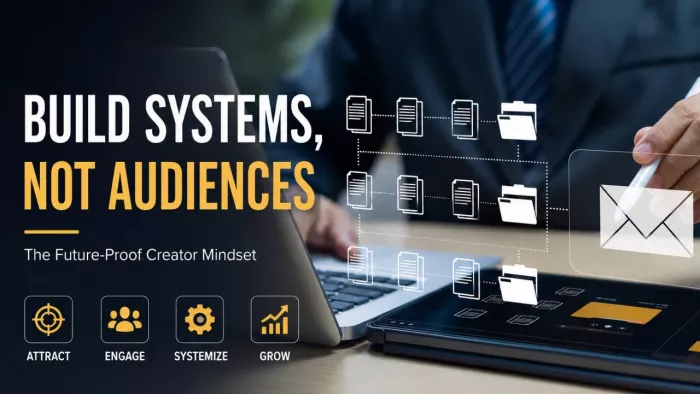
The creator economy once rewarded visibility above almost everything else. More followers meant more leverage, more sponsorships, and more reach. That logic is changing. In 2026, many successful creators are no longer treating audience growth as the main goal. They are building systems that can capture attention, distribute content, convert trust into revenue, and survive platform changes.
This shift is not about abandoning audiences. It is about refusing to depend entirely on rented attention. A creator with only followers is exposed to algorithms, burnout, and unstable reach. A creator with systems owns infrastructure that keeps working even when platforms change.
The Old Creator Model Was Built Around Attention
For years, the creator playbook was simple: post consistently, grow followers, and monetize later. That model worked when organic reach was easier to maintain and platforms rewarded frequency aggressively. But the system had a flaw. It confused visibility with ownership.
A creator could have hundreds of thousands of followers and still have no direct relationship with them outside the platform. Viral content could generate attention without building a long-term business. Many creators became highly visible but structurally fragile.
That is why more creators now feel trapped in a cycle of constant posting with unstable returns. They are producing more content while feeling less secure.
| Old Creator Model | Modern Creator System |
| Audience-first | Infrastructure-first |
| Platform dependent | Multi-channel |
| Monetization comes later | Monetization built into the workflow |
| Content is the main asset | Content, products, email, and community are assets |
| Growth is reactive | Growth is structured |
Why Audience Alone Is No Longer Enough
Audience size still matters, but it is no longer the strongest indicator of creator stability. The real question is not how many people follow a creator. It is what happens after someone discovers them.
That is where systems matter. Many creators lose value because discovery never turns into ownership. Someone watches a video, likes a post, and disappears into the feed again. There is no deeper relationship layer.
Modern creators are solving this by building systems around four functions:
● Discovery: Bringing new people through search, social platforms, collaborations, and referrals.
● Capture: Moving audiences into owned channels like newsletters or communities.
● Trust: Building authority through consistency and expertise.
● Conversion: Turning attention into products, memberships, services, or subscriptions.
This is the difference between being visible and being durable.
The Rise of Creator Infrastructure
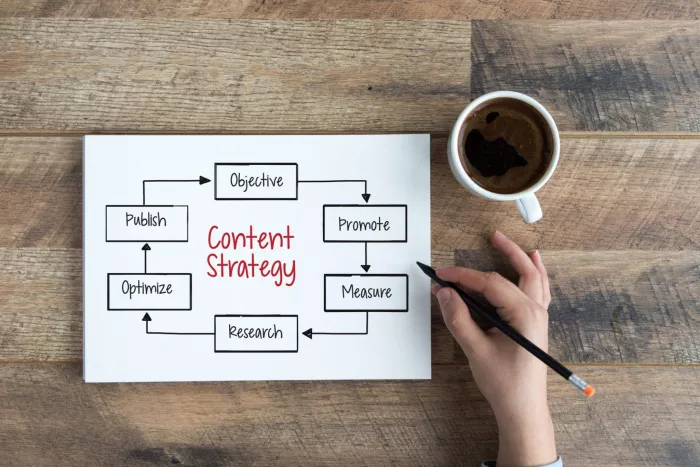
Creator infrastructure is the invisible layer behind modern creator businesses. It includes workflows, automations, email systems, reusable templates, analytics, product funnels, and community platforms. These elements may not look glamorous from the outside, but they create stability.
The most serious creators are now operating more like small media companies than influencers. Instead of only asking what content to post next, they are thinking about operational efficiency and long-term positioning.
They are asking smarter questions:
● Which content formats bring qualified attention instead of empty reach?
● Which channels deepen trust?
● Which workflows can be automated without reducing quality?
● Which products fit naturally with audience needs?
● Which assets continue producing value months after publication?
Creators are no longer simply publishing. They are designing ecosystems.
Systems Reduce Platform Risk
Every creator eventually learns the same lesson: platforms are useful, but they are unpredictable. Algorithms shift. Reach declines. Formats change. Entire platforms can become unstable. A creator who depends on one platform is vulnerable to decisions they cannot control.
Systems reduce that dependency by spreading value across multiple assets.
| Risk | Creator Without a System | Creator With a System |
| Algorithm change | Reach collapses quickly | Email and community remain accessible |
| Slower growth | Revenue becomes unstable | Evergreen assets continue working |
| Sponsorship decline | Income drops sharply | Multiple revenue streams reduce pressure |
| Burnout | Output stops completely | Templates and workflows maintain consistency |
| Platform restriction | Business may disappear | Owned assets preserve continuity |
The goal is not to leave platforms. Platforms remain important discovery engines. The real shift is that creators no longer want the platform to be the entire business.
The New Creator Asset Is the Workflow
The strongest creators today are often not the people posting the most content. They are the people with the cleanest workflows.
A strong workflow allows a creator to turn one idea into multiple valuable assets. A podcast becomes clips, newsletters, articles, short videos, and product insights. A long-form article becomes a Twitter thread, LinkedIn post, community discussion, and email sequence. This is why systems matter. They stop content from becoming disposable.
Instead of asking, “What should I post today?” creators are increasingly asking, “How does this idea move through the system?”
| Stage | Purpose | Example Output |
| Research | Understand audience needs | Notes, saved questions, market insights |
| Creation | Produce core content | Videos, essays, podcasts |
| Distribution | Adapt content for platforms | Shorts, threads, carousels |
| Capture | Build owned relationships | Email signup, community invite |
| Monetization | Match trust with offers | Courses, templates, memberships |
| Feedback | Improve future content | Surveys, analytics, replies |
The best workflows usually focus on three ideas:
● Repurposing instead of constant reinvention.
● Evergreen content that compounds over time.
● Consistency driven by systems rather than motivation alone.
Systems Help Creators Escape the Content Treadmill

One of the biggest hidden problems in the creator economy is the content treadmill. Every post feels temporary. If the creator stops publishing, attention fades immediately.
Systems change that equation. Evergreen articles continue bringing traffic. Email sequences nurture audiences automatically. Communities create ongoing conversations. Templates reduce creative exhaustion. Analytics reveal which ideas deserve deeper investment. This does not remove effort. It makes effort reusable.
Creators escaping the treadmill usually build:
● Long-form content pillars that generate multiple short-form assets.
● Searchable archives of evergreen content.
● Automated onboarding systems for newsletters and communities.
● Reusable production templates.
● Feedback loops through analytics and audience responses.
A creator with a system is not starting from zero every day. They are improving an existing machine.
Why Owned Channels Matter More Than Ever
Owned channels are becoming the foundation of serious creator businesses. Email lists, websites, private communities, and customer databases give creators direct access to their audience without depending entirely on algorithms. Social platforms are excellent for discovery. Owned channels are where trust deepens.
An email subscriber is usually more valuable than a casual follower because the creator controls communication. A community member is more valuable than a passive viewer because they actively participate and provide insight.
That is why many creators now see social media as the top of the funnel rather than the whole funnel.
AI Is Accelerating the Shift Toward Systems
AI has made content creation faster, but that has also made generic content easier to produce. The advantage is no longer simple output. The advantage is judgment and structure. The best creators are using AI to strengthen workflows rather than replace thinking.
Instead of mass-producing low-quality posts, they are using AI for:
● Research summarization and idea organization.
● Repurposing long-form content into platform-specific formats.
● Audience feedback analysis.
● Content planning and workflow management.
● Building searchable internal knowledge systems.
AI increases speed, but systems determine whether that speed creates value.
The Business Model Is Expanding Beyond Sponsorships
Sponsorships still matter, but many creators no longer want them to be the foundation of the business. Sponsorship revenue depends heavily on platform performance, advertising budgets, and market conditions.
That is why creators are building layered monetization systems instead of relying on one income source.
| Revenue Layer | Why It Matters |
| Sponsorships | Useful but often inconsistent |
| Digital products | Scalable and creator-owned |
| Memberships | Creates recurring revenue |
| Consulting | High-value monetization for expertise |
| Courses | Converts knowledge into structured learning |
| Templates and toolkits | Turns workflows into products |
The strongest creator businesses combine multiple revenue layers that align naturally with audience trust.
Communities Are Replacing Passive Audiences
An audience watches. A community participates. That distinction is becoming central to modern creator strategy. Communities create stronger retention, deeper loyalty, and better feedback loops than passive audiences alone.
They also help creators understand audience problems in a more detailed way. Comments provide signals, but communities provide context. People share frustrations, ask detailed questions, and reveal patterns that can shape future products and content.
The best creator communities are usually built around transformation rather than personality alone:
● Fitness creators help audiences become healthier.
● Business creators help professionals grow revenue.
● Writing creators help people communicate more effectively.
● AI creators help audiences improve workflows and productivity.
The creator may attract attention, but the system keeps people engaged.
Personal Brand Is Becoming More Structured
Personal branding is no longer just about aesthetics or visibility. Increasingly, it is about consistency and trust architecture. Strong creators make every part of their ecosystem reinforce the same promise. Their content, products, newsletters, and communities all support a clear positioning.
A weak creator brand feels random. A system-led creator feels focused.
The most effective creators know:
● Who they serve.
● What problems they solve.
● Which formats best communicate expertise.
● Which channels build long-term trust.
● How each product fits inside the larger ecosystem.
That clarity makes creators more memorable and more credible.
Final Takeaway
Modern creators are not building systems because audiences no longer matter. They are building systems because audiences matter too much to leave entirely inside platforms they do not control.
The future belongs to creators who can combine attention with infrastructure. They will still publish content, build communities, and grow visibility. But behind the scenes, they will also own channels, organize knowledge, diversify revenue, and create assets that continue working over time.
The creator economy is not moving away from creativity. It is moving away from improvisation. The creators who thrive over the next decade will not simply be the people with the biggest audiences. They will be the people with the strongest systems behind them.


Comments