Global Intelligence Agencies Warn AI Could Enable Automated Cyberattacks at Scale



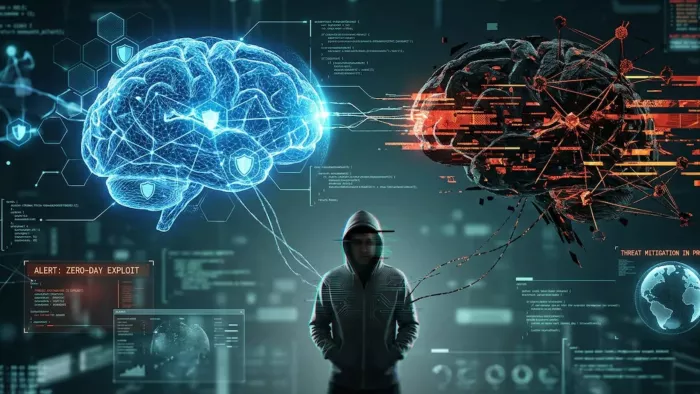
The same technology driving breakthroughs in medicine and science is poised to reshape digital conflict, compressing attacks that once took weeks into a matter of minutes, security officials caution.
A growing chorus of intelligence agencies is sounding the alarm over a fast-approaching shift in the digital battlefield: the prospect of cyberattacks that can plan, adapt, and strike with little or no human direction. In a series of recent assessments, security officials warn that artificial intelligence is steadily lowering the barrier to entry for malicious actors while dramatically increasing the speed and scale at which they can operate.
The concern is not science fiction, analysts stress. It is an extrapolation of capabilities already visible today. What once required a skilled team working over days or weeks can increasingly be delegated to software that learns and improves on its own with each iteration. Such a crew once had to map a target's network and hunt for its weaknesses before crafting tailored intrusions.
From Manual Craft to Machine Speed
For most of the internet's history, serious cyberattacks have been bottlenecked by human effort. Reconnaissance and social engineering demanded expertise that was relatively scarce, as did the painstaking work of finding and exploiting software flaws. That scarcity acted as a kind of natural brake on the volume of sophisticated threats.
AI threatens to release that brake.
Modern systems can scan vast amounts of code for vulnerabilities. They generate convincing phishing messages tailored to a specific person's writing style and automate the trial-and-error process of breaking into a system. Tasks that once filtered out all but the most capable attackers are becoming accessible to a far wider pool.
"The worry is less about a single dramatic breach and more about the sheer multiplication of attempts," one security analyst familiar with the assessments explained. A lone operator, the thinking goes, could soon orchestrate hundreds of simultaneous campaigns that would previously have required an entire organization.
The Rise of "Agentic" Threats
Particularly unsettling to officials is the emergence of so-called agentic AI. These are systems that can pursue a goal across multiple steps without waiting for human instructions at each stage. In a defensive context, such tools can patch software or hunt for intruders around the clock. In the wrong hands, the same autonomy could power malware that probes a network and decides how to move through it, adjusting its tactics in real time when it encounters resistance. Traditional defenses are often tuned to recognize known patterns of attack. An adaptive, self-directed adversary that rewrites its own approach on the fly could slip past those signatures, forcing defenders into a perpetual game of catch-up.
The compression of time is a recurring theme in the warnings. Where defenders might once have had days to detect and respond to an intrusion, an automated attack could complete its objective before a human analyst has even noticed something is wrong.
Critical Infrastructure in the Crosshairs
Among the most acute fears is the potential targeting of critical infrastructure: the power grids, water systems, hospitals, financial networks, and communications backbones that modern life depends on. These systems are often built on aging technology that is difficult to update, making them attractive targets for adversaries who can now search for weaknesses at machine speed.
Officials also point to the blurring line between cyberattacks and information warfare. The same generative tools that write malicious code can also fabricate documents and clone voices. They can flood targets with fake messages, allowing a single intrusion to be paired with a campaign of manipulation designed to sow confusion or erode public trust.
A Double-Edged Sword
For all the alarm, experts are careful not to paint a one-sided picture. The same capabilities that make AI dangerous in the hands of attackers also make it a powerful ally for defenders. Automated systems can sift through mountains of network traffic to spot anomalies no human could catch. They identify and close vulnerabilities before they are exploited, then respond to incidents in seconds rather than hours.
The future, many believe, will be defined not by AI versus humans but by AI versus AI, an accelerating contest in which both sides deploy increasingly autonomous tools. Some specialists caution against overstating the threat, noting that hype can outpace reality and that many of the most feared scenarios remain, for now, demonstrations rather than widespread practice.
Still, the prevailing view among those issuing the warnings is that preparation cannot wait for the threat to fully materialize. The advantage, they argue, will go to whoever adapts fastest.
What Comes Next
The recommendations emerging from these assessments tend to converge on a handful of themes. Governments and companies are being urged to invest heavily in AI-driven defense and to design systems that are secure from the ground up rather than patched after the fact. They are also pressed to build the international cooperation that cross-border threats demand. There are growing calls for guardrails on the most capable AI models, to make it harder for them to be repurposed for harm.


Comments