
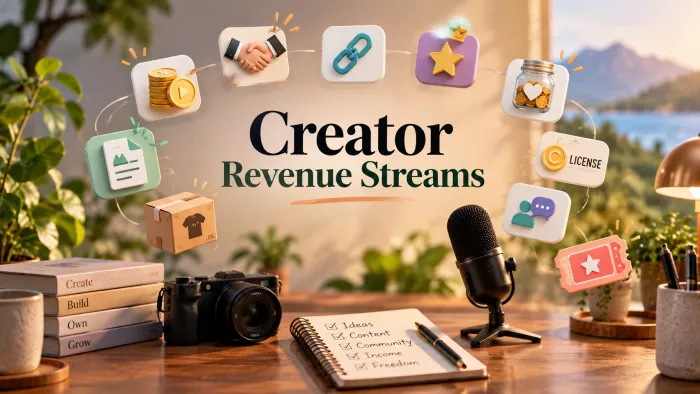
Most creators don't have an income problem. They have a dependency problem and fixing it is less about adding more money and more about controlling the money you already make.
Here's the uncomfortable truth behind a lot of "full-time creator" stories: the income looks healthy right up until a platform changes a rule, an algorithm cools off, or one big sponsor walks. A single switch flips and the whole thing goes quiet.
So the goal was never to collect all ten streams like trophies. The goal is to understand who's actually paying you for each one and how easily they could stop. Sort the ten that way and the list turns into something more useful: a map of how to go from income you rent to income you own.
Who's Actually Paying You?
Every dollar a creator earns comes out of one of four wallets. They're ordered here from the most fragile to the most durable, and that order is the whole point of this article.
● Rented attention : other businesses pay to reach the audience you built. It's the fastest money to turn on and the easiest to lose, because you control neither the rates nor the rules.
● Direct fan support : your audience chooses to pay you out of their own pocket. The numbers are smaller, but this money is far harder for anyone to take away.
● Products you own : you build an asset once and sell it many times. Slow to start, but the margins and the control are the best in the business.
● Expertise for hire: you sell the skill your content proves you have. The highest hourly value, but it trades your time directly for money.
Rented vs. Owned : the one idea to keep in your head
Rented income is quick to start and quick to vanish. Owned income is slow to build and nearly impossible to lose. Neither is "bad" you need the fast stuff while the durable stuff is still growing.
But as you read the ten below, keep asking one question: if my biggest platform disappeared tomorrow, how much of this would survive? That single test tells you where to point your energy next.
Wallet 1 : Rented Attention
1. Advertising Revenue
Ownership: Low
Effort: Low
Audience needed: Large
This is the platform paying you a cut for the ads it runs against your videos, articles, or podcasts. It feels like free money, because you'd be posting anyway and that's exactly why creators overrate it.
Ad revenue is the most rented income there is. You don't set the rates, you don't own the relationship, and the payout per view can be halved overnight by a decision made in a room you'll never sit in. Treat it as a nice floor under everything else, never the thing you build a career on.
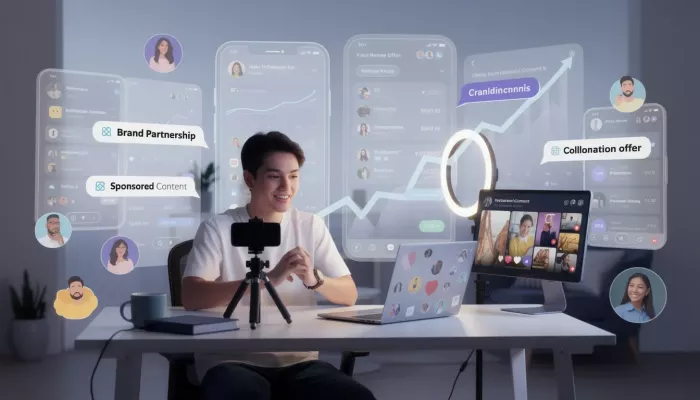
2. Sponsorships & Brand Partnerships
Ownership: Low
Effort: Medium
Audience needed: Medium
A brand pays you to put their product in front of your people. For most mid-sized creators this is the single biggest line on the income statement, and the good news is it doesn't need a huge following it needs a trusting one.
Deals get priced on engagement and niche far more than raw follower count. A woodworking channel with 40,000 genuinely invested subscribers can out-earn a general lifestyle account ten times its size. The catch is credibility: every mismatched sponsor you take spends a little of the trust that made you worth sponsoring in the first place.
3. Affiliate Marketing
Ownership: Low–Medium
Effort: Low
Audience needed: Any size
You recommend something, someone buys through your link, you earn a commission. Unlike a sponsorship, nobody pays you up front you get paid on results, which means a single well-placed recommendation can quietly earn for years.
Affiliate income rewards recommendation quality, not audience size, so it's one of the few streams a small creator can start today. The only real trap is the obvious one: push gear you don't actually use and your audience smells it instantly, and you've traded long-term trust for a short-term cut.
Wallet 2 : Direct Fan Support
Your audience chooses to pay you. Smaller numbers, far more durable.
4. Memberships & Subscriptions
Ownership: Medium
Effort: High
Audience needed: Medium
Fans pay a recurring fee for something extra early access, a community, bonus content, a sense of being on the inside. This is where the old "1,000 true fans" idea earns its keep: a thousand people paying you a few dollars a month is a real salary, and it arrives whether or not you went viral that week.
Recurring beats one-off every time, because predictable income changes how you plan your whole business. The cost is real, though the moment someone subscribes, you owe them something fresh every single month, forever. Memberships aren't passive; they're a promise.
5. Tips, Donations & Crowdfunding
Ownership: Medium
Effort: Low
Audience needed: Any size
Straight voluntary support a tip during a live stream, a one-off donation, a crowdfunding push for a specific project. It works best in emotional, real-time, or mission-driven moments, when people feel a flicker of gratitude and want to act on it right away.
The downside is that it's unpredictable by nature; you can't forecast generosity. Think of this as a welcome bonus layered on top of steadier streams, not a number you'd ever put in a budget.
Rented income answers "how do I earn now?" Owned income answers "how do I still earn in three years?"
Wallet 3 : Products You Own
Build the asset once, sell it many times. This is the heart of owned income.
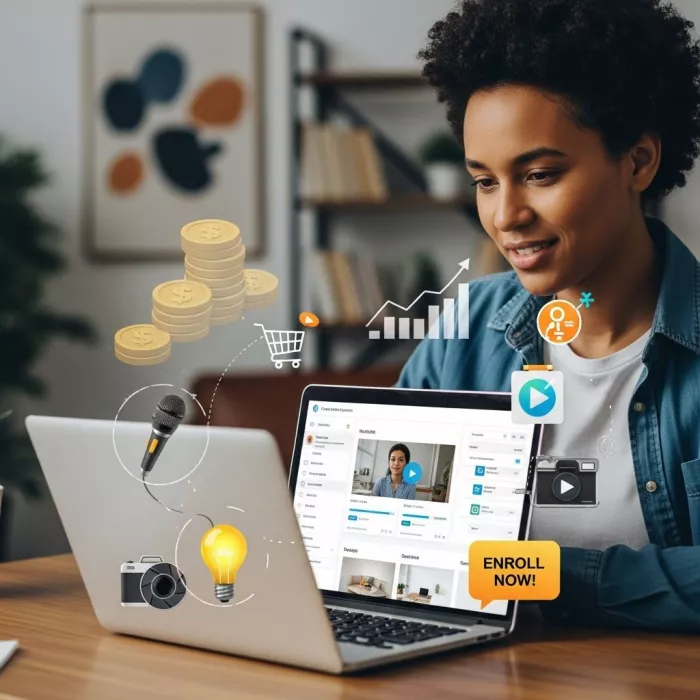
6. Digital Products
Ownership: High
Effort: High
Audience needed: Small and up
Digital products like courses, templates, presets, ebooks, Notion setups, anything you make once and sell endlessly with almost no cost per copy. The margins here are the best you'll find anywhere, because the hundredth sale costs you roughly nothing.
The quiet advantage is that your audience has already told you what to build the questions filling your comments and DMs are a product brief written for free. The honest catch is the front-load: all the effort lands before a single sale, so it takes nerve to build something for weeks with no guarantee anyone buys.
7. Merch & Physical Products
Ownership: Medium
Effort: Medium
Audience needed: Medium
T-shirts, mugs, a signature product, physical goods carrying your name or your inside jokes. It's worth being honest that merch is often as much marketing as money: every hoodie someone wears is a tiny billboard, and it happens to turn a profit.
Margins are thinner than digital and inventory is a real risk if you order a garage full of stock nobody wants. Print-on-demand quietly fixed most of those items that get made only when someone buys, which is why merch is now reachable long before you're "big."
8. Licensing & Syndication
Ownership: High
Effort: Low (after setup)
Audience needed: Any size
Letting other people pay to use what you've already made is stock footage, a viral clip a news outlet wants, music, a newsletter syndicated elsewhere, or your format and name licensed to a brand. It's the most overlooked stream on this list, and often the most genuinely passive once it's set up.
The effort is low only after the groundwork: you have to create something worth licensing and make it findable. But a single clip or track can earn in the background for years without you touching it again, which is about as close to "sleep income" as a creator gets.
Wallet 4 : Expertise for Hire
Sell the skill your content proves you have. Highest rate, least scalable.
9. Services & Consulting
Ownership: High
Effort: Medium
Audience needed: Small
Done-for-you work, coaching, freelancing selling the thing you clearly know how to do. This is the fastest stream to switch on, because your content is your portfolio; a single strong case study can land a client worth more than a month of ad revenue.
The hourly value is high and you barely need an audience to start. The ceiling is the problem: you're trading time for money, and there are only so many hours in a week. Services pay the bills brilliantly early on, and should usually fund the owned products that eventually replace them.
10. Live Events & Experiences
Ownership: High
Effort: High
Audience needed: Medium
Workshops, meetups, ticketed shows, paid speaking, a weekend retreat. People will pay a real premium to be in the same room as a creator they've only ever watched through a screen presence is something no download can replicate.
This is also where an online following becomes offline revenue, which tends to deepen loyalty in a way nothing else does. The trade-off is logistics: venues, travel, and schedules add a tax that purely digital streams don't carry, so the money has to be worth the hassle.
The Stream Scorecard
All ten in one view. Scan the column that matches your situation if you've got a tiny audience, look at "Audience needed"; if you're short on time, look at "Effort."
| Stream | Ownership | Audience needed | Effort to start | Income ceiling |
| Ad revenue | Low | Large | Low | Low–Medium |
| Sponsorships | Low | Medium | Medium | High |
| Affiliate | Low–Med | Any | Low | Medium |
| Memberships | Medium | Medium | High | High |
| Tips & crowdfunding | Medium | Any | Low | Low |
| Digital products | High | Small+ | High | Very high |
| Merch | Medium | Medium | Medium | Medium |
| Licensing | High | Any | Low* | Medium–High |
| Services | High | Small | Medium | Medium |
| Live events | High | Medium | High | High |
The Stacking Order what to add, and when
Nobody should chase all ten at once. They come online in a rough sequence, and trying to skip ahead usually means doing five things badly instead of two things well.
● While you're still small, turn on the streams that need no scale: affiliate links on things you genuinely use, and services, since your content already proves you can do the work. These pay you before an algorithm ever rewards you.
● As trust builds, add the audience-funded layer a membership or a tip jar and start taking sponsorships that actually fit. You're earning from the relationship now, not just the reach.
● Once you have an audience worth building for, pour energy into owned products: a course, a template, a licensable catalogue, a live event. This is the point of everything above the rented streams were funding the move to owned ones.
The Diversification Trap
You'll hear "diversify your income!" constantly, and it's half right. Ten shallow streams is not a strategy; it's ten part-time jobs, each with its own overhead, its own audience to serve, and its own way of pulling your attention off the work that made you worth paying.
Two or three owned streams you run well will almost always beat ten you dabble in. The real win isn't more sources of money. It's fewer sources that you control income that survives a bad month, a platform tantrum, or a sponsor saying no.
The Bottom Line
The number ten was never the point. What matters is the direction you're moving: away from income that lives at someone else's mercy, and toward income rooted in things you actually own your products, your expertise, and your direct line to the people who show up for you.
Start with the fast, rented streams to keep the lights on. Spend what they earn you building the owned ones. The creators who last aren't the ones with the most revenue streams, they're the ones whose income nobody else can switch off.


Comments