Why Link-in-Bio Tools Are Quietly Becoming Mini Business Hubs


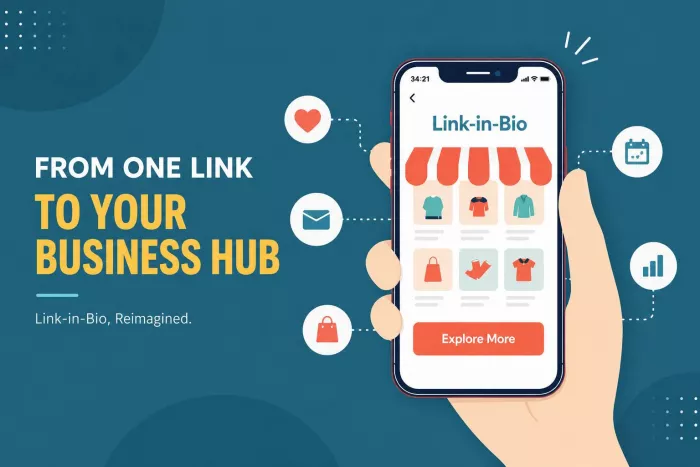
There was a time when “link in bio” meant compromise. One clickable URL trying to represent an entire online presence. Today, that single link has evolved into something far more strategic: a compact, conversion-focused business layer that sits between social attention and real revenue.
What’s driving this shift isn’t just better tools. It’s a fundamental change in how users behave online. Attention spans are shorter, intent is higher, and friction kills conversions. Link-in-bio tools have adapted to this reality faster than traditional websites, turning themselves into agile, mobile-first business hubs.
The Evolution: From Static Links to Dynamic Ecosystems
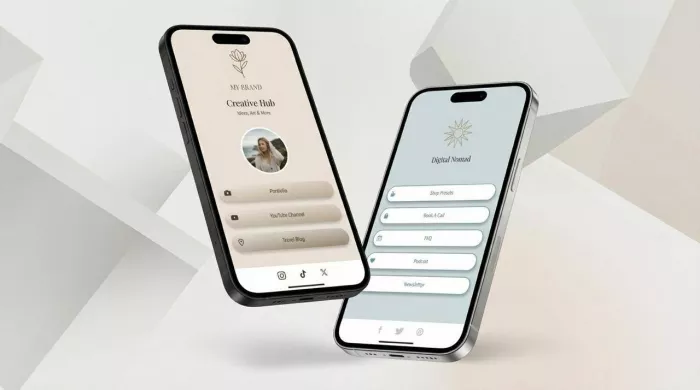
Early link-in-bio tools solved a very specific problem: platform limitations, especially on Instagram and TikTok. But their role has expanded significantly.
Modern tools now function less like directories and more like action-oriented micro platforms. Instead of sending users away, they are designed to make users act instantly whether that’s buying a product, joining a list, or booking a service.
This evolution is best understood through how their capabilities have matured:
| Capability Area | Earlier Use Case | Current Role in Business Ecosystem |
| Link Sharing | Redirect to multiple URLs | Structured content + conversion flow |
| Design | Basic templates | Fully customizable brand pages |
| Monetization | External checkout links | Native payments and product selling |
| Audience Engagement | Passive clicks | Interactive elements (video, embeds, forms) |
| Data Tracking | Basic click counts | Behavioral insights and funnel tracking |
What stands out is the shift from navigation to conversion. The goal is no longer to guide users elsewhere, but to complete key actions within the link-in-bio environment itself.
Why Link-in-Bio Pages Convert Better Than Traditional Websites
The growing preference for link-in-bio tools isn’t accidental. It’s rooted in how modern users interact with content, especially on mobile. A traditional website assumes exploration. A link-in-bio page assumes intent.
When a user clicks a bio link, they are already halfway into a decision. Sending them through multiple pages often breaks that momentum. Link-in-bio tools eliminate this friction by compressing the journey into a single, scrollable interface.
Three factors explain their higher conversion efficiency:
● Reduced decision fatigue: Users see limited, curated options instead of navigating complex menus
● Mobile-first design: Every element is optimized for thumb-based interaction
● Immediate action pathways: Checkout, signup, or booking happens without redirection
For example, a creator selling a ₹1,499 digital course can embed a product card, a short explainer video, testimonials, and a checkout button all within one page. There is no need for a separate landing page or funnel builder.
The Rise of Micro Business Infrastructure
What makes modern link-in-bio tools powerful is not just what they include, but how seamlessly these components work together.
They now combine multiple business functions that were previously spread across different platforms:
● Commerce (selling digital or physical products)
● Lead generation (email capture, waitlists)
● Content hosting (videos, links, previews)
● Service delivery (booking links, consultations)
This convergence creates what can be described as a micro business infrastructure lightweight, fast, and highly focused.
A freelancer, for instance, no longer needs a full website, a separate scheduling tool, and an email capture system. A well-optimized link-in-bio page can handle all three.
Who Is Driving This Shift?
While adoption is widespread, certain user groups are pushing these tools to their limits and shaping their evolution.
● Content creators are using them to monetize directly through digital products, memberships, and exclusive content
● Coaches and consultants are replacing traditional landing pages with bio links that combine authority-building content and booking systems
● Small businesses are leveraging them as mobile storefronts, especially in markets where social commerce is dominant
This is particularly relevant in regions like India, where WhatsApp integrations, UPI payments, and mobile-first browsing make link-in-bio tools more practical than full websites for many businesses.
Popular Tools and Their Strategic Positioning
Not all link-in-bio tools are built the same. Each platform is evolving toward a specific type of user and business model.
| Tool | Core Strength | Ideal Use Case |
| Linktree | Simplicity and scalability | Influencers and general users |
| Beacons | Creator monetization suite | YouTubers, streamers, digital creators |
| Stan Store | Digital product selling | Coaches, educators, solopreneurs |
| Carrd | Custom lightweight pages | Indie creators and developers |
| TIEUP.IO | Portfolio-style link-in-bio with selling | Creators and professionals who want a mini-site hub |
This segmentation shows that link-in-bio tools are no longer generic utilities they are becoming specialized business platforms.
Data Ownership: The Underrated Advantage
One of the most important, yet under-discussed, benefits of these tools is control over audience data.
Social platforms limit how much user data creators can access. Link-in-bio tools, on the other hand, allow direct interaction and data capture.
This includes:
● Email addresses and contact details
● Click behavior and engagement patterns
● Conversion tracking across offers
This shift is critical because it reduces dependency on algorithms. Instead of relying solely on reach, creators can build owned distribution channels, which are far more stable and valuable over time.
Where Link-in-Bio Tools Fall Short
Despite their advantages, these tools are not a complete replacement for traditional digital infrastructure.
Their limitations become more apparent as a business scales:
● They offer limited SEO capabilities, making them weak for organic search growth
● Customization can be restricted compared to fully developed websites
● Over-reliance on a single platform introduces operational risk
For this reason, the most effective approach is not replacement, but integration. Link-in-bio tools work best as a high-conversion entry layer, while websites continue to serve as long-term brand and content assets.
The Bigger Shift: Redefining the “Homepage”
The concept of a homepage is changing. For years, websites were the starting point of online journeys. Today, that role is increasingly being taken over by link-in-bio pages especially for creators and mobile-first businesses.
The new flow looks like this:
Social platform → Link-in-bio → Immediate action → Retention system
This model prioritizes speed, clarity, and conversion over exploration. And that’s exactly why link-in-bio tools are quietly becoming mini business hubs not by replacing existing systems, but by sitting at the most critical point of the user journey: the moment of intent.


Comments