Best AI Tools for Voice Generation: 8 Platforms That Actually Sound Human



AI voice generation has matured quickly. A few years ago, most tools still sounded synthetic enough that you could spot them within a sentence or two. Now the top platforms can produce voices that are not only clean and natural, but emotionally believable enough for explainers, audiobooks, product demos, ads, dubbing, and creator content.
That has changed what buyers should look for. Voice quality still matters most, but it is no longer the only factor. The best platforms also differ in how well they handle cloning, team workflows, editing control, enterprise safety, multilingual output, and commercial rights. Some are built for creators who need a few polished voiceovers each week. Others are designed for agencies, e-learning companies, app developers, or studios producing voice content at scale.
The eight tools below stand out because each one excels in a different part of the voice generation market.
1. ElevenLabs : The Realism Benchmark for Modern Voice AI
If the benchmark is voice realism, ElevenLabs still sits at the top of the conversation. It is the platform that most consistently produces speech that feels fluid, expressive, and convincingly human, especially in storytelling, dubbing, long-form narration, and premium voiceover work. What makes it especially impressive is that the voice output often carries emotional shape and natural pacing in a way that many competitors still struggle to match.
ElevenLabs also has one of the strongest product ranges in the category. It supports text-to-speech, instant voice cloning, professional voice cloning, dubbing, voice design, and broader audio workflows that make it useful for both solo creators and serious production teams.
Core use: ElevenLabs is built for realistic text-to-speech, voice cloning, dubbing, and premium narration across creator and professional workflows.
Main strength: ElevenLabs stands out because its voices feel more naturally expressive and believable than most mainstream AI voice platforms, especially in storytelling and emotionally shaped narration.
Limitations: The best results still depend on clean scripting and intentional prompting, and once you move into serious commercial usage or larger output volumes, pricing climbs quickly.
Best for: Best for creators, storytellers, agencies, audiobook producers, and teams that care most about realism and cloning quality.
Pricing
| Tier | Price | What it gives you |
| Free | $0/month | 10k credits, basic access, 3 Studio projects |
| Starter | $6/month | 30k credits, commercial license, instant voice cloning, 20 Studio projects |
| Creator | $22/month | 121k credits, professional voice cloning, more generation capacity |
| Pro | $99/month | 600k credits and higher-quality API audio output |
2. Murf AI : A Strong Choice for Business-Ready Voiceovers
Murf feels less like a voice lab and more like a polished production platform. That is exactly why it remains popular with teams making training modules, explainers, sales presentations, product walkthroughs, and business media. Its interface is clean, the editing flow is easy to understand, and the overall experience is designed for people who want strong commercial output without spending too much time fiddling with technical details.
The voice quality is very good, though often slightly more controlled and polished than the more dramatic voices from creator-first platforms. For business use cases, that is often an advantage rather than a drawback.
Core use: Murf is designed for AI voiceovers in presentations, training content, explainers, internal communication, and polished branded media.
Main strength: Murf is strongest when teams need a smooth, professional workflow for producing clean voiceovers at scale without a steep learning curve.
Limitations: It is less exciting for highly expressive narration, character performance, or creator-style storytelling where emotional range matters more.
Best for: Best for L&D teams, agencies, product marketers, and businesses that need dependable voiceover production for regular content.
Pricing
| Tier | Price | What it gives you |
| Free | $0/month | Limited preview usage, around 10 minutes generation, no commercial rights |
| Creator | $29/month | Entry paid plan for individuals and freelancers with exports and commercial use |
| Business | $99/month | More generation time, collaboration features, and team workflows |
| Enterprise | Custom | Advanced scale, enterprise support, and larger usage allowances |
3. PlayHT : Built for Scale, APIs, and High-Volume Output
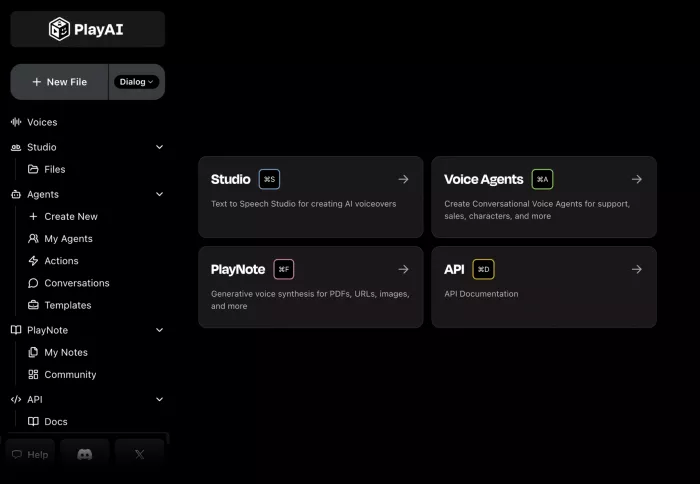
PlayHT is one of the more infrastructure-friendly tools in this category. While it can absolutely be used for content production, it becomes especially valuable when voice generation needs to become part of a larger system, whether that is an app, publishing workflow, podcast editing pipeline, or developer-driven product. Its voice quality is strong, its language support is broad, and the platform feels more scalable than many creator-first alternatives.
That makes PlayHT especially useful for teams thinking beyond individual voiceovers. It is well suited to situations where speech synthesis becomes an operational layer rather than a one-off creative task.
Core use: PlayHT is built for scalable text-to-speech, long-form narration, multilingual voice deployment, and product or API-based use cases.
Main strength: PlayHT is particularly strong for high-volume production and developer-led use cases where voice generation needs to scale beyond simple creator workflows.
Limitations: It is less beginner-friendly than some rivals and may feel more technical than necessary for casual users who only want quick voiceover creation.
Best for: Best for developers, publishers, app teams, and businesses producing voice content at scale.
Pricing
| Tier | Price | What it gives you |
| Free | $0 | Limited starter access |
| Professional | $39/month | Paid entry plan for higher-volume use and expanded capabilities |
| Premium | $99/month | More generation volume and advanced features |
| Enterprise | Custom | Custom scale and commercial deployment |
4. WellSaid : Controlled, Premium, and Enterprise-Safe
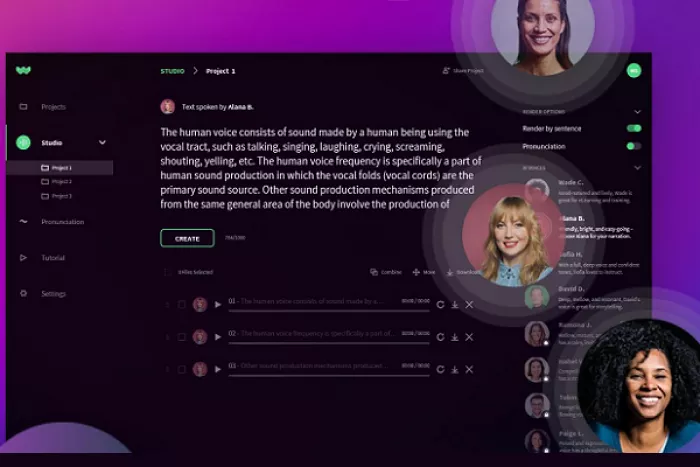
WellSaid has built its reputation in a different way from the more hype-driven AI voice brands. Its appeal is not novelty or experimentation, but reliability, quality control, and enterprise trust. If some tools in this market feel built for creators chasing the most impressive demo, WellSaid feels built for organizations that need brand-safe, polished output they can use in real production without second-guessing every script.
That makes it especially effective in e-learning, corporate narration, internal training, and enterprise communication. It is not the cheapest option, but it has earned a strong reputation in exactly the segments that care less about price and more about consistency.
Core use: WellSaid is designed for enterprise voiceovers, e-learning narration, corporate content, and brand-safe commercial audio production.
Main strength: WellSaid is especially strong because it delivers premium, reliable voice output in a platform that feels safer and more controlled for enterprise use.
Limitations: It is less appealing for hobbyists or budget-conscious buyers, and its pricing is not as transparent or creator-friendly as some rivals.
Best for: Best for enterprises, e-learning teams, training departments, and businesses that prioritize trust and consistency over experimentation.
Pricing
| Tier | Price | What it gives you |
| Trial / limited access | Varies | Introductory access may be available depending on plan route |
| Maker | Around $49/month | Entry-level paid tier frequently cited for individuals and small teams |
| Team / Business | Custom to higher-tier | More seats, collaboration, and enterprise features |
5. Speechify : The Accessibility-First Voice Tool That Sounds Surprisingly Good
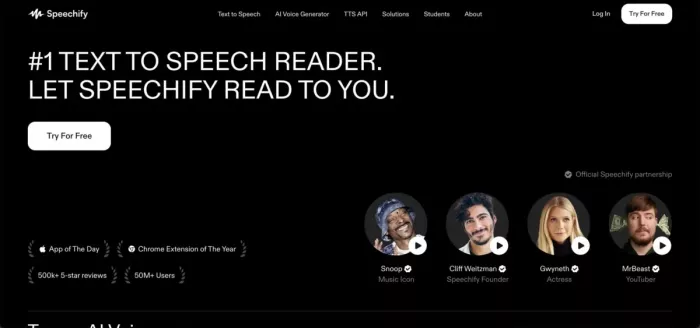
Speechify belongs in this list for a different reason than most of the others. It is not primarily a commercial voiceover production suite. Instead, it is one of the most polished tools for listening to written content, whether that means articles, PDFs, notes, web pages, or study material. Its voices are natural, its cross-device experience is smooth, and it is one of the easiest tools in the category to start using immediately.
That means Speechify is less about “voice production” in the studio sense and more about productivity, accessibility, and read-aloud convenience. Even so, its voice quality is strong enough that it deserves consideration in any serious voice AI roundup.
Core use: Speechify is built for text-to-speech listening, productivity, accessibility, and turning written material into audio.
Main strength: Speechify works extremely well because it makes natural-sounding listening simple, fast, and accessible across everyday reading workflows.
Limitations: It is not a full commercial voice generation studio, so it makes less sense for teams focused on cloning, dubbing, or branded production.
Best for: Best for students, professionals, accessibility users, and anyone who wants to listen to content rather than produce commercial voiceovers.
Pricing
| Tier | Price | What it gives you |
| Free | $0 | Basic voices and limited functionality |
| Premium (annual equivalent) | $139/year | Around $11.58/month effective cost, with premium voices and downloads |
| Premium (monthly) | $29/month | Monthly access without annual commitment |
6. LOVO : A Creator-Friendly Platform for Regular Voiceover Work
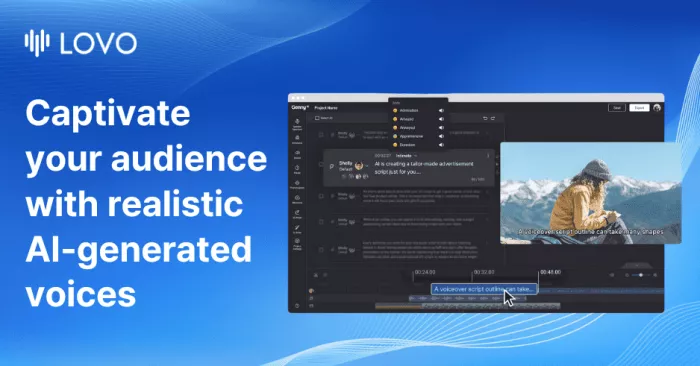
LOVO occupies a useful middle ground in the AI voice market. It is easier to approach than some enterprise-focused or API-heavy tools, but it is still robust enough to support long and short YouTube videos, voiceovers, marketing videos, courses, social content, ads, and recurring content production. The platform feels built for creators and small teams who want a dependable voice system rather than a research playground.
That balance is part of its appeal. LOVO is not trying to be the most experimental product in the market. It is trying to be consistently useful for day-to-day voiceover work, and in that role it performs well.
Core use: LOVO is designed for marketing videos, creator content, online courses, social media, ads, and recurring commercial voiceover production.
Main strength: LOVO is particularly effective because it balances ease of use, natural voice quality, and a workflow that fits regular content production well.
Limitations: Its most advanced plans become more expensive over time, and it is less distinctive than category leaders when deep cloning or ultra-premium realism is the priority.
Best for: Best for YouTubers, course creators, marketers, and small teams producing voice content on a regular schedule.
Pricing
| Tier | Price | What it gives you |
| Free / trial | Limited | Limited access or trial use depending on plan flow |
| Basic | $24/month to $29/month | Entry paid plan depending on billing route and market |
| Pro | $39/month | Professional content creation tier |
| Pro+ | $75/month | Higher-volume production tier |
7. Descript : The Smartest Option When Voice Generation Lives Inside Editing
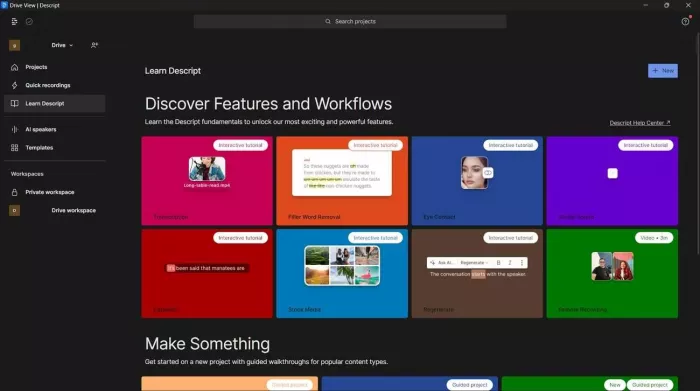
Descript is not the first product people think of when they hear “AI voice generator,” but in many real workflows it is one of the most useful. That is because its Overdub voice feature sits inside a powerful transcript-based editing environment. Instead of generating voice in isolation, you can use synthetic speech directly inside the editing process to patch lines, fix mistakes, and revise spoken content without rerecording everything.
For podcasters, educators, video creators, and teams working with lots of spoken media, that is a major productivity win. Descript’s value is not just in how the generated voice sounds, but in how naturally it fits into the editing process.
Core use: Descript is built for voice generation, voice correction, and synthetic speech inside transcript-based audio and video editing workflows.
Main strength: Descript is brilliant because it turns AI voice generation into part of the editing process, making revisions and spoken-content fixes much faster.
Limitations: It is more valuable as an editing platform with voice features than as a standalone voice generation tool built purely around realism or cloning.
Best for: Best for podcasters, educators, video creators, and teams editing voice-driven content regularly.
Pricing
| Tier | Price | What it gives you |
| Free | $0 | Basic project access and limited creation |
| Hobbyist | $16/month | Entry paid plan with more usage and editing power |
| Creator / higher tiers | Higher-tier plans available | Expanded limits and advanced features |
8. Replica Studios : Where Character Voices and Creative Performance Matter Most
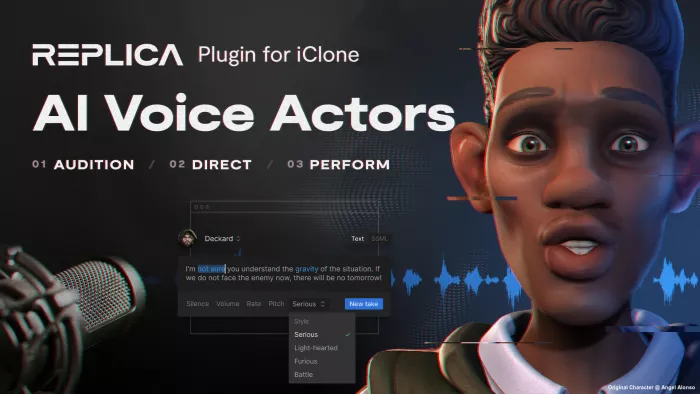
Replica Studios fills a more specialized role than most tools in this list. Rather than focusing mainly on business narration or general-purpose creator voiceovers, it is much more interesting for games, interactive media, character dialogue, and creative storytelling. That makes it an especially strong fit for studios or developers who need voices with personality and performance value rather than just clean narration.
It is not the most obvious choice for standard commercial voiceover work, but that is not the point. Replica is at its best when voice needs to feel like character, scene, or performance rather than corporate communication.
Core use: Replica Studios is built for character voice generation, game dialogue, interactive media, and performance-driven synthetic speech.
Main strength: Replica Studios stands out because it is better suited than most mainstream tools for dramatic, creative, and character-oriented voice work.
Limitations: It is a more niche platform, so it is less relevant for standard business narration, explainers, or everyday commercial voiceover production.
Best for: Best for game developers, creative studios, storytellers, and interactive media teams working with character voices.
Pricing
| Tier | Price | What it gives you |
| Starter | $10/month after intro discount in some pricing references | Entry-level access for smaller creative projects |
| Indie / Creatives | $30/month to $36/month | Paid plan commonly cited for creators with commercial use |
| Pro | $100/month | Higher-volume generation and expanded professional usage |
| Enterprise | Custom | Studio and enterprise-grade deployment |
Which Voice Generator Should You Actually Choose?
If realism is the single most important factor, ElevenLabs is still the easiest recommendation because it consistently produces the most convincing and expressive voice output. Murf and WellSaid make more sense for business environments where voice quality, brand safety, and workflow control matter more than experimentation. PlayHT is stronger when scale, multilingual deployment, or API integration is central to the use case.
LOVO is a strong option for creators and marketers who need regular voiceovers without too much friction, while Descript becomes incredibly useful when voice generation is only one part of a bigger editing workflow. Speechify is the right fit for listening and accessibility rather than studio production, and Replica Studios is the one to look at when character performance matters more than standard narration.
Final Verdict
The best AI voice generator is not simply the one with the most realistic demo. The better question is which tool fits your actual workflow, publishing volume, and production style. ElevenLabs is the most impressive all-rounder for realism and cloning, but it is not automatically the best choice for every buyer. Murf is better for polished business voiceovers, PlayHT is stronger for scalable deployment, WellSaid is safer for enterprise use, LOVO is more creator-friendly, Descript is powerful inside editing, Speechify serves accessibility beautifully, and Replica Studios stands out for character performance.
That is what the market looks like now: not one winner, but several category leaders serving different needs exceptionally well. If you choose based on workflow rather than hype, you are far more likely to end up with a tool that still feels right months from now.


Comments