US and China Plan First Official AI Talks as Tech Rivalry Deepens

Ashish Kumar
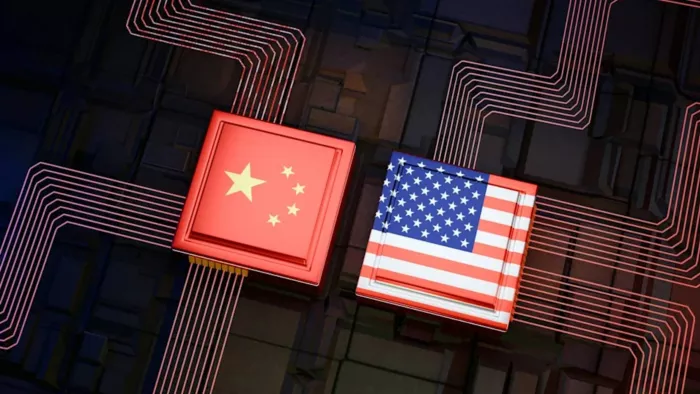
The two superpowers building the world's most powerful AI systems have barely spoken about them. That changes in September.
The United States and China are preparing to sit down for their first official government-to-government talks on artificial intelligence under the current US administration, with meetings planned for September, likely before the Chinese president's scheduled visit to the United States on September 24. The dates are not yet locked in, and Beijing is still deciding which ministries will send officials.
The stakes could hardly be higher. The two countries are pouring hundreds of billions of dollars into competing AI ecosystems while restricting each other's access to critical technology. Both are racing to deploy systems that their own governments acknowledge could be used against power grids and financial systems, and to reshape military power.
Now, for the first time in this administration, they will talk about it face to face.
How the talks came together
The dialogue is a direct product of a leaders' summit held in Beijing in mid-May, where the two presidents agreed to establish intergovernmental discussions on AI governance. Beijing's foreign ministry confirmed the agreement after the summit but has stayed quiet since. The US Treasury secretary is expected to lead the American delegation; the rest of the roster remains unannounced on both sides.
There is a thin precedent. In 2024, working-level negotiators from both countries met in Geneva and agreed on exactly one thing: humans, not machines, should control decisions about nuclear weapons. That remains the only substantive bilateral understanding on AI between the world's two largest economies.
Expectations for round one are deliberately modest. One analyst close to the process predicted the sides would attempt to agree on basic definitions, starting with what actually counts as a frontier AI model. The US side has signaled its priority: preventing the spread of powerful AI systems to non-state actors. Beijing, for its part, is said to want technical engagement rather than political theater.
The rivalry the talks must survive
The meetings will take place against a backdrop of escalating restrictions flowing in both directions.
Washington has limited exports of the most advanced AI chips to China for years, and a rule that took effect on January 15, 2026 moved certain mid-tier accelerators to case-by-case license review, with conditions attached: a 25 percent tariff, a volume cap of 50 percent relative to domestic US shipments, and mandatory testing on American soil before export. Washington is also weighing whether to restrict American companies from using Chinese open-weight models at all.
Beijing has answered in kind. In early 2026, China imposed its strictest-ever export controls on rare earths and permanent magnets, requiring government approval for foreign shipments containing even trace amounts of Chinese-origin materials. Chinese authorities are separately discussing limits on overseas access to their own most capable AI models, a mirror image of the American debate.
The blocs are hardening too. At a major AI conference in Shanghai in July, 29 countries signed on to a new AI cooperation organization headquartered in that city. It is a direct rival to a US-led initiative that counts 35 member countries. China's president used the conference to position his country as the champion of open-source AI for the developing world, criticizing nations that place their own security interests above others. Nobody in the room needed the reference to chip controls spelled out.
The scoreboard, by the numbers
The data explains why each side approaches these talks from a different position of strength.
America's advantage is raw compute. In 2025, roughly five million of the leading US-designed AI accelerators shipped worldwide, against approximately 800,000 units of China's flagship domestic chip. The best American chips currently outperform their Chinese counterparts by a factor of about five, and one analysis projects that gap widening to seventeen times by 2027. Chinese fabrication remains stuck at 7-nanometer process technology, two to three generations behind the cutting edge, with domestic chip yields estimated at 5 to 20 percent versus 60 to 80 percent for the market leader. Quality-adjusted, US and allied manufacturing capacity for advanced AI chips runs 35 to 38 times China's.
China's advantage is diffusion. Chinese models' share of global AI token usage exploded from roughly 1 percent in 2025 to about 30 percent in 2026, driven by cheap, capable open-weight models that anyone can download and run. One Chinese model family reached 942 million downloads by March 2026, more than double the next eight competitors combined. A Beijing-based lab's newest frontier model, released this month, beats several American systems on industry benchmarks. And Chinese chipmakers, while behind on performance, are scaling production; one domestic firm plans to deliver 500,000 largely home-manufactured accelerators in 2026.
The result is two different theories of victory. The United States is betting that hardware superiority produces transformative capability first. China, constrained on compute but backed by the state, is betting on open distribution and rapid deployment across its entire economy, from robotics to industrial automation.
What success would even look like
Nobody involved expects September to produce a breakthrough, and the structural problem is real: each side's core security policy, export controls on one hand and open-model proliferation on the other, is precisely what the other side wants discussed.
But the agenda items on the table are not trivial. Shared definitions of frontier models, plus guardrails against misuse by terrorists and criminal networks. Cybersecurity and biosecurity risks that neither country can contain alone. Both governments have acknowledged, in their own ways, that the most dangerous scenarios involve capabilities escaping state control entirely.
The 2024 nuclear-weapons understanding took years of friction to produce a single sentence of agreement.


Comments