
Most freelancers chasing clients on social media are solving the wrong problem. Endless energy goes into reaching more views, more followers, one post that finally takes off on the assumption that visibility eventually turns into work.
But visibility and income aren't the same thing, and the gap between them almost always sits in one overlooked spot: the profile. Someone watches a sharp post, feels a flicker of interest, taps through, and finds a bio link pointing at a generic homepage or the latest reel. Interest cools in seconds, and a potential client is gone.
The freelancers who stay booked have quietly fixed this. They've turned that single bio link from a decoration into a working system, one that catches interested visitors, sorts the serious from the curious, and routes real prospects toward a paid conversation. Here's how that machine gets built, stage by stage.
Why a freelancer's bio link isn't a creator's
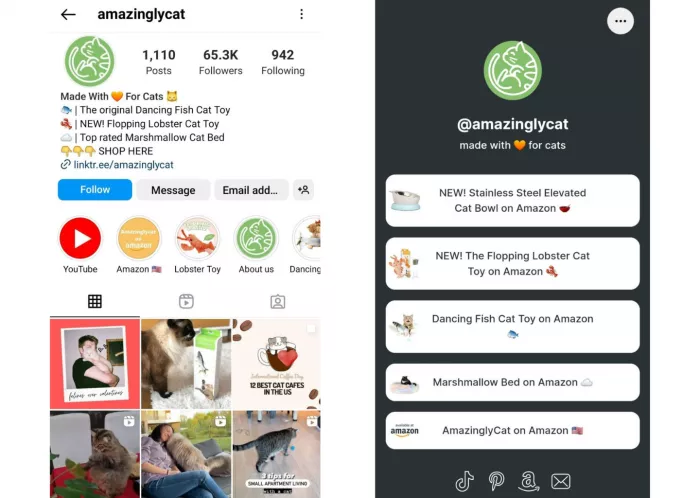
It's tempting to copy the setup influencers use: a tidy hub with a dozen buttons pointing to every platform and project. For a creator building an audience, that makes sense the goal is attention, spread across many touchpoints.
For a freelancer, it's a quiet mistake. A freelancer isn't collecting followers; a freelancer is hunting for a handful of qualified clients. Those are opposite jobs, and they call for opposite designs.
Funnel inward, don't fan outward
A creator's hub fans outward, offering choice. A freelancer should funnel inward, removing it. Every extra button on a freelance bio page is another chance for a ready-to-hire visitor to wander off instead of taking the one action that leads to money.
The shift in mindset is small but decisive. Where a creator optimizes for reach and engagement, a freelancer optimizes for captured, qualified leads. Where a creator wants more taps across more links, a freelancer wants the right visitor taking one specific action and where a creator measures success in follower counts, a freelancer measures it in booked calls and signed contracts. Get that distinction right, and the rest of the machine falls into place.
The Lead Machine: a five-stage model
A bio link only becomes a lead-generation machine when it stops being a static page and starts behaving like a funnel, a sequence that moves a stranger predictably toward becoming a client.
That sequence has five stages, plus a feedback loop that keeps the whole thing improving.
| Stage | What it does | The freelancer's goal |
| Attract | Content earns attention and points to the bio | Create intent and send it to one place |
| Capture | The page trades value for contact | Turn an anonymous visitor into a known lead |
| Qualify | A few questions sort prospects | Filter out poor fits, pre-sell the good ones |
| Nurture | Follow-up keeps leads warm | Stay present until the timing is right |
| Convert | A booking or call closes the loop | Turn a qualified lead into paid work |
Around all five runs a Measure loop tracking what happens at each step so weak points get fixed instead of guessed at. The sections below walk through each stage in the order a prospect actually experiences it.
Stage 1 : Attract
Nothing downstream matters if the right people never arrive. Attraction is the job of content posts, videos, threads, comments but not just any content. For lead generation, it has to do two things at once.
Prove the expertise
Proving expertise is straightforward in theory: show the work, share the thinking, solve a small problem in public.
A designer breaking down why a famous logo works, a copywriter rewriting a weak headline line by line, a developer explaining a common bug in plain language each post quietly makes the case that this person knows their craft.
Point the way to the bio
Creating a reason to act is where most freelancers go silent. A brilliant post that ends without direction leaves the viewer impressed but idle. The fix is a clear, low-friction handoff to the bio a cue that names exactly what waits there and why it's worth the tap.
The strongest cues are tied to the post itself: a breakdown of common website mistakes ends by pointing to a free ten-point site-audit checklist on the profile. They name the reward rather than the mechanism, because "the full template is in my bio" pulls far harder than a bare "link in bio." And they show up consistently, since a single mention rarely sticks while the steady habit trains an audience to expect something worth having. Attraction without a handoff builds an audience; attraction with one builds a pipeline.
Stage 2 : Capture
This is the stage that separates a lead machine from a link list, and the one most freelancers skip entirely. Capture means converting an anonymous visitor into a known contact, someone whose email or booking now sits in the freelancer's hands rather than the platform's.
The trap: a page that only displays
The trap is treating the bio page as a display case: portfolio, about, services, socials, and no way to actually catch anyone. A visitor browses, leaves, and vanishes without a trace, taking any chance of follow-up along.
A capture-focused page does the opposite. It offers a clear trade something genuinely useful in exchange for contact details, or a direct path to a conversation.
Two routes, depending on readiness
Which route fits depends on how ready the visitor is when they land. For someone not yet ready to hire, the answer is a lead magnet, a free, specific resource like a checklist, template, teardown, or sample, handed over in exchange for an email. It catches interest early and opens a relationship well before any sales conversation begins.
For someone already ready, the answer is a direct booking: a prominent "book a free discovery call" button that drops the prospect straight onto a calendar, with no waiting and no chance for the impulse to fade. The strongest freelance pages offer both, so no visitor leaves without at least one thread still connecting them. Everything captured here feeds the stages that follow; skip capture, and the machine has nothing to work with.
Stage 3 : Qualify
Not every lead deserves the same slice of time, and the best freelancers guard their calendars. Qualification is the quiet stage that sorts genuine prospects from tire-kickers before a single minute of a call is spent and, done well, it makes the freelancer look more in demand in the process.
A few sharp questions do the work
The mechanism is usually a short intake form sitting between the "book a call" button and the actual calendar. A handful of well-chosen questions about the project, the budget range, the timeline, the goal do a surprising amount of work.
First, they filter out poor fits: someone unwilling to name any budget or scope usually isn't ready to hire, and screening them out protects time for real prospects. They also pre-sell the freelancer, since sharp, professional questions signal a professional operation and lift perceived value before the call even begins. And they arm the call itself, arriving already aware of the project, budget, and goal means the conversation opens warm and focused instead of burning its first ten minutes on basics.
Getting the balance right
There's a balance to strike. Too many questions and good leads abandon the form; too few and unqualified ones slip through, so three to five focused questions usually hits the mark.
Qualification feels like friction, but it's the friction that keeps a calendar full of the right people rather than merely full.
Stage 4 : Nurture
Most visitors won't hire on the first encounter. Timing, budget, and readiness rarely line up on day one, and a lead that isn't ready now may be perfect in three months. Nurture bridges that gap and it's the whole reason capturing email matters so much.
The one asset fully owned
An email list is the one asset in this entire system that a freelancer fully owns. Followers belong to the platform and can vanish with an algorithm change or a suspended account.
An email list travels with its owner regardless. Every address captured earlier becomes a durable line of contact, independent of any platform's goodwill.
Staying present without selling hard
Nurture doesn't demand a heavy machine. For most freelancers, light and consistent is enough: an occasional email sharing a useful idea, a recent result, or a short case study, with a soft reminder that work is available.
The point isn't to sell hard on every message, it's to stay quietly present, so that when a need finally surfaces, the freelancer is the obvious first call rather than a half-remembered profile. Warm leads kept warm converts far more often than cold ones chased from scratch.
Stage 5 : Convert
Everything upstream exists to earn this moment: a qualified, warmed-up lead deciding whether to commit. Conversion happens on the call, but the bio page can stack the odds long before anyone dials in.
Make the booking effortless
A qualified prospect who's ready to talk needs a frictionless path to the calendar, a booking tool that shows real availability, confirms instantly, and sends reminders so the call actually happens.
Every extra step between intent and a booked slot is a place to lose someone who was ready to say yes.
Surround the button with proof
A ready-to-hire visitor is hunting for reasons to trust, and the page should hand them over freely. Specific results doing the heaviest lifting "helped a client triple inbound leads in 90 days" persuades far more than "experienced and reliable." Testimonials carry weight when they arrive with a real name, face, and role, and read as filler when they don't, while a recognizable client name or logo, used with permission, borrows credibility at a single glance.
Placed near the booking button, this proof answers the doubt a prospect feels at the exact moment they feel it. Conversion isn't about pressure; it's about removing the last reasons to hesitate.
The anatomy of a high-converting bio page
Zoom out from the funnel and look at the page itself. A freelance bio page that converts tends to follow a consistent structure, top to bottom, with every element earning its place.
| Element | The job it does |
| Headline value proposition | States who's helped and what result, in one line, above the fold |
| Primary CTA button | The one action that matters usually "book a call" placed high |
| Proof block | Testimonials, results, or client logos that build trust near the decision |
| Lead magnet offer | A value-for-email trade for visitors not ready to book yet |
| Portfolio / work samples | Evidence of quality, kept tight best work only, not everything |
| Service summary | A short, plain description of what's offered and who it's for |
The principles that hold it together
The order can flex, but a few rules rarely should. Clarity comes first: a visitor should grasp who the page is for and what to do next without scrolling, because confusion is the fastest way to lose a lead. A single primary action comes next, since competing buttons split attention while one dominant call to action concentrates it. And ruthless editing runs underneath both every link or line that doesn't move a visitor toward becoming a lead is dead weight that belongs off the page.
The page isn't a résumé. It's a conversion tool, and it earns its keep on one question: does it turn the right visitor into a booked call?
The platform playbook
The machine runs the same way everywhere, but each platform feeds it differently. The content that attracts, and the way the bio link behaves, shifts by channel.
| Platform | Strength for freelancers | Bio-link notes |
| Visual proof; strong for creative services | Multiple bio links now allowed; route them to one capture page | |
| The B2B powerhouse; decision-makers gather here | Profile link plus a "Featured" section; keep it polished | |
| TikTok | Reach and discovery; great for demand generation | One link, with follower/account rules; strong at top of funnel |
| X (Twitter) | Thought leadership; fast credibility in a niche | One profile link; threads are what drive the intent |
Why LinkedIn earns extra attention
LinkedIn deserves special attention for anyone selling to businesses. It's consistently rated the most effective channel for B2B lead generation, and it's where decision-makers already gather in a work mindset.
The bio-link approach there is subtler: a sharp profile, a "Featured" section showcasing results, and a link leading to a booking or value offer but the underlying machine is identical. Visual and creative freelancers, meanwhile, often find Instagram and TikTok more fertile, since the work itself can be shown rather than described. Whichever platform does the attracting, the smart move is to funnel every channel toward a single capture page, so the machine has one well-tuned engine rather than several half-built ones.
Lead magnets that actually work, by freelance type
A lead magnet only works if it solves a real, specific problem the ideal client already has and the best ones hint at how much better things would be with the freelancer involved. What that looks like shifts by discipline:
● Designers and video editors: a before/after teardown of a real or sample project, or a swipe file of high-performing layouts taste and skill visible at a glance.
● Writers and copywriters: a fill-in-the-blank template for email sequences, headlines, or landing pages that delivers a quick win and shows command of the craft.
● Developers and technical freelancers: a plain-language checklist or audit site speed, security, SEO basics that surfaces problems the client didn't know existed.
● Consultants and marketers: a short diagnostic or mini-guide that reframes the client's problem and positions the freelancer as the person who understands it best.
● Coaches and service providers: a free assessment or planning worksheet that starts the very conversation a paid engagement would continue.
The common thread is specificity. "The 12-point pre-launch website checklist" pulls harder than "my free guide," because it names a problem a real client is already losing sleep over.
The tools that run the machine
Building the machine doesn't require an expensive stack. A handful of tools, many with free tiers, cover every stage.
| Tool type | What it handles | Examples |
| Link-in-bio / landing page | The capture page itself | Linktree, Beacons, Carrd, Stan Store |
| Booking / scheduling | Turning intent into a booked call | Calendly, TidyCal, SavvyCal |
| Email capture / marketing | Nurture and follow-up | MailerLite, ConvertKit, Beehiiv |
| Light CRM / intake | Qualifying and tracking leads | Notion, Airtable, a simple form tool |
The flow matters more than the stack
Some all-in-one link-in-bio tools now bundle several stages a landing page, lead-magnet delivery, email capture, even a lightweight CRM into one product, which suits freelancers who'd rather manage one tool than four. Others prefer to assemble a best-in-class piece for each job, and both approaches work.
The only real requirements are that the capture page loads fast on mobile, the booking step is frictionless, and captured emails land somewhere follow-up can actually happen. Beyond that, a polished machine built on free tiers beats an expensive one nobody bothered to connect end to end.
How to tell whether the machine is working
A machine that isn't measured is just a guess. The numbers worth watching aren't followers or likes but the conversion rates between each stage, which reveal exactly where the machine leaks.
It starts at the top with the profile-to-click rate of everyone who reaches the profile, how many tap the bio link where weakness usually points to a vague bio or a lifeless call to action. Click-to-lead comes next, measuring how many of those who land on the page book or hand over an email; low numbers there signal a cluttered page or a weak offer. Lead-to-call exposes gaps in qualification and follow-up, and call-to-client, the final rate, reflects fit, pricing, and the sales conversation itself.
Tracked over time, these four numbers turn into vague frustration. Why aren't clients coming? into a specific, fixable diagnosis. Improving the single weakest link in the chain lifts the whole machine's output.
The mistakes that keep the machine idle
Most stuck pipelines trace back to the same handful of errors:
● Pointing the bio link at a generic homepage, which serves everyone and converts no one, where a purpose-built page aimed at a ready client would do the opposite.
● Displaying without capturing, so a portfolio with no email field or booking button lets every interested visitor leave without a trace.
● Burying the call to action below a wall of links or three scrolls down, where a booking button rarely gets pressed.
● Skipping follow-up entirely, letting captured leads go cold and wasting the effort spent catching them.
● Offering choice instead of direction, since twelve equal links ask a visitor to decide while one clear next step simply tells them what to do.
Each of these quietly drains the pipeline, and fixing even one often produces a noticeable jump in booked calls.
Final Take
For a freelancer, a bio link is far more than a formality; it's the single point where borrowed attention gets a chance to become paid work. Left as a static link or a scattered list, it leaks that opportunity every day.
Rebuilt as a machine content that attracts, a page that captures, questions that qualify, follow-up that nurtures, and a booking that converts it becomes an always-on intake system that keeps working while its owner sleeps.
None of the stages are complicated, and none demand a big budget. What they require is intent: treating that one link not as a business card but as the front door to a pipeline. The tools are cheap, the setup takes an afternoon, and the payoff is a steady flow of qualified leads arriving on their own compounds for years.


Comments