
Tieup.io and Beacons look like the same product, one link in your bio that holds everything. They are built for two different jobs, and that difference decides which one is right for you.
On the surface, TIEUP.IO and Beacons do the same thing: replace the single link in your bio with a page that holds all of them. Look closer and they are pointed at different goals. Beacons is a monetisation engine, a storefront, email list, and media kit wearing a link-in-bio. TIEUP.IO is a creator portfolio, a customisable page built to document your work and pull in brand deals. Which one fits depends less on a feature checklist and more on how you actually make your money.
SHORT ON TIME? THE QUICK VERSION • Choose TIEUP.IO if your income comes from brand collaborations, sponsorships, and affiliate deals, and you want a customisable portfolio that makes brands want to work with you. • Choose Beacons if you sell your own digital products, courses, or services directly to your audience and want the checkout, email tools, and analytics built in. Most creators lean clearly one way. The rest of this explains exactly why, round by round. |
At a glance
| Metrics | TIEUP.IO | Beacons |
| Core focus | Customisable portfolio & brand-collab magnet | All-in-one selling & monetisation hub |
| Best for | Sponsorships, affiliates, getting hired | Selling products, courses & services |
| Sell your own products/courses | Not natively (showcase & link out) | Yes storefront + course hosting |
| Affiliate / promo codes | Yes, a core feature | Yes, plus affiliate marketplace |
| Media kit for brand deals | The portfolio itself | Auto-updating media kit |
| Email marketing | No | Yes |
| Auto-DM / Instagram replies | No | Yes (Smart Reply) |
| AI assistant | No | Yes (Beam) |
| Customisation | Heavy emphasis full "wall" control | Good, but conversion-focused |
| Free plan | Yes, free to publish | Yes (with a seller fee) |
| Paid pricing | Premium exists; not listed publicly | Roughly $10–$90/mo by tier |
| Sales fees | No native-checkout fee (affiliate model) | 9% on Free/lower tiers; 0% on higher |
| Built in | India | United States |
What each one actually is
TIEUP.IO
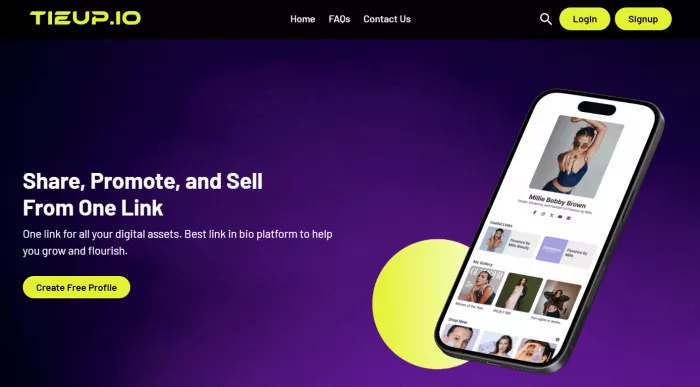
TIEUP.IO is an India-built link-in-bio that leans hard into a single idea: your bio link should be a portfolio, not a row of buttons. You add unlimited links and videos, arrange them on a fully customisable “wall,” and use the page to showcase past work, endorsed brands, affiliate links, and promo codes. Its niche templates cover influencers, coaches, doctors, agencies, and travel bloggers, and its published user list skews toward well-known creators, many of them Indian names with large followings. The whole pitch points one way toward collaboration offers. Put your best work where brands can find it, and let the page do the pitching before the first email. It is free to create and publish, with a premium tier available on a trial. Worth noting up front: TIEUP.IO does not publish its premium pricing on the site, so you only see the plans after signing up.
That portfolio-first approach is also what separates it from more traditional bio-link tools, something that becomes especially clear in a TIEUP.IO vs Linktree comparison where customization and creator presentation matter more than simply stacking links.
Beacons
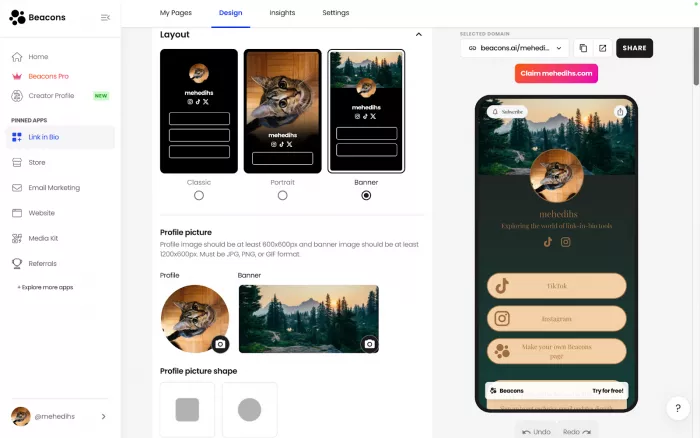
Beacons is a US-built all-in-one creator platform, and “all-in-one” is doing real work in that sentence. Alongside the link-in-bio it bundles a digital storefront, course hosting, an affiliate marketplace, an automatically-updating media kit, an email marketing tool, an auto-DM feature that sends Instagram replies, detailed analytics, and an AI assistant called Beam. It is built for creators who sell to their own audience. The trade-off is money: Beacons is free to start but charges a 9% seller fee on its Free and lower-tier plans, dropping to 0% on the higher plans, which run into the tens of dollars per month.
Setup and ease of use
Both use a drag-and-drop editor, and both get you to a live page quickly. The difference is surface area.
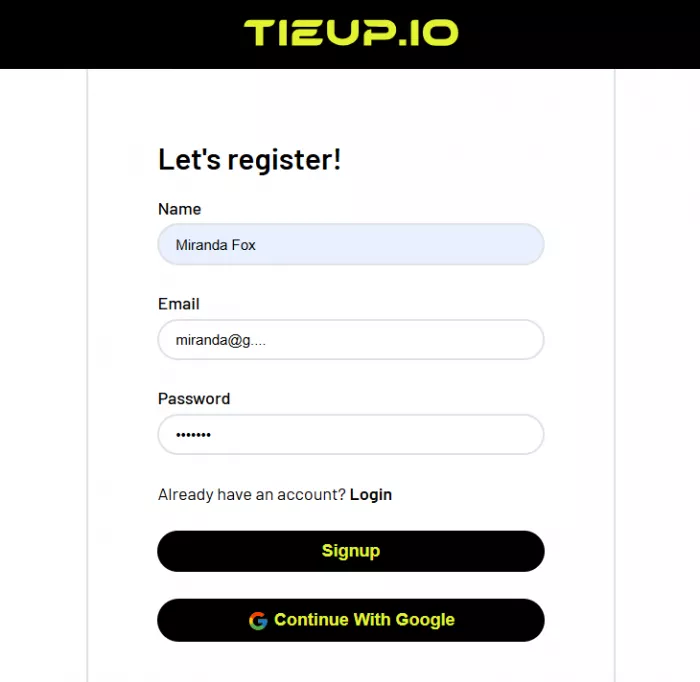
TIEUP.IO has the narrower job where you are mostly arranging links, media, and work samples on a page so there is less to learn and less standing between you and a finished page. If your goal is to be live in ten minutes, that smaller scope is the advantage.
Beacons does more, which means there is more to configure, and the number of tools can feel like a lot on the first day. That said, it is setup you would have to do somewhere anyway if you plan to run a store and an email list.
Winner: TIEUP.IO for speed to a finished page; Beacons if you are building a full toolkit regardless.
Design and customisation
TIEUP.IO makes customisation its loudest claim, and it holds up. The platform is built around a fully customisable “wall,” with the stated goal of making the page look like your brand rather than the tool’s. For creators who care about a distinctive portfolio, that flexibility is the whole point.
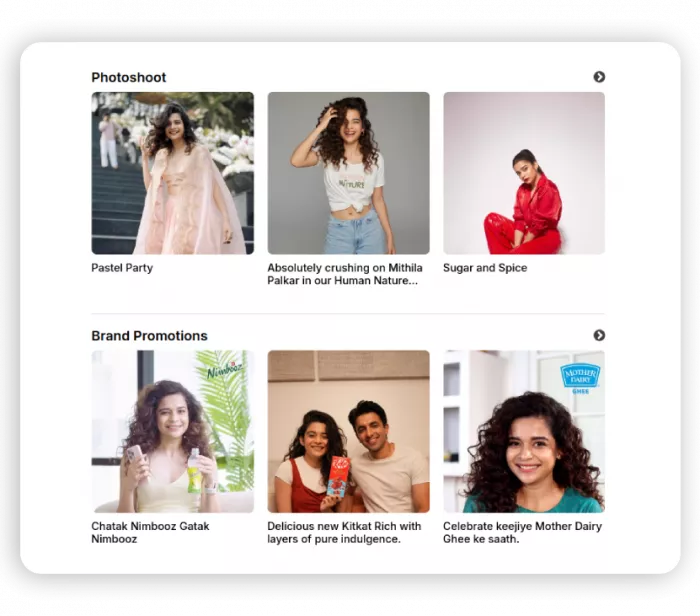
Beacons is no slouch on design; it has templates, theming, and a clean modern look but its layout is organised around conversion blocks: product cards, email sign-ups, buttons. It optimises for what the page does more than for how freely you can shape it.
Winner: TIEUP.IO.
Selling and monetisation
This is where the two genuinely part ways, and for most people it is the section that settles the decision.
Beacons sells directly. You can host and sell digital products and courses, run an affiliate marketplace, and take payment on the page itself. Money flows through Beacons, which is exactly why it charges a seller fee on its lower tiers.
TIEUP.IO monetises indirectly. Its tools are affiliate links, promo codes and coupons, showcasing e-commerce products, and the central idea attracting brand collaborations by documenting your work. It is built to help brands and affiliate programs pay you, not to run a checkout for products you own.
• If you sell your own eBooks, templates, presets, or courses to followers, Beacons has the native machinery for it, and TIEUP.IO does not offer anything comparable.
• If your income is sponsorships, brand deals, and affiliate commissions, TIEUP.IO is purpose-built for that, and Beacons’ storefront is largely beside the point.
One honest caveat: TIEUP.IO’s handling of native product checkout is not clearly documented publicly. If selling your own products directly is important to you, confirm exactly what it supports before you commit.
Winner: depends entirely on your model Beacons to sell to your audience, TIEUP.IO to get hired by brands.
Pricing and fees
Beacons is free to start, but its free and lower-tier plans carry a 9% fee on every sale, dropping to 0% on the higher plans; paid tiers run roughly $10 to $90 per month depending on tier and billing, with standard payment processing on top. That fee creates a tipping point to sell enough, and the monthly plan becomes cheaper than the cut you would pay on the free plan. By one widely-cited estimate, past roughly $334 a month in sales, the paid plan costs less than the 9% you would otherwise hand over.
TIEUP.IO is free to create and publish, with premium offered on a trial, but it does not list premium pricing publicly; you only see the figures after signing up. Because its monetisation runs on affiliates and collaborations rather than a native checkout, there is no equivalent per-sale platform fee to weigh in the same way, though this is worth confirming directly.
| Plan | TIEUP.IO | Beacons |
| Free plan | Yes free to publish | Yes includes a seller fee |
| Seller fee (free / lower tier) | No native-checkout fee | 9% per sale |
| Seller fee (higher tier) | 0% | |
| Paid plans | Premium (price shown at signup) | ~$10–$90/mo by tier & billing |
| Who the pricing favours | Non-sellers & affiliate-led creators | Sellers past the fee tipping point |
The practical takeaway: if you sell products, model the 9% against your expected monthly sales before choosing a Beacons tier. If you earn through brand deals and affiliates, that fee math is largely a non-issue for you the cost that matters is TIEUP.IO’s premium plan, so check that figure at signup.
Winner: hard to call cleanly. Beacons is more transparent about pricing but adds a per-sale fee on lower tiers; TIEUP.IO avoids that fee for its use case but hides plan pricing until you sign up.
Brand deals and the media kit
Both court sponsors, in different ways.
Beacons generates an automatically-updating media kit, a shareable page of your stats and audience data that refreshes as your numbers change, which is a real convenience when pitching.
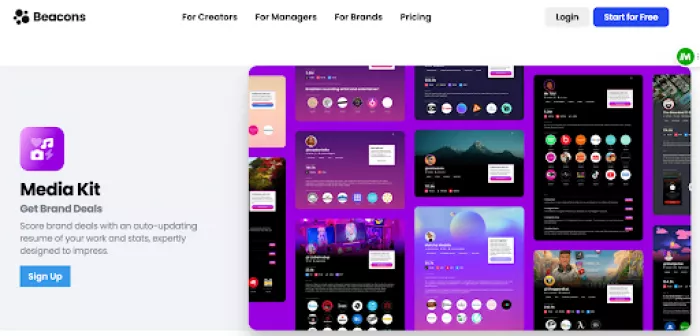
TIEUP.IO’s answer is the portfolio itself: a documented body of work, past collaborations, and endorsements arranged so a brand can make its decision before it even reaches out.
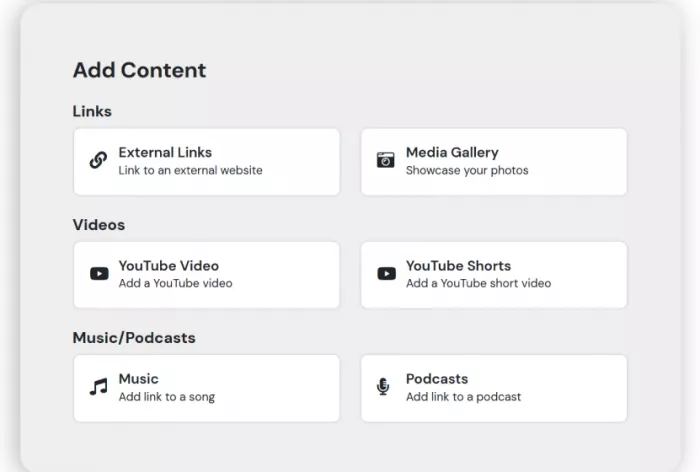
One is a stats sheet; the other is a showcase. Creators who pitch on their numbers may prefer the media kit; those who pitch on the range and quality of their work may prefer the portfolio.
Winner: tie , same goal, two different tools.
Audience and marketing tools
Beacons has the clear edge here, because it includes tools TIEUP.IO does not: an email marketing tool for building and messaging a list, and an auto-DM feature that fires off Instagram replies pointing commenters toward your links. For a creator who wants to own an audience they can contact directly, rather than renting attention inside an app, those matter.
TIEUP.IO keeps its attention on the page itself, not on audience-marketing infrastructure. There is no built-in email or DM automation to speak of consistent with its portfolio-first purpose, but a real gap if list-building is central to your plans.
Winner: Beacons.
AI features
Beacons leans on AI through Beam, an assistant that surfaces insights and helps draft bios, captions, emails, and content ideas. How much it sways you depends on how much in-app AI help you actually want; in daily use it is a convenience layer rather than a reason on its own to pick the platform.
TIEUP.IO does not market comparable AI tooling, so if built-in AI assistance is on your wishlist, it is simply not part of the pitch here.
Winner: Beacons with the honest note that AI is a nice-to-have here, not the core of either decision.
Analytics
Beacons provides detailed traffic analytics across its tools, which follows from it trying to be your commerce dashboard as well as your link page.
TIEUP.IO offers analytics on its profiles too, though how deep the reporting goes is less clearly documented. If data granularity drives your decisions, verify exactly what it reports before leaning on it.
Winner: Beacons, pending a closer look at TIEUP.IO’s reporting.
Support, reliability and reputation
Beacons has the far larger footprint, and that cuts both ways. It is widely used and well known, but its reviews also surface recurring gripes: the 9% fee on lower tiers, support that some users find slow, and limited audience segmentation.
TIEUP.IO is smaller and less battle-tested in public reviews, which means fewer documented complaints but a shorter track record to lean on.
Neither picture is complete, so read current reviews for both close to when you decide.
Winner: tie Beacons for track record, TIEUP.IO for a cleaner, if thinner, public record.
Data, privacy and ownership
TIEUP.IO markets privacy and data security as a differentiator, citing encryption and compliance with data-protection rules. That is worth taking seriously if data handling matters to you, though a marketing claim is not the same as an audit read the privacy policy for the specifics.
Beacons does not foreground privacy the same way, but it has a practical edge in portability: an email list you build there is yours to export. A portfolio page’s design and links, by contrast, are straightforward enough to rebuild elsewhere if you move on.
Ask the ownership question of whichever you choose.
Winner: TIEUP.IO on stated privacy emphasis; either way, read the fine print.
The scorecard
| Round | Winner |
| Setup & ease of use | TIEUP.IO (for speed) |
| Design & customisation | TIEUP.IO |
| Selling & monetisation | Depends on your model |
| Pricing & fees | Split depends on selling |
| Brand deals & media kit | Tie |
| Audience & marketing tools | Beacons |
| AI features | Beacons |
| Analytics | Beacons |
| Support & reputation | Tie |
| Data & privacy | TIEUP.IO |
Read the scorecard the right way: Beacons wins more rounds, but most of its wins are selling and marketing tools. If you do not sell to your audience, several of those wins do not apply to you.
Pros and cons
TIEUP.IO
STRENGTHS
• Fast to set up and free to publish, with a customisable page you can be proud to link.
• Genuinely strong customisation aimed at a distinctive, branded portfolio.
• Purpose-built to attract brand collaborations and surface affiliate and promo-code deals.
• A notable roster of established creators already using it, which lends credibility.
TRADE-OFFS
• No native way to sell your own products or host courses, in any comparable sense.
• No email marketing, auto-DM, or notable AI tooling.
• Premium pricing is not published publicly, so you cannot compare costs before signing up.
• Smaller and less publicly reviewed, and analytics depth is not well documented.
Beacons
STRENGTHS
• A true all-in-one: storefront, courses, email, media kit, auto-DM, analytics, and AI in one place.
• Built to sell directly to your audience, with payment handled on the page.
• Auto-updating media kit is a real time-saver for pitching sponsors.
• Large, well-known platform with a generous free tier for testing.
TRADE-OFFS
• A 9% seller fee on the free and lower tiers is a real cost until your sales clear the tipping point.
• More tools mean more to learn, and the interface can feel busy at first.
• Reviews cite slow support and limited audience segmentation.
• Plan names and prices have shifted over time, so the tier you researched may have moved.
Which should you use?
Because the two are pointed at different goals, the cleanest way to decide is by what kind of creator you are.
| If you are | Better fit | Why |
| An influencer living on sponsorships and affiliate deals | TIEUP.IO | Portfolio and brand-collab focus is exactly the job |
| Selling eBooks, templates, presets, or courses | Beacons | Native storefront and course hosting |
| A coach or consultant selling services and building a list | Beacons | Email, selling, and audience tools in one place |
| A freelancer or agency wanting a portfolio-pitch page | TIEUP.IO | Documented work does the selling before you email |
| A beginner who just wants a clean link hub | Either (lean TIEUP.IO) | Less to configure, free to publish |
| Focused on owning an audience you can re-contact | Beacons | Built-in email marketing you control |
Taplink is another familiar option for creators who want more control over how their bio page is structured, especially around links, landing pages and basic selling features. If that type of setup is closer to what you need, looking through a few Taplink alternatives can help you compare other tools that take a similar approach.
The verdict
Neither one wins outright, because they are not really competing for the same job. Beacons is the stronger platform if you sell to your own audience the storefront, courses, email, and media kit are all there, and the 9% fee on lower tiers is a manageable cost once your sales clear the tipping point. TIEUP.IO is the stronger choice if you make your money by being hired its customisable portfolio is built to attract brand deals and surface affiliate offers, and it gets out of your way faster.
STILL UNSURE? ANSWER ONE QUESTION Does your money come from your audience buying from you, or from brands and programs paying you? • Your audience buys from you → pick Beacons. • Brands and affiliates pay you → pick TIEUP.IO. Whichever way you lean, confirm two things first: Beacons’ current plan prices and fees, and TIEUP.IO’s premium pricing and exactly what selling it supports. Both have details that are easy to miss, and both change over time. |
Quick questions
Can I switch later?
Yes. Neither locks your content in a way you cannot leave your links and work aren’t trapped but rebuilding a page and reconnecting everything takes time, so it is worth choosing deliberately rather than switching on a whim.
Which is cheaper?
For creators who don’t sell products, TIEUP.IO is free to publish (its premium price shows at signup). For sellers, Beacons’ real cost depends on whether the 9% fee on the free plan outweighs a paid tier model of your monthly sales to see which side of the tipping point you’re on.
Does TIEUP.IO take a cut of my sales?
Its monetisation is affiliate- and collaboration-based rather than a native checkout, so there isn’t an equivalent per-sale fee in the same way Beacons has one. If you plan to sell your own products through it, confirm exactly how that works at signup.
Which is better for a complete beginner?
TIEUP.IO if you just want a clean, customisable page live quickly. Beacons if you already know you’ll be selling and would rather have the tools ready than migrate later.


Comments