
An Etsy shop may have attractive products, competitive prices, and positive reviews, yet visitors arriving from social media can still struggle to find the items that caught their attention. A busy storefront with multiple categories often makes browsing more complicated than necessary.
A well-organized link-in-bio page solves this by bringing featured products, collections, and promotional offers into one accessible space. For Etsy sellers, it provides a practical way to connect social media content with relevant listings and make the shopping experience more convenient.
Why Etsy Sellers Need More Than a Shop Link
Linking directly to an Etsy storefront is perfectly reasonable for a small shop selling a limited range of products. However, sellers with several collections, personalized items, or frequently changing inventory may benefit from a more organized approach.
Consider a jewelry seller promoting handmade necklaces, bridal earrings, personalized bracelets, and gift sets. Someone arriving from an Instagram Reel featuring bridal earrings should not have to scroll through dozens of unrelated products to find them.
A well-organized link-in-bio page provides a curated entrance to the Etsy store. Rather than replacing the storefront, it directs shoppers toward products that match their interests.
This becomes especially valuable when sellers promote different categories across Instagram, TikTok, Pinterest, and other social platforms. The page can feature current products, highlight seasonal collections, and maintain a direct link to the complete Etsy shop.
What Belongs on an Etsy Bio Page?
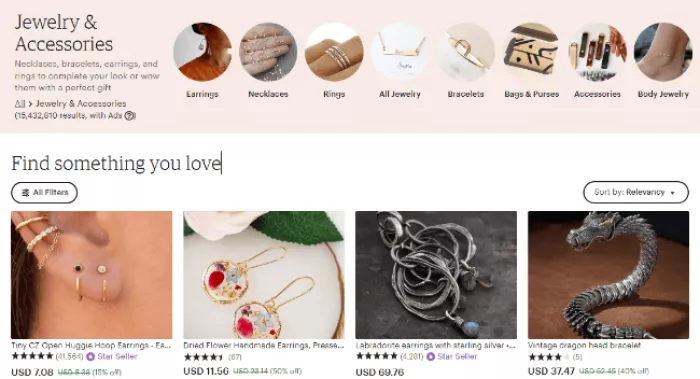
A useful bio page should answer three basic questions: What does this shop sell? Where can visitors find the featured products? What else is available?
The information needs to be organized around those questions rather than filling the page with every possible link.
Essential elements worth including:
● Shop identity and description: Display the Etsy shop name, recognizable branding, and a short introduction describing the products or handmade specialty.
● Bestselling products: Highlight established listings that introduce new visitors to the shop's most popular offerings.
● Product collections: Group related items under recognizable labels such as Personalized Gifts, Handmade Jewelry, or Printable Planners.
● Current promotions: Feature valid seasonal discounts, special offers, or limited-edition collections with accurate descriptions.
● Custom-order information: Help buyers find personalized listings or instructions for requesting customization through Etsy.
● Complete Etsy storefront: Include a general shop link for visitors who prefer exploring the entire inventory.
A seller offering a handful of digital downloads may only need four links, while a handmade gift shop with several collections might require more. The objective is not to fill every available space. Each link should make the visitor's next decision easier.
Organizing Products Around Shopper Intent
One of the most useful improvements Etsy sellers can make is organizing bio links according to what shoppers want to accomplish.
Traditional storefront categories generally describe product types, such as necklaces, bracelets, or earrings. Social media visitors may approach the same products differently. Someone looking for a birthday present might care more about price, personalization, and suitability for the recipient.
A bio page can accommodate those interests without changing the shop's existing Etsy categories.
| Shopper interest | Suggested bio link |
| Finding affordable presents | Gifts Under $25 |
| Shopping for celebrations | Wedding & Anniversary Gifts |
| Buying something personalized | Custom Name Jewelry |
| Exploring popular items | Customer Favorites |
| Discovering recent additions | New Arrivals |
| Preparing for seasonal events | Holiday Gift Collection |
These categories work particularly well for gift shops, handmade accessories, home decor, stationery, and personalized products. However, labels must accurately reflect the destination. A collection advertised as "Gifts Under $25" should genuinely contain products within that price range, excluding any clearly disclosed additional charges such as shipping or optional upgrades.
The strongest organization combines product categories with buying motivations. It gives visitors several meaningful routes without making them navigate an unnecessarily large menu.
Choosing Which Products Appear First
The first few links on a bio page usually receive the most immediate attention because they appear before visitors scroll further. Their placement should reflect current shopping interests rather than a permanent alphabetical arrangement.
For instance, a handmade candle shop may prioritize its bestselling scented candles throughout the year. During the holiday season, a gift-box collection could become more relevant and deserve the first position.
Product placement generally falls into four useful categories:
1. Bestsellers: These provide a familiar starting point for new customers and introduce products that already have an established sales history.
2. New arrivals: Recently launched collections deserve prominent placement when sellers are actively creating content around them.
3. Seasonal products: Holiday decorations, wedding accessories, and occasion-specific gifts can move higher when customer interest is expected to increase.
4. Featured promotional items: Products receiving attention through Reels, Pins, or TikTok videos should be easy to locate from the relevant social media profile.
Profit margins and stock availability also matter, but they should not be the only deciding factors. A profitable product that does not match visitor interest is unlikely to benefit simply from appearing first.
A practical arrangement is one featured collection, two or three supporting product links, and a general shop link.
Presenting Discounts and Special Offers
Promotional links need careful management because they influence customer expectations before shoppers reach Etsy.
A button advertising a discount should explain what the promotion covers. Vague wording can attract clicks, but it also increases the chance that visitors arrive expecting an offer that does not apply to their chosen product.
Compare these examples:
● Unclear: Special Discount Available
● Better: 15% Off Selected Wall Prints
● Unclear: Shop Our Amazing Deals
● Better: Weekend Sale on Handmade Candles
The more specific labels communicate the product category and promotion without requiring visitors to investigate.
Etsy provides sales and discount tools through Shop Manager, allowing sellers to create promotions subject to the platform's conditions. Sellers should ensure that featured discounts match the offers currently available on Etsy.
Three details deserve particular attention: promotion expiration dates, eligibility requirements, and the availability of advertised products.
It is also important to respect Etsy's transaction rules. Social media can be used to promote Etsy listings, but sellers should not encourage customers to move Etsy-originated transactions to an external checkout to avoid Etsy's fees.
When to Link Collections Instead of Products
Not every product deserves a separate bio button. Individual listing links are useful for specific campaigns, but a growing list of product buttons can quickly become difficult to manage.
Etsy shop sections offer an alternative by grouping related listings into collections that can be shared through dedicated URLs.
For example, a seller offering handmade ceramic mugs in several colors could link to a Coffee Mugs section instead of creating a separate button for each variation.
Choosing the Right Destination
| Link destination | Best use |
| Individual Etsy listing | A specific product featured in a video or post |
| Etsy shop section | A group of related products or styles |
| Shop search results | Listings matching a particular keyword or theme |
| Main Etsy storefront | Buyers interested in browsing the entire catalog |
Individual listings work best when the customer is already looking for one recognizable product. Collection links are more appropriate when visitors want to compare designs, colors, sizes, or similar items.
For larger shops, this approach also reduces maintenance. New listings added to an existing Etsy section can become accessible through the same collection link without requiring another bio-page button.
Making the Page Match Your Etsy Brand
An Etsy bio page should look like a natural extension of the business, not an unrelated promotional website.
Brand consistency helps visitors recognize that they have arrived at the correct destination. A seller using soft neutral photography for handmade pottery should avoid a bio page dominated by unrelated neon graphics or decorative elements.
There are several ways to maintain that consistency.
● Use recognizable product photography. Images should reflect the items buyers will see on Etsy, particularly products featured in recent social media posts.
● Keep link labels descriptive. Labels such as "Personalized Wedding Invitations" explain the destination more clearly than generic wording like "Collection One."
● Maintain readable layouts. Buttons need comfortable spacing, sufficient contrast, and text that remains clear on mobile screens.
● Keep the page visually focused. Decorative backgrounds, excessive animations, and too many competing colors can distract from the products themselves.
A professional page does not require complicated design. Clear organization, recognizable branding, and accurate product information usually matter more.
Connecting Instagram, Pinterest and TikTok
Each social platform introduces buyers to Etsy products differently. Understanding those differences helps sellers decide whether visitors need a curated page or a direct listing link.
1. Instagram: Featured Products and Collections
Instagram Reels and Stories are useful for showing finished products, packaging, customization, and behind-the-scenes work.
An Etsy seller featuring embroidered tote bags should ensure that visitors following the profile link can quickly locate those bags. A clearly labeled featured-product button is generally more useful than a vague instruction to browse the entire shop.
2. Pinterest: Inspiration and Product Discovery
Pinterest visitors frequently discover products through visual themes, design inspiration, and occasion-related searches.
A seller promoting printable wedding invitations might benefit from links organized around wedding stationery collections. However, individual Pins can also link directly to the relevant Etsy listing, avoiding an unnecessary intermediate step.
3. TikTok: Demonstrations and Product Interest
TikTok content can introduce products through demonstrations, packing videos, and customization processes. If a video focuses on one handmade product, the bio page should make that item easy to identify. Sellers must also account for TikTok's changing eligibility requirements for clickable profile links.
Across all three platforms, consistency is essential. A video mentioning the "Spring Collection" should lead visitors to a link using that name or another immediately recognizable description.
Example of an Organized Etsy Bio Page
Consider a fictional Etsy shop named Willow & Thread Studio, selling personalized gifts, handmade keepsakes, and embroidered accessories.
The seller promotes products throughout the year, with increased attention around weddings, birthdays, and holidays.
A practical link-in-bio arrangement could look like this:
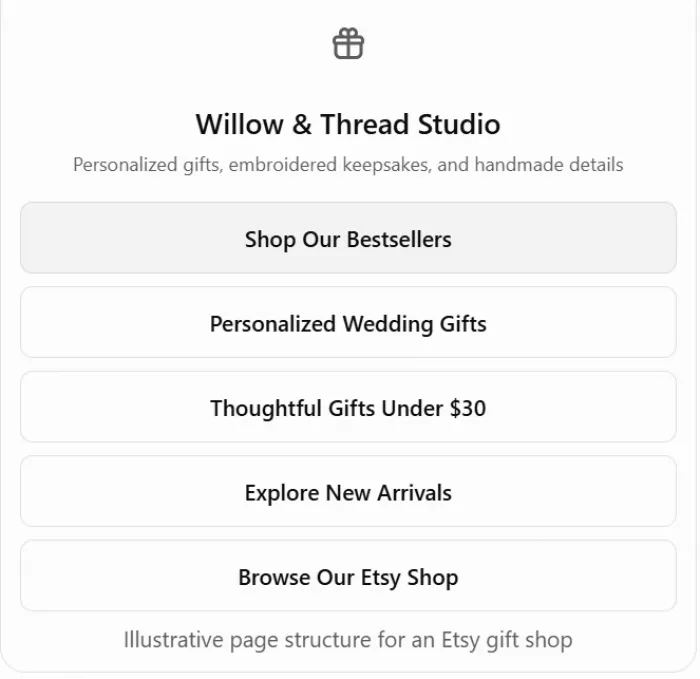
This structure gives each link a distinct role. The first introduces established products, the second targets a specific occasion, and the third helps shoppers who have a spending limit.
New arrivals provide something different for returning visitors, while the complete storefront remains available for broader browsing.
During a Christmas campaign, the seller could move a holiday gift collection into the first or second position. The rest of the page would remain familiar, reducing the need to redesign it for every promotional period.
The example also shows why link order matters. A well-organized page directs attention without requiring visitors to examine every available product category.
Choosing a Link-in-Bio Tool for Etsy
Etsy sellers generally do not need another complete e-commerce platform. Etsy already manages product listings, checkout, orders, and customer communication, so the bio tool mainly needs to organize and display useful links.
Platforms such as Linktree, Beacons, tieup.io and Carrd offer different options for creating branded pages, although their layouts, analytics, customization features, and pricing structures vary.
Rather than selecting a service based only on its popularity, sellers should consider how easily they can maintain the page as their inventory changes.
The most relevant features include product imagery, customizable buttons, mobile-friendly layouts, basic traffic analytics, and straightforward link management.
For a small Etsy shop, a free plan with clear navigation may be sufficient. A seller running several campaigns or managing a larger collection might benefit from more detailed analytics or branding controls.
One practical consideration is whether the page builder offers sufficient control over outgoing URLs. Sellers participating in Etsy referral programs should verify that their eligible tracking links retain the required format and work correctly with their chosen service.
Measuring Clicks and Shopping Interest
Creating a bio page is only the first part of the process. Sellers also need to understand whether its organization is helping visitors reach relevant products.
Many link-in-bio tools provide link analytics showing page visits and individual link clicks. These figures can reveal which collections attract attention, but they do not establish whether visitors completed a purchase.
A listing receiving numerous clicks may generate interest without resulting in orders. The reasons could include unexpected shipping costs, limited customization options, pricing, or a mismatch between the promotional content and the actual product.
A useful review should consider the following:
● Link popularity: Identify which featured products and collections receive attention and whether the pattern changes during promotional campaigns.
● Social traffic sources: Compare visits from different platforms where reliable source information is available.
● Etsy listing performance: Check Etsy shop statistics to understand visits, orders, and product interest alongside bio-page activity.
● Seasonal changes: Review whether featured collections continue attracting visitors after a holiday or campaign ends.
Etsy's Share & Save program may also be relevant for eligible sellers promoting their shops externally. The program offers fee refunds on qualifying orders attributed to eligible shared links, subject to Etsy's current terms.
However, sellers should confirm how Etsy's tracking requirements apply when a qualifying link is placed behind another service's bio page. An ordinary click recorded by a link-in-bio tool does not automatically establish referral eligibility or a completed sale.
The goal is to identify meaningful shopping interest rather than simply maximizing the number of clicks.
Common Mistakes That Reduce Shopping Interest
A bio page can become less useful over time, particularly when sellers continue adding new products without reviewing older links.
Some problems are easy to overlook because the page may still appear visually attractive.
● Too many individual product links: Long menus make important collections harder to identify. Grouping similar listings gives visitors a clearer starting point.
● Outdated promotions: Expired discounts or old seasonal campaigns create confusion when visitors reach the Etsy listing and find different information.
● Broken or unavailable listing links: Products may sell out, become inactive, or be replaced. Sellers should regularly check that important links still lead to available listings.
● Generic button wording: Labels such as "Click Here" provide little context, especially when multiple buttons look similar.
● Poor mobile presentation: Overcrowded layouts, small text, and oversized images make navigating from social media unnecessarily difficult.
● Ignoring listing quality: A well-designed bio page cannot compensate for unclear Etsy photos, incomplete product descriptions, or confusing shipping and personalization details.
Reviewing the page monthly is a useful starting point, with more frequent checks during product launches and seasonal promotions. Sellers should update important links whenever their inventory or marketing priorities change.
Make Every Link Count
A link-in-bio page works best when it reflects how customers actually shop. Someone looking for a personalized birthday gift has different priorities from someone browsing seasonal home decorations, even if both products come from the same Etsy store.
For smaller sellers, a direct Etsy shop link may already provide everything visitors need. Larger shops with multiple collections, seasonal promotions, and customization options have more to gain from organizing products into clear shopping paths.
The most practical approach is to start with a few meaningful links, keep product information accurate, and adjust the arrangement based on current promotions and visitor interest.
An effective Etsy bio page does not need to display everything a seller offers. It needs to make the right products easier to find, giving interested shoppers a more direct route from social media discovery to the Etsy listings they want to explore.


Comments