The Problem With Building a Personal Brand Around One Platform

Christine Davis
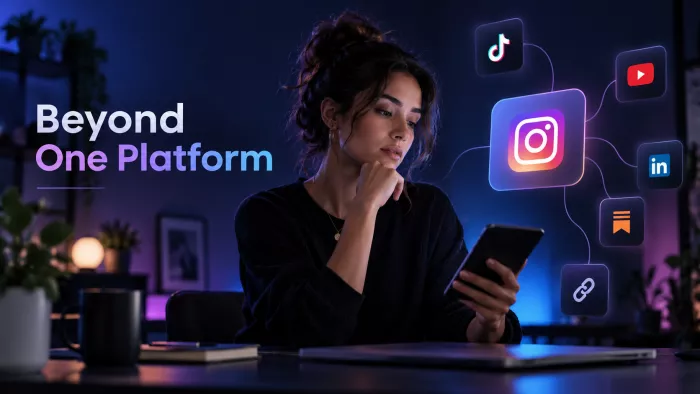
A creator can spend years building an audience on Instagram, TikTok, or YouTube, only to discover how much their business depends on decisions they cannot control. One algorithm change, account restriction, or monetization update can disrupt years of work.
The problem isn't growing on one platform. It's building a personal brand that cannot function without it. For creators turning online attention into a business, long-term success depends on what remains valuable beyond the platform that made them popular.
The Illusion of Audience Ownership
Having 100,000 Instagram followers can feel like owning a valuable audience. But a follower count doesn't guarantee that those people will see future posts, remember the creator, or remain connected if the account becomes unavailable.
Social platforms control much of the distribution process. Creators can publish content and interact with followers, but they cannot determine exactly who receives their posts or how recommendations change.
This creates three important dependencies:
● Audience access: Followers may recognize a creator without having another reliable way to receive updates or contact them outside the platform.
● Content distribution: Algorithms influence which posts appear in feeds, search results, and recommendations, making visibility difficult to predict.
● Business infrastructure: When customer inquiries, product promotion, and revenue depend on one account, an interruption can affect multiple business activities simultaneously.
Creators may own the rights to their original content, but controlling creative work isn't the same as controlling its distribution. A durable personal brand builds recognition that extends beyond a username.
When Algorithms Change Direction
Imagine a photographer who builds an audience through detailed editing tutorials. Their posts attract consistent engagement, brands offer collaborations, and the account becomes an important source of income.
Then the platform starts favoring different content formats. The photographer's expertise hasn't changed, but the content that previously performed well becomes less visible.
Platform recommendations are not guaranteed distribution channels. Meta's recommendation guidelines, for example, distinguish between content that is allowed and content eligible for recommendations. TikTok also documents circumstances in which accounts may become less discoverable.
For creators, declining visibility can affect more than engagement. Fewer recommendations may lead to fewer profile visits, customer inquiries, and sponsorship opportunities.
Adapting to new formats is reasonable, but constantly changing creative direction to satisfy an algorithm can weaken a recognizable identity. The deeper concern is allowing a distribution system to determine what a creator produces, how they communicate, and which parts of their expertise receive attention.
Popularity Doesn't Guarantee Loyalty
A video receiving a million views sounds impressive, but it reveals little about how many viewers remember the creator or deliberately return for future content.
Social feeds are designed to introduce users to content they might enjoy. Someone can watch several videos without remembering the account responsible for them.
That attention has value, but it shouldn't be confused with audience loyalty.
| Platform attention | Stronger relationship signal |
| Someone watches a viral Reel | They search for the creator by name |
| A post receives thousands of likes | People return for new content |
| Someone follows an account | They voluntarily subscribe to updates |
| Viewers ask about a product | They visit the product page |
| A profile receives impressions | Visitors return to its website |
These actions represent different levels of interest rather than interchangeable measurements.
A creator with 15,000 followers who regularly generates qualified inquiries may have a more dependable business than someone with 200,000 followers who struggles to turn attention into meaningful engagement. Audience size matters, but the ability to maintain relationships matters just as much.
The Cost of Being Format-Locked
Platforms can gradually influence what a personal brand becomes. An educator who gains popularity through short videos may eventually want to publish detailed lessons or workshops. However, their audience may continue expecting brief explanations, while longer content receives less attention.
Photographers can become known only for editing tricks, writers for motivational carousels, and fitness creators for quick challenges rather than comprehensive training advice.
Three patterns often develop:
● Performance shapes creative decisions: Creators repeatedly choose topics that attract immediate engagement, even when those subjects no longer reflect their strongest interests.
● Experimentation becomes difficult: Trying different formats may temporarily reduce visibility, encouraging creators to repeat familiar ideas.
● Audience expectations become restrictive: Followers associate the brand with one content style and overlook other valuable work.
Specialization helps people understand what a creator offers. The problem begins when specialization becomes a limitation rather than a deliberate choice. A strong personal brand should allow someone's expertise and interests to develop without requiring an entirely new identity.
Monetization on Borrowed Ground
Platform dependence becomes more serious when online attention starts generating income. A fitness creator may earn primarily through Instagram sponsorships, despite having expertise that could support training guides, consultations, and membership programs.
If sponsorship revenue depends on one account maintaining strong visibility, a decline in reach can affect the entire business.
Different income models also carry different dependencies.
| Revenue source | Main dependency |
| Platform payouts | Eligibility and monetization rules |
| Sponsored content | Brand demand and social visibility |
| Affiliate commissions | Referral traffic and merchant programs |
| Digital products | Customer demand and payment systems |
| Coaching services | Client acquisition and service delivery |
| Memberships | Subscriber retention and ongoing value |
Diversification doesn't eliminate risk. Digital products still depend on customers and payment providers, while memberships require consistent value. However, developing several income sources around existing expertise reduces reliance on one form of social media attention.
The objective isn't to launch as many products as possible. It's to build a business where one disappointing month on a platform doesn't automatically threaten every revenue stream.
When an Account Becomes Unavailable
Algorithm changes usually affect performance gradually. Losing access to an account can create immediate operational problems.
Security incidents, technical errors, temporary restrictions, and account suspensions may interrupt publishing and communication. Even when recovery procedures exist, creators can lose valuable time resolving access problems.
For someone managing sponsorship deadlines, client inquiries, or product launches, an interruption can have financial consequences.
Basic preparation can reduce the damage:
● Preserve original content: Store photographs, videos, scripts, graphics, and brand assets outside social accounts so important creative work remains accessible.
● Protect business records: Maintain separate records of contracts, customer communications, transactions, and essential project information.
● Create alternative contact routes: Give clients and collaborators a professional email address, website, or central page they can reach independently.
● Strengthen account security: Use unique passwords, multifactor authentication, updated recovery information, and carefully managed account permissions.
These precautions don't prevent every problem, but they make a creator's business less vulnerable to one account becoming inaccessible.
Why a Link-in-Bio Matters
A personal brand needs somewhere to direct people after they discover it. An Instagram follower may want to explore a portfolio, while a YouTube viewer might be interested in purchasing a course. Others simply want to find contact information or subscribe to future updates.
A link-in-bio page connects these destinations through one recognizable identity. By organizing multiple links in one place, a photographer can showcase a portfolio, preset collection, booking information, and newsletter. An educator might feature free resources, workshops, and paid learning materials.
The benefit comes from organizing the visitor's next step, not filling a page with every available link.
However, link-in-bio services are also third-party platforms. Creators should consider data export options, custom-domain support, pricing, and access to customer information before relying heavily on one provider. The goal is to make the brand easier to find across platforms without simply replacing one dependency with another.
Build Relationships Beyond the Feed
Reducing platform dependence requires giving interested followers a reason to maintain contact elsewhere. Email newsletters, personal websites, subscriber communities, and customer portals can create more deliberate relationships than occasional appearances in recommendation feeds.
Consider a food creator publishing recipe videos on TikTok. Some viewers simply enjoy watching, while others want printable recipes, ingredient lists, or detailed cooking instructions. A website could provide those resources, while an optional newsletter delivers new recipes to subscribers.
The audience journey might look like this:
Social discovery → Creator website → Useful resource → Voluntary subscription → Continued engagement
However, collecting email addresses doesn't automatically create loyalty. Subscribers need a clear reason to remain interested.
Useful tutorials, exclusive resources, thoughtful updates, and relevant opportunities can strengthen relationships. Constant promotional messages often achieve the opposite.
Creators should also explain what subscribers are agreeing to receive, respect privacy requirements, and offer appropriate unsubscribe options. Direct communication provides more control over audience relationships, even though email and website services still depend on external infrastructure.
One Strong Platform Still Matters
Creators are frequently encouraged to publish everywhere, but spreading attention across too many channels can weaken their work.
An early-stage creator may have limited time for planning, production, editing, and audience interaction. Maintaining Instagram, TikTok, YouTube, a newsletter, and a blog simultaneously can become unsustainable.
Each platform also has different audience expectations. Publishing identical content everywhere doesn't guarantee meaningful growth.
An Instagram-first fashion creator may achieve better results by improving visual storytelling than by dividing attention across several unrelated formats. Similarly, a YouTube educator might benefit more from producing stronger lessons than constantly chasing short-form trends.
The important distinction is between a primary growth platform and a single point of failure. A primary platform gives creators focus. A single point of failure means the entire business struggles when that platform experiences problems.
Creators can concentrate on one channel while maintaining a website, organized business records, consistent branding, and alternative contact options. Resilience doesn't require equal activity everywhere.
A Better Multi-Channel Brand Model
Instead of treating every platform as a separate business, creators can organize their online presence around three connected functions.
Discovery: Where people find the brand
Social platforms, search engines, collaborations, and recommendations introduce creators to new audiences. One or two well-managed channels may be sufficient.
Connection: Where people learn more
A website, link-in-bio page, portfolio, or newsletter helps interested visitors explore work beyond an individual post.
Value: Why people continue returning
Products, services, useful resources, entertainment, and communities give audiences reasons to maintain the relationship.
Consider a photographer selling editing presets. Instagram introduces their photography to new viewers. A central page provides access to the portfolio and preset collection, while customers receive products and support through dedicated systems.
If Instagram reach declines, the photographer still has useful products, existing customer relationships, and other ways to communicate. This framework also explains why some large accounts struggle commercially. They have developed effective discovery but lack clear ways to turn temporary attention into continuing relationships.
Measuring Real Brand Strength
Follower counts, impressions, and views help creators understand visibility. They don't reveal the complete health of a personal brand. A creator might gain thousands of followers after a viral post without experiencing any increase in returning visitors, inquiries, or sales.
More meaningful measurement depends on the creator's goals.
For someone selling services, qualified inquiries and completed bookings may be useful indicators. A newsletter publisher might prioritize returning readers and subscriber retention, while a digital product seller could focus on conversion rates and repeat purchases.
Consider a creator receiving 50,000 monthly profile visits but only 100 visits to their product page. Improving link conversions may require clearer profile positioning or better organization of important links rather than simply publishing more content.
The numbers alone don't explain why visitors leave, but they identify where further investigation is useful. Creators should evaluate what happens after someone discovers their work, not simply how many people encounter it.
A personal brand becomes more durable when recognition leads to intentional engagement rather than depending entirely on repeated exposure.
A Practical Independence Plan
Creators don't need to abandon established accounts or invest in expensive infrastructure to reduce platform dependence. A manageable 30-day plan can establish the foundations without disrupting existing content schedules.
Week 1: Identify current dependencies
Review where followers discover the brand, how customers make contact, and which activities generate revenue. Identify information or assets that are accessible only through one platform.
Week 2: Build a central destination
Create or improve a link-in-bio page or website. Include a clear description, consistent branding, essential resources, relevant offers, and reliable contact information.
Week 3: Introduce direct communication
Provide one useful reason for interested followers to stay connected. This could be a newsletter, free resource, workshop registration, or access to more detailed material.
Week 4: Review what works
Check which links receive visits, whether subscribers engage with updates, and whether audiences can easily find the creator's most important work.
A few ongoing habits make the strategy stronger:
● Adapt content selectively: Repurpose valuable ideas for additional channels when the format suits the audience rather than reposting everything without a clear purpose.
● Maintain independent backups: Keep creative assets, business documents, and legally held customer information accessible outside individual social platforms.
● Expand when justified: Add a second active publishing channel only when there is a meaningful audience opportunity or business need.
● Review dependencies periodically: Check whether new tools, income sources, or audience behaviors have created risks that require attention.
After these changes, most traffic may still come from one platform. That isn't a failure. The improvement is having more control over what happens after people discover the brand.
Verdict: Build Beyond the Algorithm
A personal brand can begin on Instagram, TikTok, YouTube, or LinkedIn without being permanently defined by that platform. Social media provides valuable opportunities for discovery, but visibility alone doesn't guarantee enduring relationships or financial stability.
The greatest risk isn't concentrating on one platform. It's allowing that platform to become the only place where the brand has value. Creators who develop recognizable identities, accessible resources, direct audience relationships, and reliable business processes give their work more room to grow.
A strong personal brand should benefit from the platform that helped establish it while remaining useful and recognizable when that platform no longer provides the same attention.


Comments