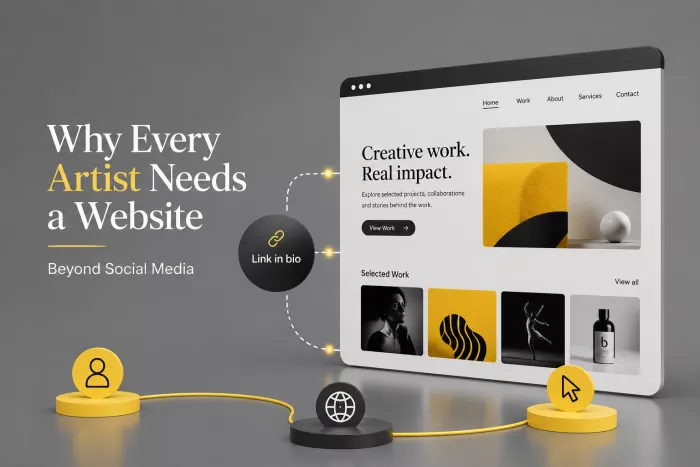
Social media can put creative work in front of a large audience, but attention scattered across posts, profiles and temporary links is difficult to organise. A link-in-bio page helps visitors choose where to go next, yet the destination behind those links matters more than the buttons themselves.
A website brings the strongest work, professional history, contact routes and current opportunities into one controlled space. It also gives clearer insight into which projects visitors explore, where enquiries begin and what content continues attracting interest long after it is published.
Social Profiles Are Borrowed
Social media has become part of how creative work is discovered. A photographer may attract clients through Instagram, an actor may share scenes and casting updates, while a musician may introduce a new song through short-form video. These platforms can place work in front of people who would never find it through a traditional search.
The artist still does not control the environment around that work. Platforms determine how profiles are arranged, which formats receive priority and how frequently followers see new posts. A designer who built an audience through static project carousels may lose reach when the platform begins favouring video. A performer may post a carefully produced showreel, only to see it buried beneath newer updates a few weeks later.
The audience relationship is also limited. Followers can be reached only through the tools and distribution systems provided by the platform. Even a large following does not guarantee that an important announcement, new release or booking update will appear in front of most people.
A website provides continuity. The domain, structure, project order and visitor journey remain under the artist’s control. Social profiles can continue bringing people in, but they no longer have to carry the full weight of the artist’s professional identity.
| Social media profile | Link-in-bio page | Personal website |
| Built around frequent posts and engagement | Built to direct visitors towards selected links | Built to present the complete professional identity |
| Older work quickly moves down the feed | Current priorities can remain visible | Important work can stay prominent indefinitely |
| Presentation follows a platform template | Design options are usually limited | Structure and appearance can match the profession |
| Followers remain inside the platform | Visitors are sent to external destinations | Visitors can enquire, book, subscribe or purchase directly |
| Best for discovery and conversation | Best for routing immediate traffic | Best for depth, credibility and long-term value |
The strongest digital presence uses all three deliberately. Social media creates discovery, the bio link organises the next click and the website provides the substance.
Bio Links Need Depth
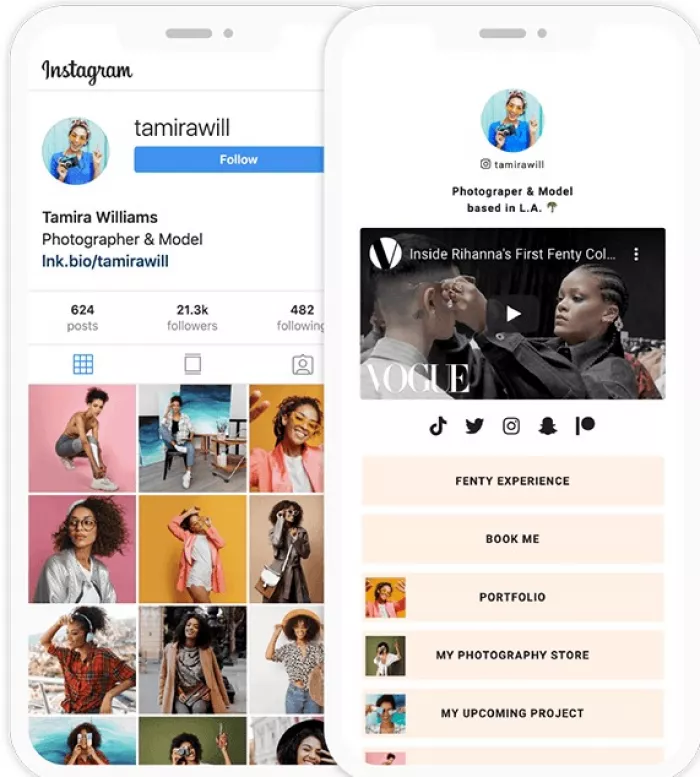
A link-in-bio page is useful because social profiles often allow only one prominent external destination. Rather than replacing that link whenever a new release, event or project appears, an artist can present several current options in one place.
An actor might link to a showreel, representation details and an upcoming production. A photographer may highlight a portfolio, booking form and print shop. A musician could direct listeners towards a new release, live dates and merchandise. A digital creator may feature recent work, partnerships and a newsletter.
This makes the bio link an effective traffic controller. It helps visitors choose a relevant route without scrolling through an entire social profile.
Its limitation is depth. A group of buttons cannot explain a creative practice, demonstrate range or provide enough evidence for a serious professional decision. A casting director needs more than a button labelled “Acting Work.” A brand reviewing a creator for a campaign needs examples, audience information and contact details. A client considering a designer needs project context, not only thumbnail links.
The bio link should therefore operate as an entrance rather than the complete destination. It can change frequently to reflect current priorities, while the website remains the stable centre behind it.
Feeds Flatten Creative Work
Social platforms place very different creative professions inside nearly identical layouts. A photographer, dancer, graphic designer, writer and actor are all presented through the same grid, feed or short-video interface.
That uniformity is convenient for platforms but restrictive for artists.
A photographer may need high-resolution galleries, project sequencing and image credits. An actor needs a showreel, headshots, training and performance history. A designer may need case studies showing the brief, decisions and final outcome. A musician requires releases, live recordings and booking information. A writer may need selected articles, books, scripts and publication credits.
A social feed cannot give each of these professions the structure it deserves. It records what was posted recently rather than what best demonstrates ability.
This can create a misleading first impression. A visitor may see informal studio updates before the completed campaign, personal posts before the professional reel or promotional clips before the strongest performance. The feed reflects activity, not necessarily quality or relevance.
A website allows the artist to lead with the most convincing evidence. The photographer can place a defining series first. The actor can feature a strong reel above old updates. The designer can guide visitors through selected case studies. The creator can separate editorial work from commercial partnerships.
The difference is significant. A feed shows what has been happening. A website shows what the artist wants to be hired, commissioned or remembered for.
Different Careers Need Proof
Every creative profession relies on a different form of evidence. A website becomes valuable when it is designed around that evidence rather than following a generic portfolio template.
An actor needs material that helps a casting director assess suitability quickly. This may include a showreel, current headshots, credits, skills, location, playing range and representation details. The site should make these elements easy to find without forcing visitors through personal updates.
A photographer needs visual consistency, but also practical information. Commercial clients may look for relevant industries, campaign experience and availability. Editorial clients may want published work, portrait experience or documentary projects. Separating these areas prevents a strong but unrelated gallery from weakening the enquiry.
A designer benefits from showing how decisions were made. Finished visuals may attract attention, but case studies explain the problem, constraints, process and result. This helps clients understand more than visual taste.
Musicians, dancers and performers often need a combination of recorded work and logistical information. Booking contacts, technical requirements, tour dates, credits and press materials may influence whether an opportunity progresses.
Creators and influencers need their own type of professional proof. Brands may want past campaigns, content formats, audience information, creative approach and usage options. A polished website can present these details without turning the public social profile into a permanent sales pitch.
| Creative profession | What the website should prove |
| Actor or performer | Range, screen presence, experience, current materials and booking route |
| Photographer | Visual style, technical ability, project relevance and client experience |
| Designer | Strategic thinking, process, execution and measurable project outcomes |
| Musician | Sound, performance quality, releases, live activity and booking availability |
| Writer or filmmaker | Voice, subject range, published work, credits and project experience |
| Creator or influencer | Content quality, audience fit, campaign history and collaboration options |
| Illustrator or visual artist | Distinct style, available work, licensing potential and commission suitability |
The website should not attempt to make every creative professional look the same. It should make the right evidence easy to evaluate.
First Impressions Need Control
Social media places creative work beside comments, advertisements, recommended posts and visible engagement numbers. Those elements affect how visitors interpret what they see.
A video with limited engagement may appear less important even when it is an excellent performance. A design project may lose impact when viewed as a small carousel between unrelated posts. A photograph intended to be studied may become another image in a rapid scroll.
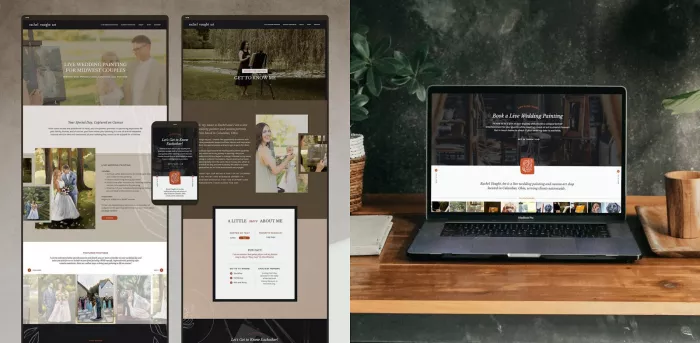
A website creates a more focused viewing environment. It gives the artist control over image scale, video placement, typography, spacing and sequence. These decisions influence whether the work feels considered or improvised.
Control does not mean adding complicated animation or decorative effects. The best creative websites often use restrained design because the work should remain the main attraction. Clear navigation, strong editing and thoughtful presentation usually contribute more than visual tricks.
The homepage should answer three questions quickly: who the artist is, what kind of work they create and where the visitor should go next. A vague opening statement followed by a full-screen image may look stylish, but it can leave a casting director, client or collaborator unsure about the artist’s actual role.
A precise first impression does not reduce creativity. It gives the work a clearer frame.
Context Strengthens the Work
A finished image, video, performance or design rarely tells the complete story. Context helps visitors understand the thinking, responsibility and skill behind it.
For a photographer, context might include the purpose of the series, location, publication or production team. A designer may explain the brief, audience and constraints. A filmmaker can identify their exact role in a project rather than presenting the final video as if it were completed alone. A musician may include songwriting, production and performance credits. A creator can explain the campaign objective and which parts of the concept they developed.
This information matters because creative work is often collaborative. Without proper context, visitors may not know whether the artist directed, edited, performed, designed or simply appeared in the project.
Project pages also protect important credits as work circulates. Social posts are frequently shared without full captions, and portfolio pieces may be separated from the people who created them. A website provides an authoritative version containing names, dates, roles and usage information.
Context should remain concise. Visitors do not need a long essay for every project. They need enough information to understand the challenge, the contribution and the result.
A well-built project page can include:
● A short summary explaining the purpose of the work and the artist’s role in it.
● Selected images, clips or excerpts arranged in a deliberate sequence.
● Relevant collaborators, clients, publications or production credits.
● A brief explanation of the process where it demonstrates valuable skill.
● A related action such as viewing another project, making an enquiry or requesting availability.
This turns a collection of finished outputs into evidence of professional ability.
Professional Visitors Need Clarity
A social audience may be happy to browse casually. Professional visitors usually arrive with a task.
A casting director wants to confirm whether an actor suits a role. An editor wants to review a photographer’s relevant work. A client wants to understand a designer’s experience. A venue wants to assess a performer and find the correct booking contact. A brand wants to know whether a creator fits a campaign.
These visitors should not have to search through old posts, story highlights and unrelated links.
The website can create direct routes for different intentions. Work, About, Credits, Press and Contact may sound ordinary, but they reduce effort. Clear navigation is especially important when an opportunity is being considered quickly.
Practical details also strengthen confidence. An artist’s location, availability, representation, preferred enquiry type and response method should be visible where relevant. A professional email address connected to a custom domain adds further consistency.
Credibility is not created by claiming to be established or innovative. It comes from making the work, history and contact information easy to verify.
Search Preserves Career Value
Social media is strongest at immediate discovery. Search engines are more useful for long-term discovery.
A post promoting a performance, campaign or exhibition may receive attention for a few days. A dedicated page can remain discoverable years later when someone searches for the project, profession, subject or collaborator.
This matters across creative fields. An editor researching documentary photographers may find an older photo essay. A producer looking for a movement director may discover a past production. A company searching for a packaging designer may reach a relevant case study. A journalist researching a musician may find an organised press page rather than scattered social posts.
Each project page becomes another entrance to the website. Over time, those entrances create a searchable career record.
Artists do not need to turn their websites into keyword-heavy publications. Clear language is usually enough. Project titles should identify the work accurately. Descriptions should mention the medium, role and relevant context. Images should use descriptive file names and alt text. Related projects should link to one another naturally.
The bio link can continue highlighting what is current. Search allows older work to retain professional value after it is removed from that priority list.
Websites Support Creative Income
A creative website should not behave like an aggressive sales page, but it should make the next professional step clear.
That step differs by profession. A photographer may need a booking enquiry. An actor may direct visitors to representation. A designer may invite project enquiries. A musician may sell tickets or accept bookings. A visual artist may offer prints, originals or licensing. A creator may provide a brand collaboration route.
The website can gather useful information before the conversation begins. A commission form may request the timeline, budget range and intended use. A photography enquiry can ask for the location and project type. A creator partnership form may request deliverables, usage rights and campaign dates.
This improves the quality of enquiries and saves time for both sides.
Not every opportunity should be processed through a form. Some professions benefit from direct contact through an agent, manager, gallery or production company. The website should explain that route clearly rather than allowing visitors to send enquiries to the wrong place.
Commercial information should also match the nature of the work. A print shop may display prices publicly, while a high-value commission may require a private discussion. A performer may list booking contacts without publishing fees. A designer may show services but avoid turning the portfolio into a fixed-price menu.
The goal is not to make every visitor purchase something. It is to help the right visitor take the right action.
Email Creates Direct Access
A social following can be large but difficult to reach consistently. An email list creates a smaller, more direct audience of people who have chosen to remain connected.
The value of that list differs across professions. A musician can announce releases and live dates. A visual artist can share private previews. A filmmaker may send festival updates. A writer can publish occasional essays or project news. A creator can develop an audience relationship beyond daily platform activity.
The website is usually the best place to explain what subscribers will receive. “Join my newsletter” is less persuasive than a specific promise such as early access to new work, monthly studio notes or exhibition invitations.
The email sign-up can also appear as a priority on the bio-link page during relevant periods. After a release or exhibition ends, another link can replace it without changing the website’s permanent structure.
Email should not become another content treadmill. Occasional, useful communication is more valuable than frequent messages sent without a clear purpose.
Build One Connected System
Social media, a bio link and a website should not operate as disconnected pieces. Social media introduces the work through timely posts, conversations and informal updates. The bio link highlights the most relevant next steps. The website contains the complete portfolio, professional information and permanent contact routes. Email supports the relationship after the first visit.
Each part should reflect the same identity. Names, profile images, role descriptions and contact details should remain consistent. A visitor should not see one profession listed on social media and a different description on the website. Commission availability should not be open in one place and closed in another.
The bio-link page should remain selective. It does not need to repeat every item in the website navigation. Three to five current links are usually enough, such as a new release, selected portfolio, booking route, shop or mailing list.
The website can hold the deeper structure:
● A focused homepage should explain the profession and present the strongest current work.
● A portfolio should be organised around the way clients, collaborators or audiences assess that discipline.
● Project pages should explain roles, context, credits and outcomes.
● An About page should combine a readable biography with relevant career information.
● A Contact page should direct different enquiries towards the correct person or method.
● Optional pages for press, performances, services, availability or sales should be added only where they solve a genuine need.
This system allows the artist to remain active on social platforms without depending on them completely.
Start Small and Focused
A useful website does not need dozens of pages. A clear five-page site is more effective than a large portfolio filled with weak work and outdated information.
The first version should include the strongest material, a precise professional description and a reliable contact route. Additional sections can be added as the career develops.
A performer may begin with a homepage, reel, credits, biography and contact page. A designer may start with three detailed case studies rather than twenty unexplained images. A photographer can publish a few tightly edited galleries before building a shop or archive. A creator may begin with selected campaigns, audience information and a partnership enquiry page.
Maintenance deserves as much attention as launch. Old tour dates, expired availability notices, broken videos and incorrect representation details weaken trust. The bio link should also be checked regularly because much of the traffic arriving from social platforms will pass through it.
A website should grow through better selection and clearer information, not only through the addition of more content.
Common Website Mistakes
The biggest mistake is building a website around the wrong meaning of “artist.” A generic template filled with gallery-style images will not serve an actor, filmmaker, writer or creator. The structure must reflect the profession.
Another mistake is presenting everything. A large archive without selection makes visitors work too hard. Strong editing shows confidence and helps the most relevant material stand out.
Vague role descriptions also create confusion. Terms such as multidisciplinary creative may be accurate, but they should not replace a clear explanation of what the person actually does. A visitor should know whether they are viewing the work of a director, performer, photographer, designer or creator.
Other common problems include slow media files, missing credits, hidden contact details and unclear navigation. Autoplay audio can be disruptive, while video-heavy pages may perform poorly on mobile connections. Since social and bio-link traffic often arrives through a phone, the mobile experience should be treated as essential rather than secondary.
The final mistake is using the website as a static business card. A site should not require constant updates, but it should reflect the artist’s current direction and strongest work.
Verdict: Build Beyond Platforms
Social media is useful for discovery, conversation and timely promotion, while a bio link creates a convenient bridge to current priorities. A website completes the system by giving those clicks a stable and informative destination.
It allows important work to remain visible beyond the lifespan of a post, gives professional visitors the details needed to make decisions and creates direct routes for bookings, commissions, collaborations, sales or subscriptions. It also builds a searchable career record that becomes more valuable as new projects are added.
The goal is not to replace social platforms. It is to prevent an entire professional presence from depending on them. Social media attracts attention, the link in bio directs it and the website turns it into lasting career value.

Comments