Indie Sleaze in 2026: The Messy-Glam Aesthetic Guide for Creators

Snigdha Das
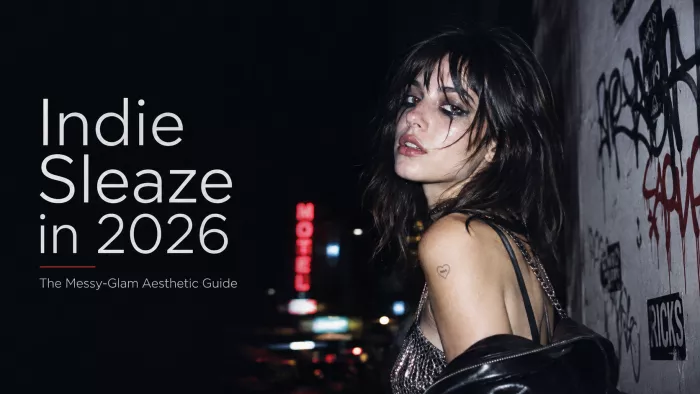
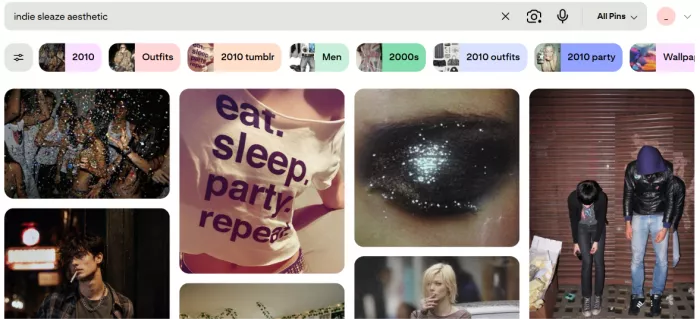
Open TikTok on a Friday night in 2026 and the feed looks like it fell out of a 2008 hard drive. Harsh flash. Red eyes. Someone's arm across the lens. Glitter on a kitchen floor at 1 a.m. The indie sleaze aesthetic is back, and the algorithm cannot get enough of it.
Beige feeds ruled for half a decade, and then the pendulum swung.
For creators, this revival is a rare alignment: a look, a sound, a photography style, and an audience mood all pointing the same way at the same time. This guide explains what indie sleaze actually is and why it returned. Then it gets practical, with content formats, niche angles, a starter kit, and a plan for turning one aesthetic into a personal brand that outlasts the trend cycle.
What Is Indie Sleaze?
Indie sleaze is a party-born aesthetic defined by direct flash photography, thrifted and worn-in fashion, smudged makeup, and an open rejection of polish. It first peaked between 2006 and 2012 on Myspace and early Tumblr, then came roaring back in the mid 2020s as an answer to years of minimalism.
That definition is doing heavy lifting, so here is the texture behind it. Picture a warehouse party shot on a cheap point-and-shoot. American Apparel disco pants next to a fur coat that cost eight dollars. A Vice magazine on the coffee table, a recession outside the door, glitter in the sink, and a bathroom mirror selfie taken through smoke. Nobody posed. Everybody performed.
The sleaze half of the name was earned. So was the indie half: this was a culture built by kids with blogs, borrowed cameras, cheap rent, and bands nobody's parents had heard of.
The first era, 2006 to 2012
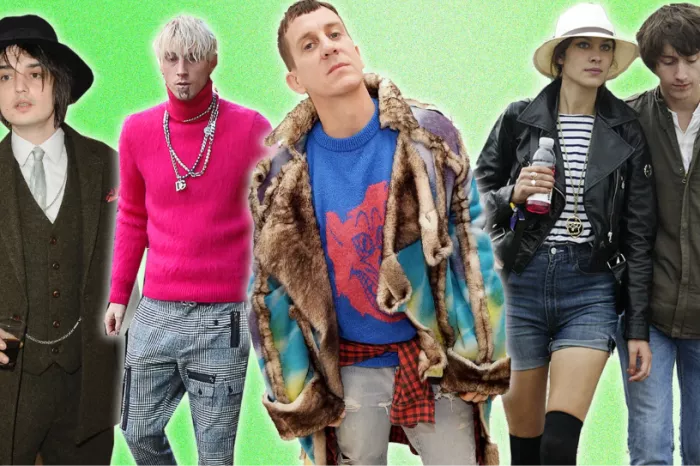
The original run had its own economy of fame. Party photographers like Mark Hunter, better known as The Cobrasnake, built entire careers shooting sweaty club nights, and landing on his site could make a scene kid semi-famous by Monday. Blogs and Myspace bios did the work follower counts do now. Faces like Alexa Chung, Cory Kennedy, Sky Ferreira, and Kate Moss became its patron saints, and the sound behind it all gets its own breakdown in the elements section below.
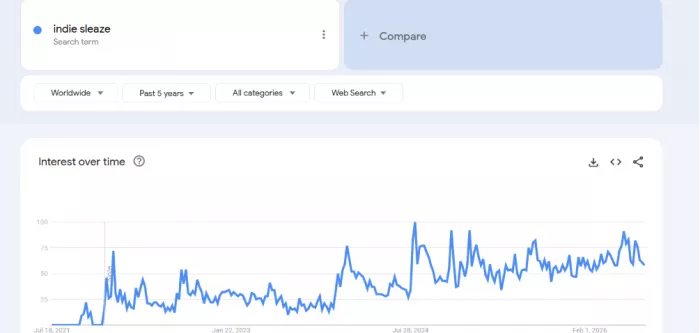
Here is the twist: nobody living through it called it indie sleaze. The label arrived retroactively in late 2021, when trend forecaster Mandy Lee predicted the look's return in a viral TikTok and the @indiesleaze archive account on Instagram gave the era its scrapbook. The name stuck because it captured what the old labels missed: glamour and grime sharing a single frame. That tension is the whole aesthetic, and it is why "messy-glam" is the shortest honest description of it.
That history matters because the 2026 revival is a remix rather than a rerun, and the differences are where your opportunity sits. The next section breaks down what changed.
Why It Came Back in 2026
Trend revivals need two engines: a push from culture and a pull from fatigue. Indie sleaze got both.
The music moved first
One album did more for this revival than any runway. Charli XCX released Brat in 2024, and its blown-out club sound and don't-care attitude handed the aesthetic a soundtrack and a face at the same moment. The Brat tour ran through August 2025, keeping the look in front of arenas. Around it grew a neo indie sleaze scene. The Dare took the downtown New York nightlife slot LCD Soundsystem once held. Olivia Rodrigo pulled the pop-punk crowd, and underground acts like Snow Strippers and The Hellp filled out the rest. Fashion caught up to a shift that music started. .
The runways made it official
The spring/summer 2026 shows confirmed what the internet had been hinting at for two years. Victoria Beckham sent out skinny jeans. Alexander McQueen showed Napoleon-style military jackets. The Balenciaga City bag, the defining handbag of the original era and a Kate Moss staple, is being carried again by people who were in primary school the first time around. Who What Wear opened the year with a list of pieces making the trend feel current, and fashion press spent spring calling the comeback bigger than the original.
Demna's debut at Gucci carried indie sleaze traces in its skintight fabrics and downtown self-awareness, and pre-fall 2026 collections leaned into the same dark energy. High fashion tends to sand off the rough edges that make the look work, which is why it still lives at street level
The feed got tired of perfect
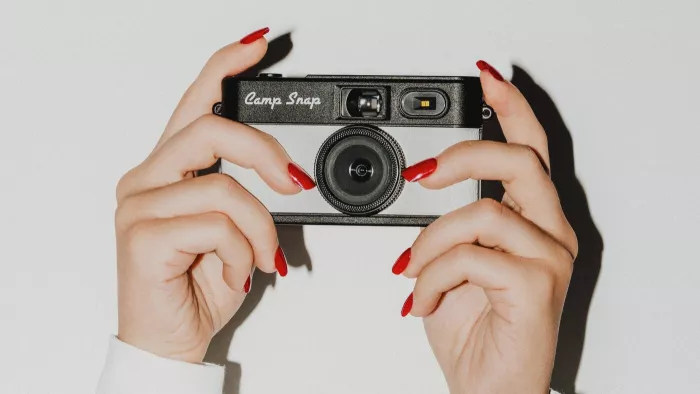
The deeper engine is exhaustion. Audiences sat through the clean girl era, quiet luxury, capsule wardrobes, and beige apartment tours until every feed looked like every other feed. Indie sleaze hands people permission to look like they had a night. Grainy digicam photos also solve a practical problem for creators: they hide the imperfections a ring light exposes, which is one reason secondhand point-and-shoot cameras keep selling out on resale apps. The camera trend has hard numbers behind it. Canon told NPR its PowerShot sales jumped nearly sevenfold between 2022 and 2025. Camp Snap, a screen-free digital camera brand, has sold more than 750,000 units. In Japan, digicam shipments rose in 2024 for the first time in seven years. Compact camera shipments in China surged 213 percent. These aren't accidental sell-outs. They sit at the center of a market that grew back while everyone assumed phones had buried it.
One more difference separates 2026 from 2008. The original era ran on fast fashion and disposable everything. The revival runs on thrift stores, resale apps, closet swaps, and repair culture, which happens to be the version both brands and audiences want to fund now.
There is also a colder, practical reason for creators to care: reach. Short-video algorithms in 2026 reward watch time and rewatches, and grainy flash content earns both, because viewers slow down to decode it. Polished studio footage reads as an ad within half a second, and ads get scrolled.
There's a driver underneath the other two: a hunger for anything that isn't a phone. Gen Z has been trading smartphones for flip phones and reaching for physical media over the churn of online aesthetics. The digicam fits that appetite. It shoots, and it does nothing else. No feed to fall into, no notifications to answer. For an audience raised entirely online, a device that only takes pictures reads as rebellion.
As the history section showed, the look was always photogenic chaos. What is new is that the chaos now has infrastructure: hashtags, resale markets, archive accounts, and a creator economy ready to pay for it. The rest of this guide is about taking your share, starting with the raw materials.
The Core Elements of the Look
Every aesthetic is a kit of parts. These are the four that make indie sleaze read as indie sleaze, and each one doubles as content raw material for the two sections that follow.
The wardrobe
Build outfits in contrast: one polished piece against several ruined ones. The core rack:
- Skinny jeans, the darker and tighter the better
- Ripped tights or fishnets, worn under shorts or slip dresses
- Vintage band tees, ideally soft enough to have survived actual tours
- A leather jacket, or studded anything
- Fur-trim coats and cropped denim from the thrift rack
- Ballet flats, creepers, chunky loafers, or beat-up ankle boots
- Wayfarer sunglasses, worn indoors without apology
The face and the hair
Makeup follows one rule: it should look survived, never applied. Smudged black eyeliner, yesterday's mascara, chipped polish, glitter that has migrated somewhere it was never put. Hair gets teased, slept on, air dried, or tied back with whatever was in your pocket. The polished blowout is the single fastest way to break the illusion..
The photography
This element matters most for creators, and the personal brand section below leans on it hard. Indie sleaze is a camera style before it is a clothing style. The signatures:
- Direct on-camera flash, preferably at night
- Digicam grain from an early 2000s point-and-shoot
- Red eye left in, motion blur left in
- Candid angles: mid-laugh, mid-yell, mid-fall, mid-sentence
- Group shots that look stolen rather than staged
The technical bar is low on purpose. Two settings matter: force the flash on, and switch every beauty filter off. A used digicam costs less than one studio light, and the gear list near the end of this guide names exact price ranges.
The soundtrack
On video platforms the audio does half the aesthetic work. Build around bloghouse and late 2000s indie: MGMT, Justice, Crystal Castles, Yeah Yeah Yeahs, LCD Soundsystem, early Kesha, M.I.A. Audio from these catalogs resurfaces as trending sound every few weeks, and the playlist idea in the content section turns that recurrence into a repeatable format instead of a lucky catch.
The revival comes with current artists too. Charli XCX anchors it. The Dare, Olivia Rodrigo, Snow Strippers, and The Hellp round out the neo indie sleaze wave. Their tracks trend as sounds the same way the old catalog does.
Indie Sleaze vs. the Other Internet Aesthetics
Search interest in aesthetic comparisons stays high all year, and audiences genuinely mix these up.
Indie sleaze grew out of the Y2K revival rather than beside it, drawing on the same early-2000s era but stripping the shine off. Where Y2K is glossy, indie sleaze is grimy. Same decade, opposite mood. The table settles it.
| Aesthetic | Peak era | Attitude | Signature pieces | Camera style |
|---|---|---|---|---|
| Indie sleaze | 2006 to 2012, revived mid 2020s | Glamorous mess, party first | Skinny jeans, fishnets, band tees, fur trim | Harsh flash, digicam grain, red eye, motion blur |
| Y2K | 1998 to 2004 | Shiny tech optimism | Low-rise denim, baby tees, metallics, tinted shades | Bright, saturated, glossy, futuristic |
| Grunge | Early 1990s | Detached, anti-fashion | Flannel, ripped denim, combat boots, thermal layers | Muted and moody, shot in daylight |
| Clean girl | 2020 to 2024 | Controlled minimalism | Slick buns, gold hoops, neutral sets, dewy skin | Soft natural light, filtered |
A quick test for your own photos: if the shot looks curated, you drifted into clean girl territory. If it looks like evidence, you nailed it.
Study the clean girl row hardest, because that is the aesthetic your audience is actively leaving, and the contrast between the two is the engine behind one of the highest-performing content formats in the next section. One clarification before moving on: the revival borrows from its neighbors, so a boho maxi skirt under a leather jacket still counts. Purity is the one thing this aesthetic never asks for.
The Catch Worth Naming
The original indie sleaze was accidental. Nobody at those parties was building an aesthetic; the mess was real because point-and-shoots were the only cameras in the room and glam teams didn't exist yet. The 2026 version inverts that. It's messiness staged for an algorithm. Low-fi filters get applied to high-res files. Chaos gets planned on a Tuesday for a post that ships Thursday. Fashion historians have started calling it a styled version of messiness, arguing the sleaze is largely missing. Vogue's Christian Allaire made the same point: the sloppiness that made the early era charming is exactly what a curated feed struggles to fake.
This belongs in a creator's toolkit because the ones who last know the difference. A feed that looks staged has drifted into the clean girl trap wearing fishnets. Go out for real, hand the camera to a friend, keep the ugly frames, post them anyway. Real beats referenced whenever the audience can tell.
Content Ideas That Ride the Trend
The photography style from the elements section is the engine here. Each idea below works because the format itself signals the aesthetic before the caption even loads.
- The digicam photo dump. Shoot a whole night on a point-and-shoot, post 8 to 12 frames unedited. Dumps outperform single images for this aesthetic because chaos needs volume.
- The flash GRWM. Get ready with me, lit only by on-camera flash. The lighting alone separates it from ten thousand ring-light versions of the same format.
- The priced thrift haul. Show each piece with what you paid. Secondhand sourcing is core to the 2026 revival, and visible price tags make the look feel achievable rather than aspirational.
- Party photographer for your scene. Become the person who shoots every local gig or house party, then post weekly recaps. This is the exact playbook that built The Cobrasnake, as covered in the history section.
- Songs that sound like 2009. Playlist content built from the soundtrack list above, posted as a carousel, a ranked countdown, a stitched reaction, or a "getting ready" audio pairing.
- The 2008 Tumblr recreation. Rebuild an old-school photoset or text post, screenshot style. Nostalgia formats travel because sharing them is self-expression for the viewer.
- Clean girl to indie sleaze transformation. Start polished, end flash-lit. Transition edits remain among the most rewatched short-video formats, and this one rides two aesthetics at once.
- The bedroom makeover. Exposed bulbs, band posters, a cracked thrifted mirror, string lights. Decor pulls a different audience segment than fashion, which widens your reach.
- POV skits set in 2009. Waiting for a Myspace comment, burning a CD for a crush. Comedy makes the aesthetic accessible to people who will never wear fishnets.
- Fit checks on a friend's camera. Hand over the digicam and get shot walking away, badly framed on purpose. Imperfection is the proof of authenticity here.
Matching ideas to your niche
- Fashion creators: ideas 1, 3, 7, and 10, plus a weekly styling breakdown of one thrifted piece.
- Beauty creators: ideas 2 and 7, plus smudged-liner tutorials filmed under flash instead of a ring light.
- Music creators: ideas 4 and 5, plus covers of bloghouse tracks filmed on deliberately grainy video.
- Lifestyle and decor creators: ideas 8 and 9, plus thrift-with-me vlogs shot handheld.
A posting rhythm that compounds
One more layer before we get to profiles: cadence. This aesthetic rewards consistency over volume. A workable week looks like one photo dump, one video format from the list above, one carousel, and one lightweight story set. Batch the shooting, since a single Friday night on the digicam can feed the whole week once you cut it into a dump, a fit check, a playlist pairing, and a behind-the-scenes clip.
Post one-off content and you get a spike. The next section is about converting spikes into something with your name on it.
Turning a Trend Into a Personal Brand
Here is the leak in most creators' funnels. A digicam dump takes off, 40,000 people see it, a few hundred tap through to the profile, and they find one plain link to one platform. The aesthetic that earned the click dies at the door.
The fix is a bio link page that carries the look and holds everything you offer in one place. This is the job TIEUP.IO exists for: the profile works like a micro-website and takes minutes to build, with room for unlimited links and videos. What an indie sleaze creator's page should hold:
- Your platforms, with your grainiest flash shot as the profile image
- The playlist from idea 5, embedded or linked out
- Your Depop or Vinted shop for the thrift finds you flip
- A booking link if you shoot parties, as pitched in idea 4
- Digital products, starting with digicam-style editing presets
- A mailing list signup for people who want the photo dumps before the algorithm decides
Monetization stacks fast once the page exists. Preset packs that recreate digicam flash sell repeatedly in the five to fifteen dollar range, party photography turns into paid bookings, thrifted finds flip on resale shops, and a small print store can sell the best frames from your dumps. Each of those is a separate income line running through a single URL.
Keep the handle and the visual language identical everywhere, because rediscovery is half the game. Someone who saw your dump on TikTok should recognize your Pinterest board and your TIEUP page in under a second.
Design the page like the aesthetic. TIEUP's customization is open-ended, so a profile can run dark backgrounds, flash-lit imagery, scattered stickers, and lowercase everything, instead of the default pastel grid most bio link tools produce. Creators featured on TIEUP's explore pages treat the profile as a destination rather than a list of links, and that is the standard to aim for.
A trend gets you discovered once. A page that matches the trend turns that discovery into a follower, a subscriber, a customer, or a booking.
The Starter Kit
Everything above assumes you have the raw materials. This is the shopping and setup list, kept cheap on purpose, because the aesthetic punishes anything that looks expensive.
Wardrobe, mostly thrifted
Around $60 at secondhand shops covers the essentials:
- One pair of skinny jeans (check the men's section for darker washes)
- Two band or graphic tees, the softer the better
- A leather or faux leather jacket
- Fishnets or ripped tights, which cost almost nothing new
- One chaos piece: fur trim, sequins, studs, or animal print
The face, for under $15
One black kohl pencil, a finger to smudge it with, cheap mascara you refuse to baby, and loose glitter. That is the entire beauty budget, and going past it usually reads as trying too hard.
Gear
- A secondhand digicam from the early 2000s. Resale prices run $30 to $80 for models that produce the exact grain this look wants.
- Camp Snap makes a screen-free digital camera that keeps turning up in celebrity hands. Kodak launched a digital disposable called the Charmera in September 2025 that sold out on release. Naming a current model beats hunting blind for an unmarked early-2000s point-and-shoot.
- One disposable film camera for special nights, since scans add a texture digicams miss
- Wired earphones, which cost $10 and function as the era's most recognizable prop
- A phone fallback for digicam-free nights: flash forced on, clarity and warmth pulled down in edits
The first week
- Days 1 and 2: thrift the wardrobe list and film the trip, which is content idea 3 finished
- Day 3: build the playlist and the TIEUP page from the previous section
- Day 4 or 5: shoot a flash GRWM before a night out, even an invented one
- The weekend: shoot the photo dump, then post it Sunday evening and pin it to your profile
Start Before the Flash Fades
Aesthetic revivals follow a curve: underground, ascendant, saturated, ironic. Indie sleaze in mid 2026 sits in the ascendant phase, past the point of doubt but ahead of the point where a fast fashion chain flattens it. The window for becoming an early archive of this moment is open now and will not reopen.
So claim a corner of it. Pick two ideas from the content list, thrift the kit, build a TIEUP profile that looks like your camera roll at 2 a.m., and post the first dump this weekend. The people everyone remembers from the first indie sleaze era were the ones holding the camera. That job just became vacant again.

Comments