8 Best AI Tools for Blogging in 2026 to Write Faster, Rank Higher, Scale Smarter




Blogging in 2026 is no longer just about producing more articles. The real challenge is building content that answers search intent, feels useful to readers, looks professional, and can be repurposed across multiple channels. The best AI tools for blogging now support the full workflow: topic research, outlines, writing, SEO optimization, editing, visuals, and content promotion.
Below are eight AI tools that can help bloggers publish stronger, cleaner, and more competitive content.
1. Scalenut: Best for SEO-Focused Blog Creation
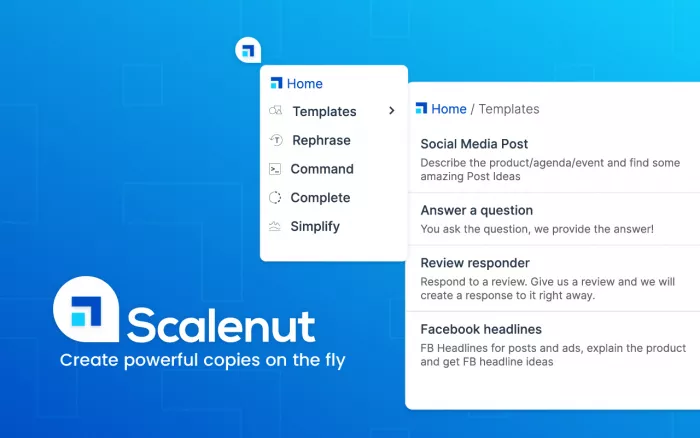
Scalenut is a strong choice for bloggers who want an AI writing tool built around SEO rather than just fast drafting. It helps with keyword planning, content outlines, article generation, optimization, and AI search visibility. That makes it useful for bloggers who publish informational articles, tool reviews, comparison posts, and search-driven content.
The platform is especially helpful when you need a structured workflow. Instead of starting with a blank page, Scalenut can help move from topic research to brief creation and then into content generation. For small teams and solo publishers, this can reduce the time spent switching between keyword tools, AI writers, and SEO checkers.
Its main limitation is that the final article still needs human editing. Like most AI writing tools, Scalenut can create structure and first drafts, but the strongest results come when a writer adds examples, opinions, product details, and real judgment.
Most useful features: keyword planning, AI article writing, content optimization, SEO reports, AI search visibility tools, and expert-led service options.
Scalenut Pricing and Plans
| Plan | Price | Best For |
| Starter | $59/month | Founders and small teams starting with AI visibility |
| Plus | $89/month | Growing teams needing optimization support |
| Professional | Around $199/month | Larger content teams |
| VIP Service | Custom | Brands needing expert-led SEO support |
Best Choice For SEO Bloggers
Scalenut is best for bloggers who want one platform for writing, SEO structure, and optimization instead of using separate tools for every stage.
2. Pippit AI: Best for Turning Blog Posts Into Visual Content

Pippit AI is not a traditional blog-writing tool, but it is useful for modern bloggers because publishing does not stop at the article. A strong blog post often needs a cover image, social media creatives, short videos, product explainers, posters, and promotional assets.
This makes Pippit AI valuable for bloggers who want to turn written content into visual content. A review article can become a short video. A how-to guide can become a social carousel. A listicle can become a promotional poster or short-form video. This is especially useful for blogs that rely on Pinterest, Instagram, TikTok, YouTube Shorts, LinkedIn, or newsletter promotion.
Pippit AI works best as a content repurposing tool. It helps bloggers extend the life of each article instead of publishing once and moving on.
Most useful features: AI video generation, image studio, avatars, link-to-video tools, sales posters, publishing scheduler, analytics, and social account support.
Pippit AI Pricing and Plans
| Plan | Price | Best For |
| Free | $0 | Testing basic features |
| Go Starter | $36.25/month monthly | Regular creators and bloggers |
| Go Starter yearly | $24.17/month billed yearly | Bloggers creating ongoing visuals |
| Enterprise | Custom | Larger teams and brands |
Best Fit for Blog Promotion
Pippit AI is best for bloggers who want to promote articles with visuals, videos, and social content instead of relying only on search traffic.
3. Jasper: Best for Brand-Controlled Marketing Blogs
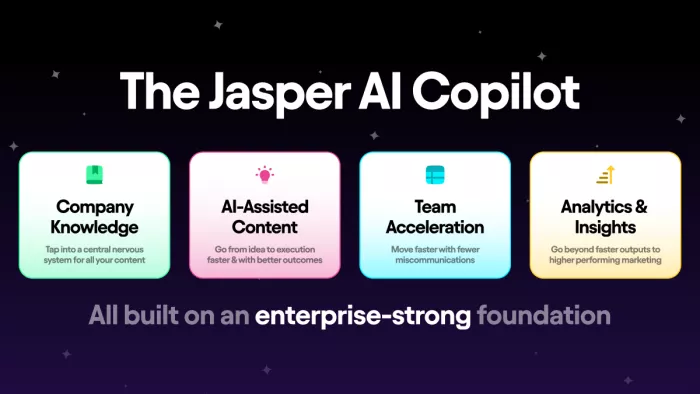
Jasper is built for marketers and content teams that need consistent messaging. It is useful for companies, agencies, and SaaS blogs where every article needs to match a brand voice, product positioning, and campaign strategy.
Its biggest strength is control. Jasper can help teams maintain brand voice, reuse approved messaging, and create content across blogs, landing pages, emails, and social posts. This makes it stronger for business blogging than casual blogging.
For solo bloggers, Jasper may feel more expensive than necessary. But for teams publishing at scale, its brand and collaboration features make it a serious option.
Most useful features: brand voice, marketing templates, team workflows, campaign content, AI agents, knowledge assets, and collaboration tools.
Jasper Pricing and Plans
| Plan | Price | Best For |
| Pro | Around $59/month annually | Small marketing teams |
| Business | Custom pricing | Larger teams and enterprise workflows |
Best Option for Brand-Led Blogging
Jasper is best for marketing teams that want blog content to stay consistent with broader campaigns, sales messaging, and brand identity.
4. Copy.ai: Best for Blog Workflows Connected to Marketing and Sales

Copy.ai is useful when blog content is part of a larger go-to-market workflow. It can help create blog posts, sales emails, product copy, campaign content, and marketing assets from one system.
For bloggers, Copy.ai works well when articles are tied to business goals. A product blog can become an email campaign. A comparison article can become sales enablement material. A thought-leadership post can become social copy and outbound messaging.
Its pricing and structure make it better suited for teams than casual individual bloggers. The platform is more valuable when multiple people are using workflows across marketing and sales.
Most useful features: AI chat, workflow automation, brand voice, document builder, GTM templates, sales copy, blog generation, and team seats.
Copy.ai Pricing and Plans
| Plan | Price | Best For |
| Chat | $29/month, or $24/month billed annually | Small teams and content marketers |
| Growth | $1,000/month billed annually | Larger GTM teams |
| Expansion | $2,000/month billed annually | Enterprise automation teams |
| Scale | $3,000/month billed annually | Large organizations |
| Enterprise | Custom | Custom enterprise needs |
Strong Pick for Revenue-Focused Blogs
Copy.ai is best for companies where blog content supports sales, lead generation, product marketing, and customer education.
5. Writesonic: Best for SEO and AI Search Visibility
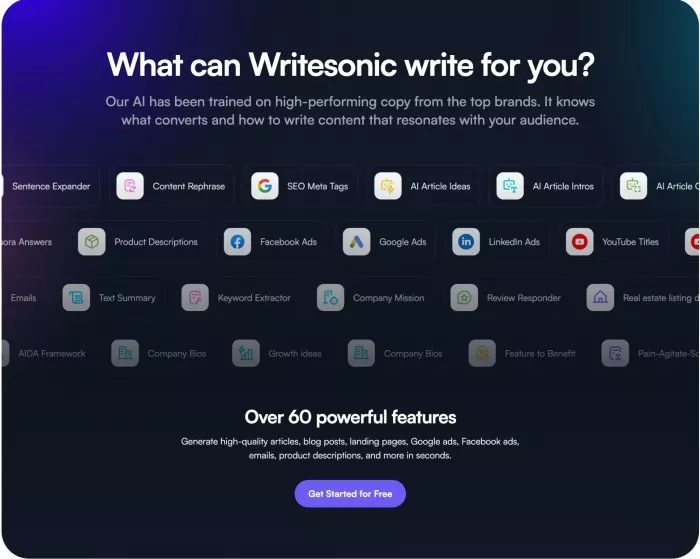
Writesonic has shifted from being a general AI writer into a broader SEO and AI search visibility platform. That makes it useful for bloggers who care about how their content appears across Google, ChatGPT, Gemini, and Google AI Overviews.
The tool can support AI article creation, SEO audits, brand visibility tracking, and content optimization. For publishers, this matters because search is changing. Ranking in Google is still important, but appearing in AI-generated answers is becoming another visibility layer.
Writesonic is more expensive than many basic AI writers, so it is best for serious content teams rather than casual bloggers.
Most useful features: AI article writing, SEO audits, GEO tracking, AI visibility monitoring, brand presence tracking, prompt tracking, and content optimization.
Writesonic Pricing and Plans
| Plan | Price Monthly | Annual Price | Best For |
| Starter | $79/month | Lower annual rate available | Solo marketers |
| Basic | $249/month | $199/month annually | SEO and GEO teams |
| Growth | $499/month | $399/month annually | Larger content teams |
| Enterprise | Custom | Custom | Enterprise workflows |
Writesonic’s pricing page lists Starter at $79 per month, Basic at $199 per month billed annually, and Growth at $399 per month billed annually. Its documentation also lists Basic at $249 monthly and Growth at $499 monthly.
Best for AI Search-Aware Blogging
Writesonic is best for bloggers and teams who want to track visibility across both traditional search engines and AI answer platforms.
6. Surfer: Best for On-Page SEO Optimization

Surfer is one of the strongest tools for improving articles before publishing. It helps compare your draft against competing pages and gives guidance on content depth, keyword coverage, structure, and topical relevance.
Surfer is most useful after the first draft is ready. Instead of asking it to write the whole article, bloggers should use it to check whether important subtopics are missing, whether the article is too thin, and whether the page has enough SEO depth.
The key is not to chase the score blindly. Surfer should guide the article, not control it. A useful, readable article with a slightly lower score is better than an over-optimized article that feels unnatural.
Most useful features: Content Editor, AI visibility tracking, prompt tracking, document optimization, integrations, plagiarism checker, and content audits.
Surfer Pricing and Plans
| Plan | Price | Best For |
| Standard | $99/month billed yearly | Small SEO teams |
| Pro | $182/month billed yearly | Growing teams |
| Enterprise | Custom | Large SEO operations |
Surfer’s pricing page lists Standard at $99 per month billed yearly and Pro at $182 per month billed yearly, with document optimization, AI visibility tracking, and prompt tracking included.
Best for Search-Driven Articles
Surfer is best for bloggers who already have drafts but want stronger SEO structure before publishing.
7. Frase: Best for Research Briefs and SERP Planning

Frase is useful for bloggers who want better planning before writing. It helps analyze search results, build briefs, identify common questions, and understand what competing pages cover.
This is especially useful for informational articles, comparison posts, and long-form SEO content. Instead of guessing what readers need, Frase helps writers build articles around search intent and topic coverage.
Frase is not just about writing faster. Its bigger value is helping bloggers write with better direction. A strong brief can prevent weak structure, missing sections, and thin coverage.
Most useful features: SERP analysis, AI content briefs, topic research, question discovery, AI writing support, optimization, AI visibility tracking, and site audits.
Frase Pricing and Plans
| Plan | Price | Best For |
| Entry plan | From $39/month | Solo bloggers and small teams |
| Higher plans | Varies by scale | Growing teams |
| Trial | 7-day free trial | Testing before subscribing |
Best for Better Blog Planning
Frase is best for bloggers who want to create stronger outlines and briefs before writing the full article.
8. Grammarly: Best for Editing and Final Polish

Grammarly is not a full blogging platform, but it is one of the most useful tools for the final stage of publishing. It helps improve grammar, clarity, tone, fluency, and sentence structure.
For bloggers, Grammarly is especially useful before hitting publish. Even a well-researched article can lose trust if it has awkward sentences, grammar mistakes, or inconsistent tone. Grammarly helps clean up the final draft without changing the core idea.
Its AI features also support rewriting, tone adjustment, plagiarism detection, and AI-generated text detection. Writers should still review suggestions manually, but it is a useful quality-control layer.
Most useful features: grammar checking, full-sentence rewrites, tone adjustment, plagiarism detection, AI text detection, writing suggestions, and browser support.
Grammarly Pricing and Plans
| Plan | Price | Best For |
| Free | $0/month | Basic grammar and tone checks |
| Pro annual | $12/member/month billed annually | Bloggers and teams |
| Pro monthly | $30/member/month | Short-term users |
| Enterprise | Custom | Larger organizations |
Best Final Step Before Publishing
Grammarly is best for bloggers who want cleaner, sharper, and more professional writing before publication.
Which AI Blogging Tool Should You Choose?
| Need | Best Tool |
| SEO blog writing from start to finish | Scalenut |
| Blog visuals and social promotion | Pippit AI |
| Brand-controlled marketing content | Jasper |
| Blog workflows tied to sales and GTM | Copy.ai |
| SEO plus AI search visibility | Writesonic |
| On-page SEO optimization | Surfer |
| SERP research and content briefs | Frase |
| Editing and final polish | Grammarly |
Final Verdict
The best AI tool for blogging depends on the weak point in your workflow. If you need SEO-focused writing support, Scalenut is a strong starting point. If you want to turn blog posts into visuals and social content, Pippit AI is the most useful add-on. Jasper and Copy.ai are better for marketing teams, while Writesonic, Surfer, and Frase are stronger for SEO-heavy publishing. Grammarly remains the safest final editing tool before publishing.
A practical blogging stack does not need every tool on this list. For most bloggers, a strong setup would include Scalenut or Frase for planning, Surfer for optimization, Pippit AI for promotion, and Grammarly for final editing. That covers the full blogging cycle: research, writing, optimization, polishing, and distribution.


Comments