Online Portfolio vs. Personal Website: Which Fits a Creator's Goals?

Ranjit Sharma
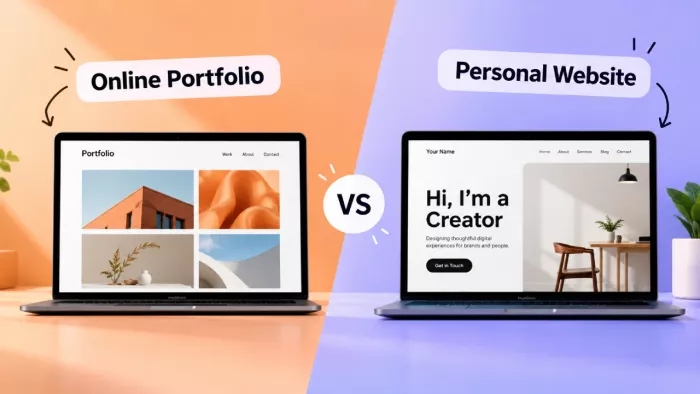
Most creators use "portfolio" and "website" as if they mean the same thing. They don't, and the gap between them quietly decides how far your work travels. A portfolio shows what you can do. A website is where everything about you lives: the work, the story, the offer, the way to reach you. One is a display case; the other is the building it sits in. Mix them up and you end up with a beautiful gallery nobody can find, or a sprawling site that buries the three projects that actually win you work.
The real question was never which one is better. It's which one fits what you're trying to do right now, and where you are in your career. Here's how to tell them apart and pick without overbuilding.
What an Online Portfolio Is Built to Do
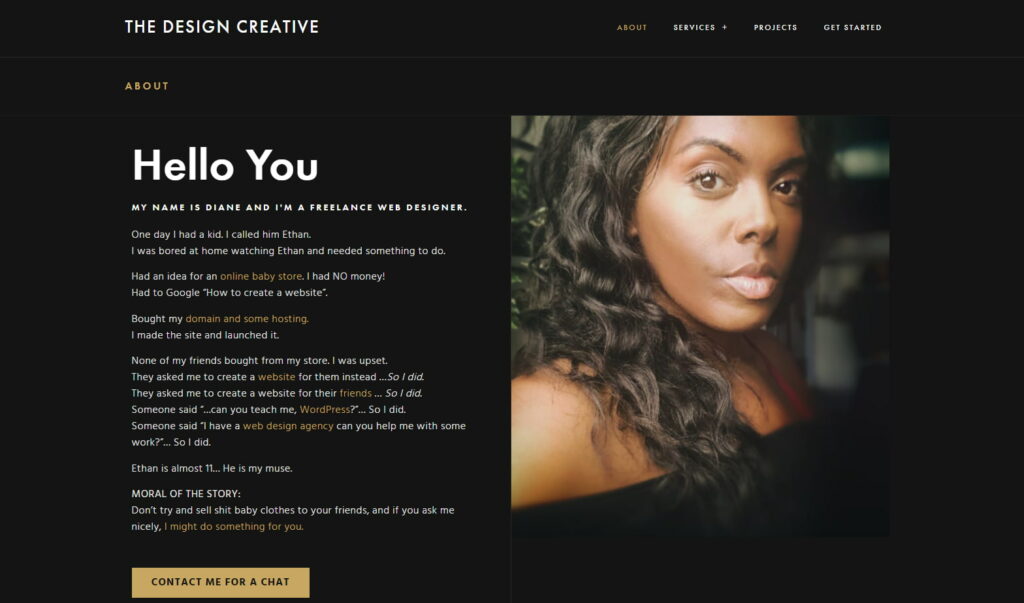
A portfolio has one job: prove you can do the work, fast. It's a tight, curated set of your strongest pieces, and knowing how to create a creator portfolio that highlights relevant skills helps someone judge your work in under a minute.
Most portfolios live on a host Behance, Dribbble, a template builder, or the portfolio tab of a creator platform. That's deliberate. The platform handles the layout, the hosting, and sometimes even the audience, so your time goes into choosing work instead of wrestling with design or code. A few things it's built to do well:
● Launch fast. You can have something live the same afternoon, no domain purchase or design skills required.
● Put the work first. The format pushes your images and projects to the front and keeps everything else out of the way.
● Stay frictionless for the viewer. A client or hiring manager sees the proof immediately, without digging through menus to find it.
The trade-off is depth. A portfolio answers "can you do this?" extremely well. What it rarely answers is the fuller question a serious buyer asks next who are you, what exactly do you offer, and how do I actually work with you?
What a Personal Website Is Built to Do
A personal website is your owned identity hub, a domain you control that holds your work and everything around it. Knowing what a personal website should include helps you organize your story, services, rates, contact details, and other information without overwhelming visitors.
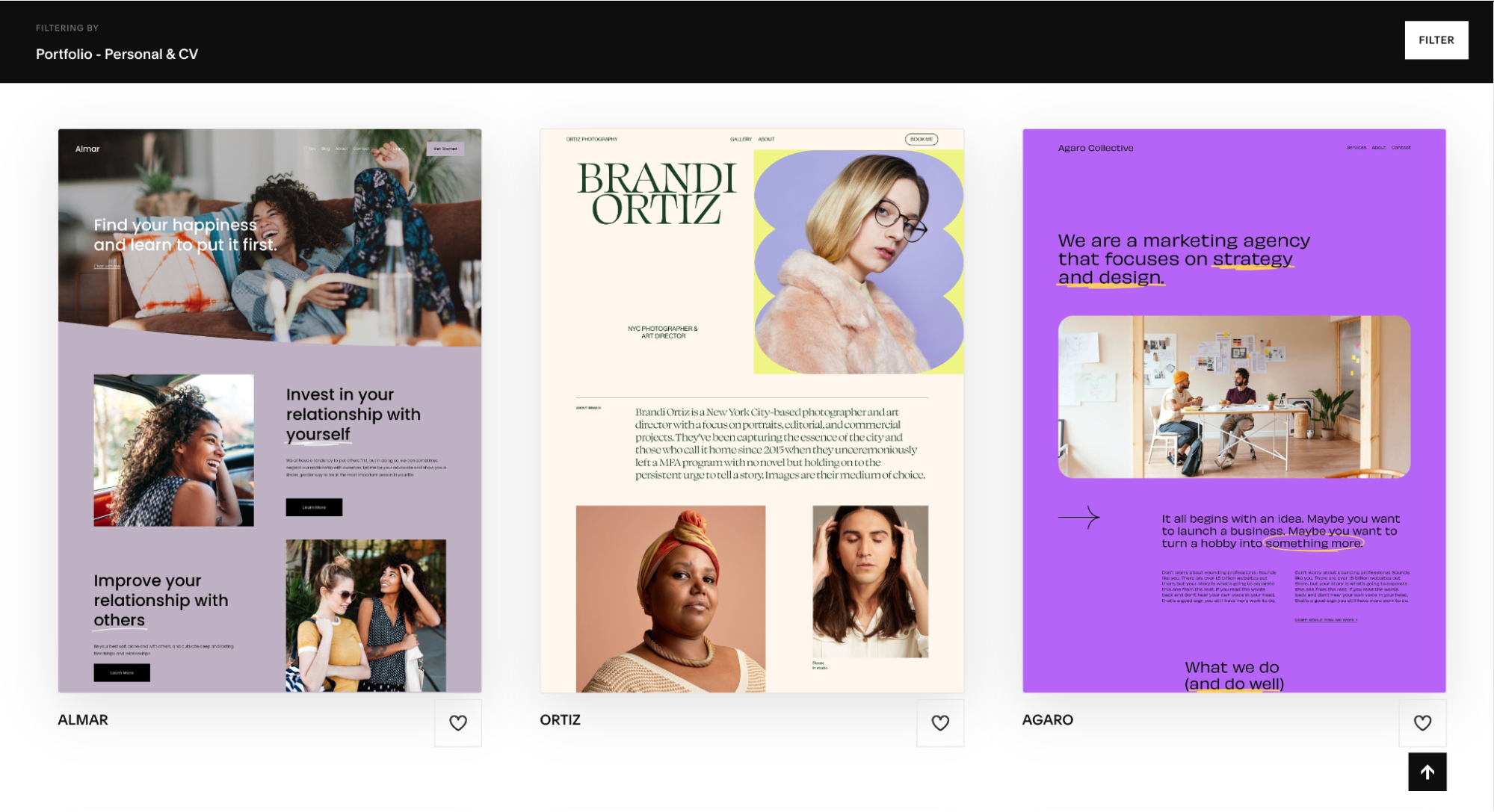
Where a portfolio is a display case, a website is the whole room. The work still matters, but now it sits inside the context that does the selling for you proof of who you are, what you stand for, and why someone should pick you over the next person with a similar reel. Its job is broader and slower. A portfolio converts attention you already have; a website builds a home that attention can be pointed at from anywhere: a business card, a podcast bio, a pitch email, a search result.
That breadth is both the point and the cost. You get room to grow and full control over the experience. You also take on the setup, the upkeep, and the quiet pressure of an empty page you're now responsible for filling.
The Difference That Actually Matters: Rented vs. Owned
Here's the distinction most comparisons skip, and it matters more than design or price.
A portfolio on a platform is rented space. You play by the platform's rules, you're subject to its algorithm, and your reach depends on decisions you don't make. If the platform changes its terms, buries your profile, or shuts down, your presence goes with it and you usually can't take your audience along.
A personal website on your own domain is owned space. The tool you build it with can change, but the domain, the content, and the relationship with your audience stay yours. You can switch hosts, redesign, or pivot your whole offer without asking permission or losing your address.
Creators already feel this risk. Anyone who's watched a social account lose reach overnight knows the ground can shift without warning. A portfolio bets on the landlord staying friendly. A website is the one piece of your online presence a platform can't quietly take back and that single fact reframes the whole decision. It isn't a display case vs. building. It's renting vs. owning.
Start With the Goal, Not the Tool
Most people pick the tool first and reverse-engineer a reason for it. Flip the order. Name the outcome you want over the next year, then let that point you to the format.
| Your main goal | What usually fits |
| Land freelance clients or get hired | Portfolio first proof of skill is what closes the deal |
| Sell your own products or services | Website you need checkout, offers, and full control |
| Build and keep an audience | Website email capture and owned traffic are the point |
| Establish authority in a niche | Website searchable writing compounds over time |
| Show a single discipline simply | Portfolio anything more is overbuilding |
None of these are absolute. A photographer chasing clients can run on a portfolio for years; a writer building authority needs a site almost immediately. The point is to choose from the goal down, not the tool up. Start with "I should have a website" and you build something you don't need yet. Start with "I want to sell my own course" and the answer picks itself.
Side-by-Side: Cost, Control, Setup and Flexibility
Here's how the two stack up across the factors that usually decide it. Read it less as a scoreboard and more as a map of trade-offs.
| Factor | Online portfolio | Personal website |
| Setup time | Minutes to an afternoon | Days to weeks, depending on scope |
| Ongoing cost | Often free or low, in platform tiers | Domain + hosting + any paid tools |
| Customization ceiling | Capped by the template | Effectively unlimited |
| Ownership | Rented; lives on the platform | Owned; lives on your domain |
| Best at | Showing work fast | Building a full presence |
Read down the column that matches your stage. If setup time and ongoing cost are what you care about most, a portfolio wins cleanly. If customization and ownership sit at the top of your list, the extra effort of a website pays for itself. The factors never change which ones you weight does, and that shifts as you grow.
Discoverability and SEO
This is the trade most creators find out about too late.
A portfolio on a big platform borrows that platform's traffic. People already browse Behance or Dribbble, so your work can get seen without much effort from you. But the search authority the ranking power built every time someone links to or discovers your work mostly accrues to the platform, not to you. You're a tenant benefiting from the landlord's foot traffic.
A personal website starts with none of that. Nobody is browsing your domain on day one. But every post you publish, every backlink you earn, and every page that ranks builds authority that belongs to you and keeps compounding. Two years in, a well-tended site can pull steady search traffic that no portfolio profile ever will.
So the honest version: portfolios give you borrowed reach now, websites give you owned reach later if you put in the work. Early on, borrowed traffic is often the smarter bet. The longer your time horizon, the more the compounding tilts toward a site.
The Maintenance Reality
Nobody mentions the upkeep until it's yours. A portfolio is low-maintenance by design. The platform handles security, updates, and uptime. Your only real job is swapping in newer, better work now and then. For the most part it runs itself.
A website is a small ongoing responsibility. Someone has to keep the software current, fix whatever breaks after an update, refresh pages that have gone stale, and renew the domain before it lapses. It isn't heavy, but it's never zero and a neglected site still showing work from three years ago can read as more out of date than no site at all.
This isn't a reason to avoid a website. It's a reason to be honest about the cost before you commit. If you won't tend it, a clean portfolio beats a stale site every single time.
When a Portfolio Is Enough
Not everyone needs a website, and building one too early is its own mistake. A portfolio does the whole job if you recognize yourself in any of these:
● You're early in your career, and the priority is landing the next client or role rather than building a brand.
● You work in a single visual discipline photography, design, illustration, motion where the work carries the argument on its own.
● You lean on a platform's built-in audience, and it's already sending real opportunities your way.
● You don't sell anything directly, so you have no need for checkout, offers, or email capture.
If that's you, a portfolio isn't a compromise, it's the right call. The effort you'd pour into a website is better spent making the work itself undeniable. In every situation where proof of skill is what actually closes the deal, a strong portfolio beats a half-finished site.
Signs You've Outgrown It
The moment to move usually announces itself. Watch for these:
● You've started selling your own thing a product, a course, a service and you're routing people to a checkout the platform was never built to handle.
● You're getting repeat visitors, not just one-time viewers, and you've got nothing to bring them back.
● You want to capture emails so your audience is actually yours, not rented from a platform that can change the rules overnight.
● You're collaborating, pitching, or getting press, and a platform profile no longer feels like it represents you.
Any one of these is a signal. Two or three together mean you've already outgrown the portfolio and are just feeling the friction. The tell is simple: the moment you catch yourself wishing the portfolio could do something it structurally can't sell, capture emails, host your writing you've hit the ceiling, and it's time to own your space.
The Hybrid Approach and Where a Link-in-Bio Hub Fits
Here's what most established creators actually do: they stop choosing. They run a portfolio and a website, each doing the job it's best at, and they tie everything together with a link-in-bio hub.
The hub is the connective tissue. It's the single link in your Instagram bio, your TikTok, your email signature and from there you send people wherever they need to go: your portfolio to see the work, your shop to buy, your site to read your story or get in touch. Instead of forcing one URL to do five jobs, you give people a clean fork in the road.
That solves the real problem, which was never portfolio vs. website it was fragmentation. Creators live across half a dozen platforms, and the hub pulls them into one coherent front door. So the mature setup isn't a single tool. It's a portfolio for proof, a website for ownership, and a link-in-bio hub holding them together, so that wherever someone finds you, they land somewhere that makes sense.
How to Decide in One Pass
You don't need a spreadsheet. Run these prompts and the answer usually falls out:
● Do you sell anything directly? Yes → website. No → a portfolio probably covers you.
● Is your goal getting hired, or building something that's yours? Hired → portfolio. Building → website.
● Will you actually maintain it? No → keep it to a portfolio you can set and forget.
● Do you already have an audience you want to keep? Yes → you need owned space and email capture, so a website.
● Are you spread across several platforms? Yes → add a link-in-bio hub regardless of the answers above.
Count where your answers land. Mostly portfolio-side, start there and keep it simple. Mostly website-side, the extra effort is justified build it. A mix is completely normal, and it points straight at the hybrid: portfolio now, site when one of these answers flips, hub connecting them from the start.
The Verdict: Match the Tool to the Moment
There's no universal winner here, because the two tools aren't really competing; they're built for different moments on a creator's path.
Early on, when the job is to prove you can do the work, a portfolio is the honest, efficient choice. Later, when you're selling, building an audience, or ready to own your corner of the internet, a website earns its keep. And a link-in-bio hub starts making sense the moment your presence outgrows a single link.
So don't pick for the creator you'll be in five years. Pick for where you are now, keep your work and your audience portable, and let the setup grow as you do. Match the tool to the moment and change the tool when the moment changes.


Comments