TIEUP.IO vs Stan Store: Which Is the Better Tool for Selling From Your Bio?

Christine Davis
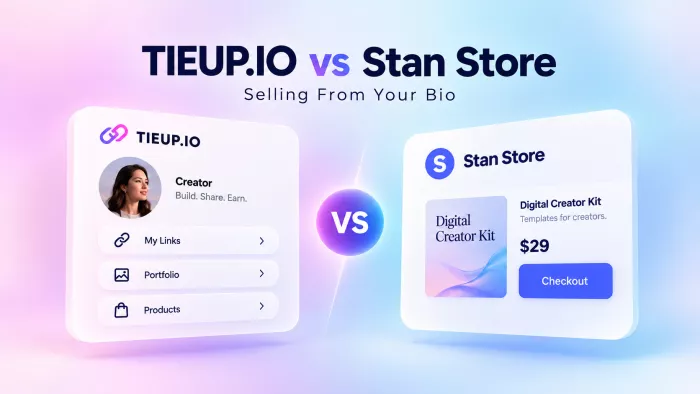
The short version Stan Store is a purpose-built checkout that exists to turn a follower into a buyer in as few taps as possible. TIEUP.IO is a broader creator hub where selling sits alongside your links, portfolio, and brand-deal presence. If direct digital-product sales are your whole game, Stan is hard to beat. If selling is one of several ways you make money, TIEUP.IO's wider net may serve you better and it lets you start for free. |
I didn't come to this comparison as someone clicking through demos. I've put actual products behind both tools, pushed traffic from the same audience at them, and watched what happens between “someone tapped my bio link” and “someone paid me.” That's the only test that matters, and it's the one most comparison posts skip.
The two get filed under the same “link in bio” label, but after living in both for a while, I'd argue they're barely competing for the same job. That difference is the whole story, so let me start there and work outward.
1. Meet the Contenders
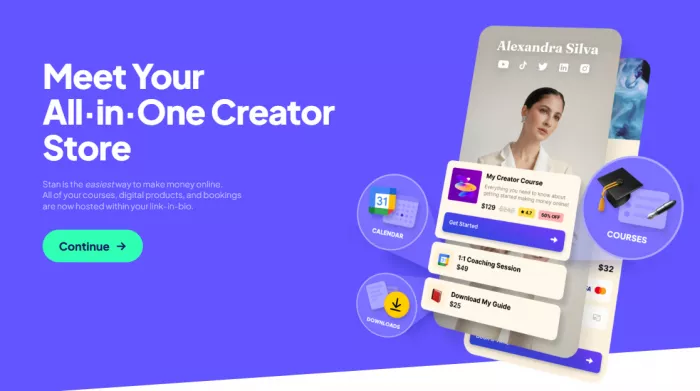
Stan Store is the one you've seen linked under a thousand TikTok and Instagram bios. It's a mobile-first storefront: a clean, vertical page where a visitor scrolls a short list of offers, taps one, and checks out on the spot. Everything about it is built around that single motion.
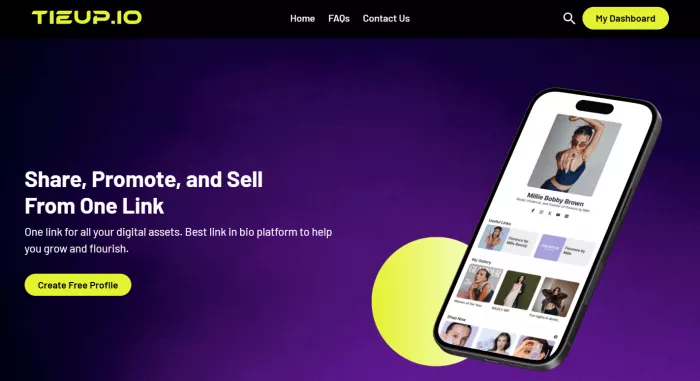
TIEUP.IO is aiming at something bigger. It bills itself as an all-in-one creator platform part link hub, part portfolio, part storefront. The pitch is that your one link becomes a “mini-world”: your work, your socials, your products, your promo codes, and your brand-collaboration presence, all on one customizable page.
| Metric | TIEUP.IO | Stan Store |
| What it really is | Creator hub + portfolio + storefront | Focused selling storefront |
| Best known for | Bringing your whole presence into one link | Fast, high-converting product checkout |
| Free to start? | Yes free profile | No 14-day trial only |
| Feels built for | Multi-income creators & influencers | Coaches & digital-product sellers |
2. Storefront vs Creator Hub : The Difference That Decides Everything
Here's the thing I wish someone had told me before I tested both: these tools optimize for two different verbs. Stan optimizes for buy. TIEUP.IO optimizes for explore.
That sounds like a small distinction until you see it play out. On Stan, a visitor's attention has almost nowhere to go except your offers, that's by design, and it's why the checkout rate feels high. On TIEUP.IO, a visitor can wander through your portfolio, links, socials, and products, which is wonderful for showing the full picture of who you are and terrible if your only goal is to funnel someone toward one purchase.
So before comparing a single feature, answer this honestly: do you want a page that sells one thing well, or a page that represents everything you do? Almost every difference below flows from that answer.
3. Pricing & Fees What Each Actually Costs
This is where people make lazy comparisons, so let me be precise. The number on the pricing page is not what a tool costs you transaction fees and the free-plan question matter just as much.
Stan Store has no free tier; you get a 14-day trial and then pay. Its plans are the Creator plan at $29/month and Creator Pro at $99/month, both cheaper billed annually. The part that genuinely surprised me: Stan takes no platform cut of your sales. You pay only the standard Stripe or PayPal processing fee (roughly 2.9% + 30¢). For a real seller, that flat-subscription, zero-platform-fee model is a big deal at volume.
TIEUP.IO flips the entry point: you can spin up a profile for free, which lowers the barrier to just getting something live. Its paid tiers unlock the more advanced pieces. One honest caveat from experience, TIEUP.IO's plan structure has shifted over time, so check the current numbers on their site before you commit rather than trusting any figure you read secondhand, mine included.
| Feature | TIEUP.IO | Stan Store |
|---|---|---|
| Free Plan | Yes. Creators can start with a free profile. | No. A 14-day free trial is available before a paid plan is required. |
| Paid Entry | Premium features are available for creators who need more functionality. | Creator: $29/month · Creator Pro: $99/month |
| Selling Model | Supports product showcases, affiliate links, promo codes, and links to external destinations. | Provides native checkout for selling directly, with 0% Stan transaction fees. |
| Cost Approach | A lower-cost option for building a creator presence first and expanding as needed. | A fixed monthly subscription designed primarily around direct selling and monetization. |
The takeaway isn't “one is cheaper.” It's that they price for different sellers. TIEUP.IO removes the risk of starting; Stan removes the friction of scaling. If you're doing serious monthly sales, run your own numbers at a flat $29 with no platform cut often beats a “free” tool once real money moves through it.
4. Selling & Checkout From Tap to Payment
This is the section that separates a real selling tool from a pretty page, and it's where Stan's single-mindedness shows.
On Stan, the distance from “tapped your bio” to “entered card details” is about as short as it gets on the web. The offers sit right there, the checkout is native and mobile-optimized, digital delivery is automatic, and the whole thing is engineered so a distracted phone user doesn't fall out of the flow. When your traffic is cold and impulsive which social traffic almost always is that tightness converts.
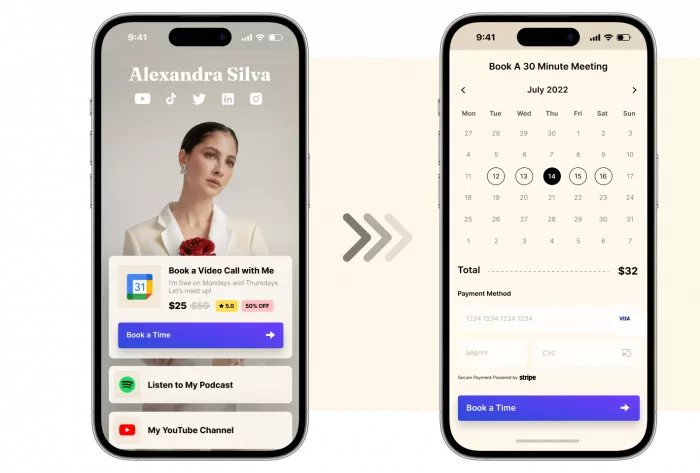
TIEUP.IO takes a lighter approach to selling. It works well for showcasing products, affiliate offers, promo codes and services in one place, while the actual purchase may continue through another platform. That makes it useful when the goal is to present several offers from one creator profile. Stan goes further by keeping checkout, payment and digital delivery inside the same system, which creates a more direct path from product discovery to purchase.
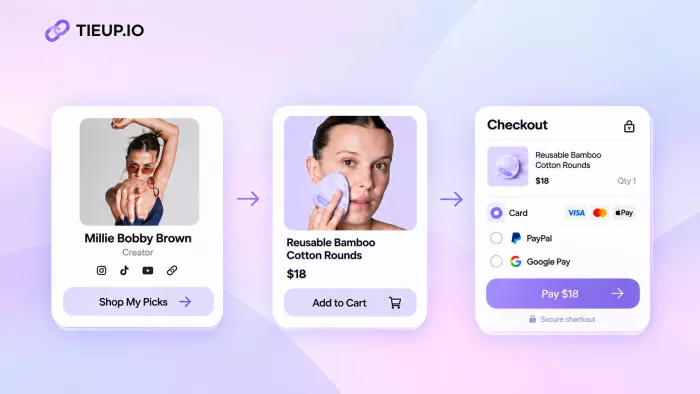
A rule I trust Every extra tap between the bio and the payment screen quietly costs you sales you'll never see. Whichever tool you pick, count the taps. |
5. What You Can Actually Sell on Each
“Can it sell?” is the wrong question. “Can it sell what I sell, natively?” is the right one. Here's how the two stack up across the things creators actually charge for.
| You want to sell | TIEUP.IO | Stan Store |
| Digital downloads (ebooks, presets) | Via product showcase | Native, auto-delivery |
| Online courses | Best hosted elsewhere & linked | Native, unlimited |
| Coaching & bookings | Via linked scheduler | Native booking calendar |
| Subscriptions / memberships | Check current support | Native, recurring billing |
| Affiliate links, promo codes | A core strength | Affiliate program on Pro |
| Portfolio / brand-deal showcase | Built for exactly this | Not the focus |
Read that table and the personalities jump out. Stan is deep on the things you sell directly: products, courses, calls, subscriptions with real checkout machinery behind each. TIEUP.IO is broad across the things a creator presents products plus promo codes, affiliates, and a portfolio that helps land the brand deal in the first place.
6. Design, Customization & Branding
TIEUP.IO gives you more room to make the page feel like you a drag-and-drop wall, visual freedom, room to show your work and personality. If your brand is your face and your aesthetic, that matters, and it's genuinely nicer to build in. That's also where the difference between TIEUP.IO and Linktree becomes noticeable: one leans toward a customizable portfolio, while the other keeps the familiar, streamlined link-hub approach.
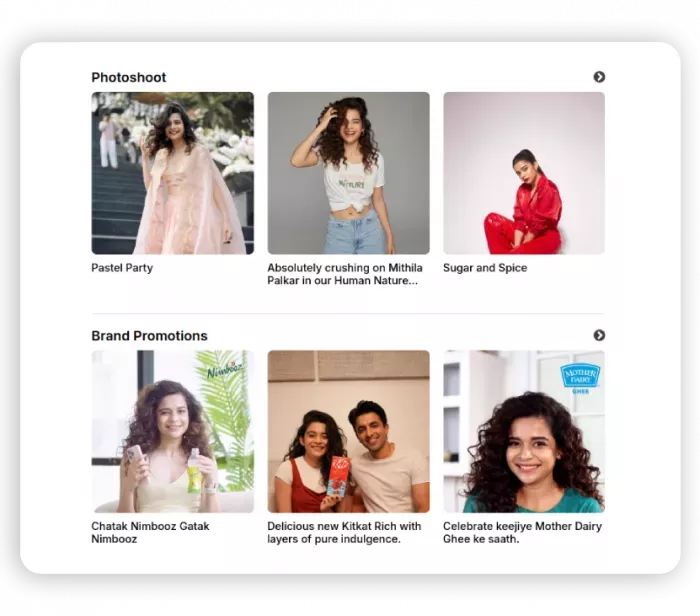
Stan is deliberately more constrained. The templates are tight, the layout is opinionated, and you can't turn it into an art project. At first that annoyed me. Then I realized the constraint is the feature: a page you can't over-decorate is a page that keeps pointing at the buy button.

So there's a real trade-off here, not a winner. More design control buys you brand expression at the risk of distraction. A locked-down template buys you focus at the cost of flair. Which one helps you depends entirely on whether your visitor needs to be impressed or needs to be checked out.
7. Beyond Direct Sales : The Wider Money Picture
If your income only ever comes from selling your own products, you can skip this section. Most creators can't, and this is where TIEUP.IO's broader design pays off.
A lot of creator income doesn't come from a checkout at all, it comes from affiliate commissions, sponsor codes, and the brand partnerships you land because a company looked at your presence and took you seriously. TIEUP.IO treats those as first-class citizens: promo codes, affiliate slots, and a portfolio built to make a brand want to work with you. That distinction shows up with other creator platforms too; the TIEUP.IO vs Beacons choice largely comes down to whether brand collaborations or direct audience monetization matter more.
Stan can host an affiliate program and links, but its center of gravity is your own catalog. It's a selling tool that happens to allow other things, whereas TIEUP.IO is a presence tool where selling is one lane. If a meaningful slice of your money is indirect, that framing difference is worth real weight.
8. Marketing & Growth Tools Compared
Getting someone to the store is only the first part of the job. What happens after that is where the gap between these platforms becomes wider.
Stan has built quite a lot around the sale itself. The Creator plan includes lead collection, store and product analytics, recurring subscriptions and AutoDM for Instagram. Creator Pro moves further into growth tools with funnels, upsells, order bumps, discount codes, affiliate management, email broadcasts, automated email flows, advanced analytics and tracking pixels for platforms including Meta, Google, Pinterest and TikTok.
TIEUP.IO's public feature set is much more focused on the top of the creator funnel: bringing links together, displaying work, showing products, publishing promo codes and affiliate offers, and making the creator easier for brands or potential clients to evaluate.
| Growth job | TIEUP.IO | Stan Store |
|---|---|---|
| Bring multiple destinations together | Strong focus | Supported through storefront links |
| Portfolio and previous work | Core feature | Not the main focus |
| Affiliate links and promo codes | Core use case | Affiliate tools available, especially on Pro |
| Lead collection | Not the main public pitch | Built in |
| Instagram DM automation | Not publicly highlighted | AutoDM included |
| Funnels and upsells | Not the core model | Creator Pro |
| Built-in email marketing | Not publicly highlighted | Broadcasts and flows on Creator Pro |
| Conversion tracking | Basic creator-page focus | Advanced analytics and pixels on Pro |
This changes how I would judge “growth.” TIEUP.IO helps widen the number of opportunities that can begin from one profile. Stan goes deeper after someone has shown purchase intent.
For a creator chasing sponsorships, affiliate clicks and inbound opportunities, the first model makes sense. For someone testing order bumps, follow-up emails and funnels around a digital product, the second gives far more machinery to work with.
9. Ease of Use & Time to Launch
Both are aimed at people who don't want to touch code, and both get you live fast. The honest difference is what “fast” is optimizing for.
With Stan, the narrow feature set works in your favor when you're starting: there are fewer decisions, so you can have a real, sellable offer up in well under half an hour. The tool nudges you toward shipping rather than fiddling.
TIEUP.IO's canvas gives you more to arrange, which is a joy if you enjoy building your page and a small time-sink if you just want to sell. Neither is hard. Just know that “more you can customize” and “more you have to customize” are the same sentence, and set your expectations to the kind of person you are.
10. Payments, Payouts & Who Owns Your Audience
This becomes much more important once the store starts making real money.
Stan currently supports Stripe and PayPal for checkout. Stripe transactions normally need time to process before they become available for cashout; Stan says this can take around two to seven business days depending on the account and location. Once money is available and cashed out through Stan, it generally reaches the connected bank account within another 24–48 hours. PayPal transactions follow the connected PayPal account instead.
There is another detail I care about just as much: getting my data back out. Stan allows customer information to be downloaded as CSV, including subscription-status information, and transaction data can also be exported. That means the customer list is not simply something I can look at inside a dashboard; I can actually take useful records with me.
TIEUP.IO is a different case because the relationship it manages is often happening before a direct transaction. The valuable asset there may be the page itself: portfolio visibility, affiliate clicks, product discovery, brand interest and traffic sent into the rest of my stack.
That leads me to a better question than “who has the best payment system?”
Where does the customer relationship actually live?
If I use Stan for checkout, courses and email, more of that relationship sits inside one platform. If I use TIEUP.IO as the front door and connect separate stores, schedulers or affiliate programs behind it, the relationship is spread across those services instead.
Neither setup is automatically wrong. I just want to know where my customer records, payments and communication history will be before I build a business around the page.
11. So Which One Should You Choose?
I'm not going to crown one winner, because the honest answer is that they're built for different people. Here's how I'd actually advise someone, depending on who they are:
● You sell digital products, courses, or coaching as your main income. Go with Stan Store. The native checkout, the depth across product types, and the zero platform fee are exactly what a focused seller needs, and the flat cost rewards you as sales grow.
● You're a multi-hyphenate creator brand deals, affiliate codes, links, and a few products. TIEUP.IO's wider net fits better. It presents your whole self, not just a shop, and the portfolio angle helps land the partnerships a pure storefront can't.
● You want to start without spending anything. Begin on TIEUP.IO's free profile, prove the concept, and only pay once there's money to justify it. Stan will cost you from day 15 whether you've sold anything or not.
● Your traffic is cold, impulsive, and social-first. Lean Stan. When attention is measured in seconds, the shortest tap-to-pay path wins, and that's Stan's entire reason for existing.
The Takeaway
After building on both, I keep landing in the same place: this isn't really a contest between two versions of the same tool. It's a choice between two philosophies of what your bio link is for.
Stan Store treats that link as a cash register narrow, fast, and unapologetically built to close the sale. TIEUP.IO treats it as a storefront window and a business card, showing the whole of who you are and letting money come from several directions.
Pick Stan if you know exactly what you're selling and you want the shortest possible line to the payment screen. Pick TIEUP.IO if selling is one chapter of a bigger creator story and you want a home for all of it. You're not choosing the better app, you're choosing which kind of business you're actually running, and that's a question no comparison table can answer for you.


Comments